
Plants
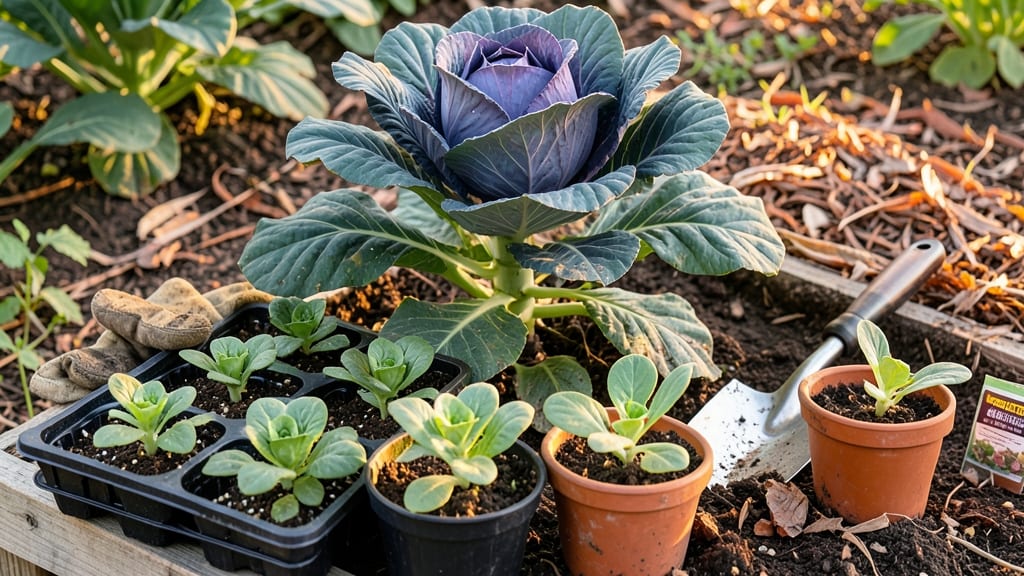
Planting cabbage 🥬 in Alabama isn’t just about throwing seeds in the dirt—it’s about mastering the state’s unpredictable swings from mild winters to scorching summers. Get the timing wrong, and you’ll end up with bitter leaves or crops that bolt before harvest.
The key? Understanding your specific USDA zone (7b-8b) and when to plant for the best flavor and yield.
Alabama gardeners have two prime windows to grow cabbage 🥬: late winter through early spring (February–March) and late summer into early fall (August–September). But here’s the catch—Northern Alabama’s cooler microclimates let you plant earlier than the Gulf Coast’s heat-prone regions.
Whether you’re in Huntsville or Mobile, knowing your last frost date (around March 15) and heat tolerance thresholds is non-negotiable.
In this guide, I’ll break down the exact months to plant cabbage 🥬 for your Alabama location, including heat-resistant varieties that won’t wilt in 90°F+ temperatures. You’ll also learn how to adapt for urban gardens, clay-heavy soils, and even succession planting to stretch your harvest from May through December.
Ready to grow heads of cabbage 🥬 that are crisp, sweet, and ready to harvest? Let’s dive into the month-by-month schedule tailored just for Alabama’s climate—so you can enjoy homegrown goodness without the guesswork.
Best cabbage planting months in Alabama by region (heat-Zone breakdown)
Alabama’s USDA Zones 7b-8b mean your cabbage planting window depends heavily on whether you’re in North Alabama’s cooler hills or South Alabama’s warmer Gulf Coast.
In Zone 7 (north), you can start 6-8 weeks before your last frost (typically mid-February to early March), while Zone 8 gardeners (south) should begin late February to early April to avoid summer’s brutal heat.
Cabbage thrives in cool temperatures (50-75°F), but Alabama’s summers push it beyond its comfort zone. Planting too early risks bolting (premature flowering) from heat stress, while late starts may leave you with small, bitter heads before frost.
The key is two planting windows: spring (Feb-Apr) and fall (Aug-Sep).
North Alabama (Zone 7) has a slightly longer growing season, allowing for earlier spring starts and later fall plantings. Meanwhile, South Alabama (Zone 8) must work around longer heat waves, making shade cloth and succession planting essential strategies. Let’s break down the exact months for each region to maximize your harvest.
🌱 Visual Element: Comparison Table
| Region | USDA Zone | Spring Planting Window | Fall Planting Window | Last Frost Date | Heat Risk |
|---|---|---|---|---|---|
| North Alabama | 7b | Mid-February to early April | Late August to mid-September | March 15 | Moderate (May heat) |
| Central Alabama | 8a | Late February to early April | Early August to early September | March 1 | High (June-August) |
| South Alabama | 8b | Late February to March | Mid-July to early August | February 15 | Very High (April-Sept) |
For spring plantings, aim to transplant seedlings 2-3 weeks before your last frost date. In North Alabama, this means early April transplants, while South Alabama gardeners should wait until mid-April to avoid heat stress.
Use row covers or shade cloth (30-50%) if planting in late March or April to protect tender seedlings.
Fall plantings are trickier in Alabama’s climate. Start seeds indoors in July for transplanting in August, giving heads time to mature before first frost (mid-November). In Zone 8, you can push it to early September starts, but monitor soil temperatures—cabbage struggles when soil exceeds 80°F.
Pro tip: Use succession planting every 2-3 weeks in spring and fall to stagger harvests. This ensures a continuous supply of fresh cabbage instead of one big crop.
For example, plant one batch in early March, another in mid-April, and a final batch in late August for fall harvests.
If you’re in South Alabama’s Zone 8b, consider heat-tolerant varieties like 'Cavalo' or 'Golden Acre', which handle warmer soils better than traditional types. Pair this with drip irrigation and mulch to keep roots cool during summer’s peak.
Remember: Cabbage needs 60-80 days to maturity, so calculate backward from your first frost date. For example, if frost hits November 15, your latest fall planting should be by early September for a 75-day variety.
Use this heat-zone breakdown to avoid common mistakes like bolting or pest outbreaks from poor timing.
🌿 For urban gardeners in Birmingham or Huntsville, microclimates can shift planting windows by 2-3 weeks. Always check your local Alabama Cooperative Extension Service for frost date updates—they’re your best resource for region-specific advice.
Best cabbage planting months in Alabama by region (heat-Zone breakdown)
Alabama’s USDA Zones 7b-8b mean your cabbage planting schedule depends heavily on whether you’re in North Alabama’s cooler hills or Central/South Alabama’s heat zones. The biggest mistake I see? Planting too early in the South or too late in the North, both of which trigger bolting or stunted growth.
Let’s break it down by region so you can align your planting with Alabama’s 210 frost-free days.
For North Alabama (Zone 7b), your last frost date typically lands around March 15, giving you a longer spring window. In contrast, Central/South Alabama (Zone 8b) sees its last frost closer to February 28, but summer heat arrives earlier.
This means your fall planting must happen before August 15 to avoid heat stress. The key? Planting 4-6 weeks before your last frost for spring crops and 8-10 weeks before your first frost (around November 15) for fall harvests.
📅 Spring Planting Window (Zone 7b-8b)
For fall planting 🍂, the window narrows significantly in Alabama’s heat zones. In Zone 7b, you can start seeds indoors by July 1 for a September 1 transplant, while Zone 8b gardeners should aim for August 15 transplants to avoid summer heat.
The goal? Harvest before November 15, when temperatures drop and frost risk increases.
Pro tip: Use row covers in early spring or shade cloth in late summer to extend your planting windows by 2-3 weeks in both directions. This is especially critical in Central Alabama, where heat arrives earlier than the North.
For example, if you’re in Birmingham, planting ‘Golden Acre’ cabbage on March 10 gives you a 75-day harvest window before summer heat sets in.
One common mistake I see? Assuming all of Alabama has the same frost dates. Mobile’s Gulf Coast microclimate can be 2-3 weeks warmer than Huntsville’s Piedmont region. Always check your local frost date (via Alabama A&M Extension) and adjust your schedule accordingly.
For instance, if your last frost is March 22, plant 4 weeks prior (by February 15) for a reliable crop.
Remember: Cabbage 🥬 thrives in cool weather but bolts when temps exceed 85°F for more than 3 days. In Alabama’s Zone 8b, that means your fall planting must finish by August 15—any later, and you’ll risk bitter, loose heads.
Use this schedule as your guide, and you’ll enjoy crisp, sweet cabbage from May through December.