
Plants
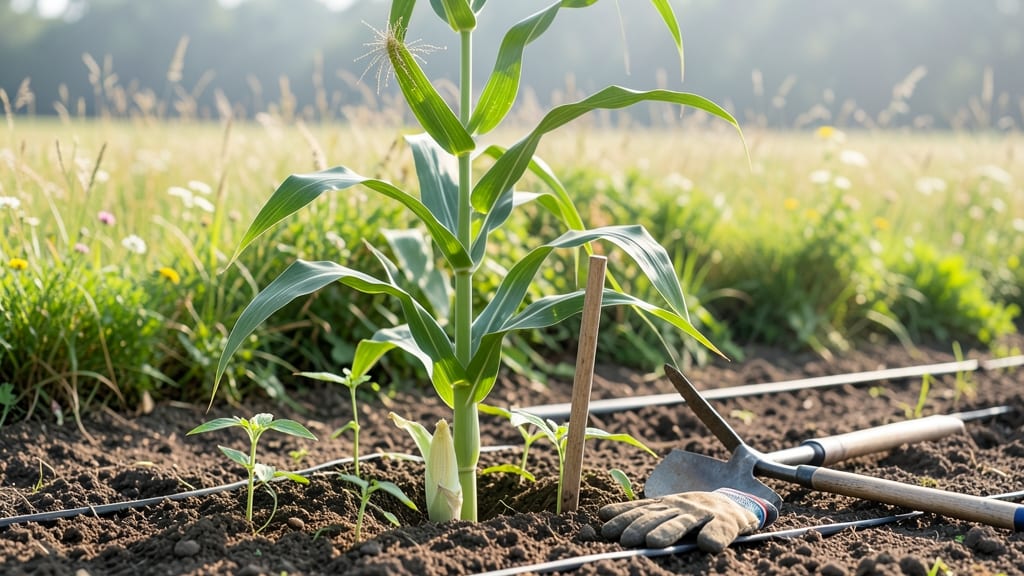
Timing your 🌽 corn planting in Illinois can make or break your harvest—get it wrong, and you might end up with stunted plants or wasted seeds. Illinois gardeners know the weather shifts fast, so knowing the exact weeks before last frost is critical for those towering ears you’re dreaming of.
Most Illinois farmers and home gardeners aim to plant corn between mid-April and early June, but the 5b-6a USDA zones mean your timing should adjust based on whether you’re in northern or southern Illinois.
The key isn’t just avoiding frost—it’s waiting for soil temperatures to hit at least 60°F for those seeds to germinate properly.
In this guide, I’ll break down the ideal planting windows, how to read frost-free dates, and why some gardeners swear by direct sowing over transplants. You’ll also discover how to extend your growing season for a second crop if you’re ambitious enough to try succession planting.
Whether you’re a first-time gardener or a seasoned farmer, these Illinois-specific tips will help you maximize your yield and avoid common mistakes that leave plants struggling. Let’s get those seeds in the ground at the perfect moment!
Illinois corn planting timeline: exact weeks before last frost for optimal growth
Getting your corn planted at the right time in Illinois is all about balancing soil warmth, frost risk, and regional climate differences. Corn thrives when soil temperatures consistently reach 50°F or higher, but the ideal planting window shifts between Northern and Southern Illinois.
Let’s break it down by exact weeks before your last frost date to maximize your harvest potential.
In most of Illinois, the last average frost date falls around April 15 in the south and May 1 in the north. However, corn needs 90-120 days to mature, so you’ll want to plant 2-3 weeks after that last frost date to ensure enough growing time.
For example, if your last frost is April 20, aim to plant by May 10.
Here’s how the planting timeline varies by region, using USDA Zones 5b-6a as our guide:
| Region | Last Frost Date | Ideal Planting Window | Soil Temp Threshold | Notes |
|---|---|---|---|---|
| Southern IL (e.g., St. Louis, Cairo) | April 1-15 | Mid-April to early May | 50°F+ (consistently) | Warmer soils allow earlier planting; use short-season varieties if planting late. |
| Central IL (e.g., Springfield, Champaign) | April 15-30 | Late April to mid-May | 55°F+ (minimum) | Monitor soil temps with a soil thermometer—corn won’t germinate well below 55°F. |
| Northern IL (e.g., Chicago, Rockford) | May 1-15 | Late April to early June | 60°F+ (ideal) | Use black plastic mulch to warm soil faster in cooler zones. |
For gardeners in Northern Illinois, where frosts can linger, consider using row covers or planting early-maturing hybrids (like Silver Queen or Bodacious) to squeeze in a harvest. In Southern Illinois, you can push the envelope slightly later—even into early June—if you choose longer-season varieties.
Pro tip: Use the University of Illinois Extension’s Planting Heat Unit Maps to fine-tune your schedule. These maps account for growing degree days, which are more accurate than frost dates alone for corn. For example, Chicago-area gardeners should aim for 2,400 growing degree days to harvest sweet corn.
If you’re unsure about your last frost date, check the National Weather Service or your local Cooperative Extension Service. They provide 30-year averages that are far more reliable than guessing.
And remember: Corn planted too early risks frost damage, while planting too late can lead to stunted ears or no harvest at all.
For a second crop, consider succession planting in June if your growing season is long. Choose fast-maturing varieties (like Early Sunglow) and plant in blocks every 2 weeks for continuous harvests through summer.
🌽
5 Critical factors that determine your Illinois corn planting schedule
Planting corn in Illinois isn’t just about avoiding frost—it’s about nailing five key factors that make or break your harvest. First, soil temperature is non-negotiable: seeds won’t germinate until the soil hits 50°F+, but ideal growth starts at 60°F.
Use a soil thermometer to check—cold soil delays sprouting and invites rot.
Next, last frost dates vary wildly across Illinois. Northern zones (like USDA 5b) may wait until mid-May, while southern areas (like USDA 6a) can plant as early as late April. Always check the University of Illinois Extension for your county’s frost-free averages—they’re your planting GPS.
Don’t overlook seed maturity ratings. Short-season hybrids (like ‘Early Sunglow’) need just 75 days to harvest, while sweet corn varieties can stretch to 120 days. Match your hybrid to your frost-free window—planting a long-season variety too late means underdeveloped ears.
Soil moisture is another game-changer. Corn needs 1-2 inches of water weekly, but soggy soil at planting time can drown seeds. Wait for dry, warm soil—stick your finger in: if it’s damp but not wet, it’s ready. Drought stress early on stunts roots permanently.
Finally, planting method matters. Illinois gardeners almost always direct-sow corn (not transplant), because roots are sensitive to disturbance. Use a planting board for even rows—corn thrives with 12-15 inches between plants and 30-36 inches between rows for airflow.
Pro tip: Use black plastic mulch to warm soil faster in early springs—it can shave 2-3 weeks off your planting timeline. And if you’re in Zone 5b, consider row covers to protect young plants from late frosts.
Timing isn’t just about the calendar—it’s about reading your microclimate like a pro.
Now that you’ve got the critical factors locked in, your next move is to avoid the common Illinois planting mistakes that sabotage even the best-laid plans. Stay tuned for my next section on pitfalls to dodge—like planting too early or ignoring soil warmth!