
Plants
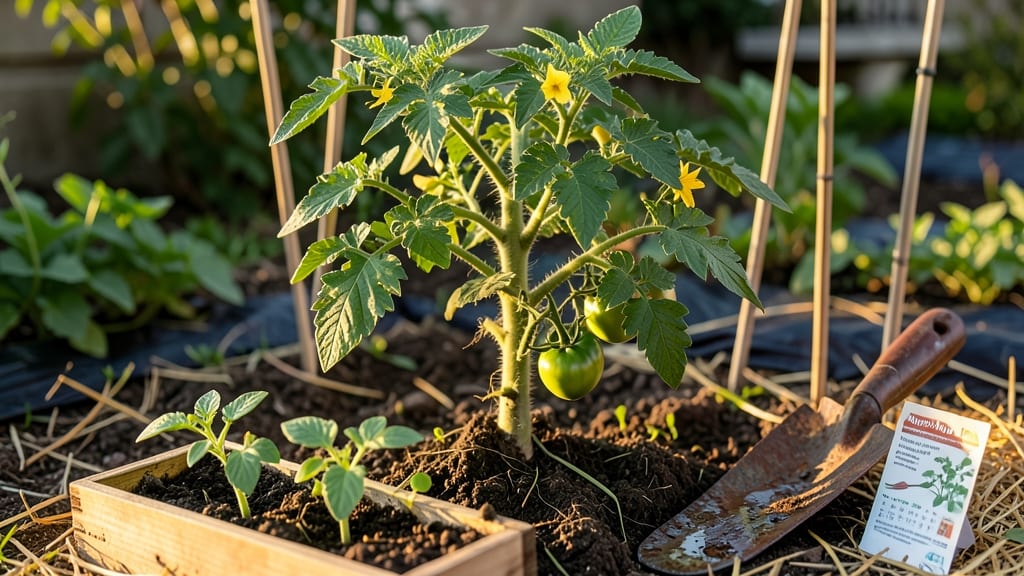
When is the best time to plant tomatoes in North Carolina? Timing your tomato planting just right can mean the difference between a bountiful harvest and bitter-tasting fruit—or worse, wasted effort.
The best time to plant your 🍅 depends on avoiding early cold snaps, which can shock seedlings, and bolting, which turns your plants into flower factories before they even get a chance to produce.
If you've ever watched your tomato plants bolt after a late frost, you know how frustrating it can be.
North Carolina's varied climate—from the cooler mountain regions to the warmer Coastal Plain—means planting windows shift depending on where you live. Most gardeners in zones 7a-8b should aim for mid-April to early June for spring planting, but that's just the starting point.
The real secret lies in calculating 4-6 weeks before your last frost date, which can vary by as much as two weeks across the state.
Here's what you need to know: whether you're starting seeds indoors or transplanting seedlings, getting the timing right isn't just about avoiding frost—it's about giving your tomatoes the perfect growing window.
I'll walk you through the exact weeks to plant, regional nuances, and even how to stretch your harvest into fall if you're feeling ambitious.
Let's dive into the specifics so you can confidently plant your tomatoes and enjoy a garden full of juicy, homegrown fruit all season long.
North Carolina’s last frost dates by region: exact weeks to plant tomatoes without bolt risk
North Carolina’s varied climate—from the cool Mountains to the humid Coastal Plain—means your tomato planting window depends entirely on your region. Planting too early risks frost damage, while waiting too long can lead to bolting (premature flowering).
Here’s the exact timing you need for each zone, based on NC State Extension data.
In the Mountains (USDA Zones 6-7), like Asheville, last frost typically hits April 15-30. Aim to plant transplants 4-6 weeks before—so late March to early April—or start seeds indoors 6-8 weeks earlier. For heirloom varieties with longer growing seasons, begin seeds indoors in February.
For the Piedmont (Zones 7-8), including Raleigh and Greensboro, last frost averages March 30-April 15. Plant transplants outdoors 4-6 weeks before, meaning mid-March to early April. If you’re growing cherry tomatoes or early-maturing hybrids, you can push this window slightly later.
The Coastal Plain (Zones 8a-8b), such as Wilmington and Fayetteville, enjoys warmer springs with last frost dates around March 15-30. Here, you can plant transplants as early as late February or start seeds indoors in January for a head start.
This region’s longer growing season also allows for fall planting—more on that later!
| Region | Last Frost Date | Plant Transplants Outdoors | Start Seeds Indoors | Best Varieties |
|---|---|---|---|---|
| Mountains (Asheville) | April 15-30 | Late March - Early April | February | 'Mountain Merit', 'Stupice' |
| Piedmont (Raleigh) | March 30 - April 15 | Mid-March - Early April | Late January - February | 'Celebrity', 'Better Boy' |
| Coastal Plain (Wilmington) | March 15-30 | Late February - March | January | 'Sun Gold', 'Sweet 100' |
Choosing the right tomato variety is just as critical as timing. In cooler regions like the Mountains, opt for determinate varieties (bush types) like 'Mountain Merit' that mature faster.
The Piedmont and Coastal Plain can handle indeterminate varieties (vining types) like 'Better Boy' or 'Sweet 100' for a longer harvest.
Pro tip: Always check the days to maturity on your seed packet. For example, if your last frost is April 15 and you’re planting transplants on April 1, choose varieties that mature in 70-80 days to avoid fall frost cutting your season short.
In the Coastal Plain, you can push this to 90 days thanks to warmer nights.
One common mistake? Planting too early and risking bolting—when tomatoes flower prematurely due to cold stress. To prevent this, use row covers or wait until soil temperatures hit 60°F (use a soil thermometer!).
In my Piedmont garden, I’ve found that late March transplants under row covers thrive even if nights dip into the 40s°F.
For fall planting, aim to transplant July 15-August 1 in all regions. This gives tomatoes 80-90 days to mature before the first frost. Varieties like 'Early Girl' or 'Fourth of July' are perfect for this window—they’re fast-growing and heat-tolerant, which is key for North Carolina’s hot Augusts.
Remember, these dates are averages. Microclimates—like a south-facing slope or urban heat islands—can shift your window by 1-2 weeks. Always monitor local forecasts and adjust accordingly. With these exact planting windows, you’ll avoid bitter fruit and maximize your tomato harvest!
How to calculate your local planting window using NC State Extension data (step-by-step guide)
To pinpoint the best time to plant tomatoes in North Carolina, you need your local last frost date—and the easiest way to find it is through the NC State Extension's climate tools.
These resources provide precise data for your county, accounting for microclimates that can shift planting windows by 1-2 weeks. Start by visiting the NC Climate Office or using their interactive frost map to identify your USDA zone (7a-8b) and average last frost date.
Once you have your frost date, work backward 4-6 weeks to determine when to start seeds indoors. For example, if your last frost is April 15, you should begin seeds by March 1-15.
This timing ensures seedlings are ready to transplant outdoors when soil temperatures hit at least 60°F, which typically occurs 2-3 weeks after last frost in most of NC.
Here’s how to refine your planting window further: Check the NC State Extension’s Plant Toolbox for your county’s specific frost-free dates. For instance, Asheville (Zone 7a) usually has a last frost around April 1, while Raleigh (Zone 7b) averages April 15.
These differences matter—planting too early in cooler zones risks cold damage, while delaying in warmer areas can lead to bolting before harvest.
Step-by-Step Guide to Calculate Your Planting Window
- Step 1: Visit NC Climate Office and enter your county to find your last frost date.
- Step 2: Subtract 4-6 weeks from your last frost date to determine indoor seed-starting time.
- Step 3: Use a soil thermometer to confirm soil is 60°F+ before transplanting outdoors (typically 2-3 weeks after last frost).
- Step 4: Adjust for microclimates: South-facing slopes warm faster; low-lying areas stay cooler.
- Step 5: Choose fast-maturing varieties (e.g., ‘Early Girl’ (60 days)) for cooler zones or longer-season varieties (e.g., ‘Brandywine’ (85 days)) for warmer areas.
Don’t overlook microclimates—they can dramatically alter your planting window. For example, a south-facing garden bed may warm up 1-2 weeks earlier than a north-facing one. Use a minimum-maximum thermometer to track your garden’s specific conditions for 2-3 weeks before planting.
If you’re in a transition zone (like the Piedmont), consider using row covers to extend your season by 2-4 weeks.
For a fall harvest, aim to plant transplants in late July to early August, giving tomatoes 80-90 days to mature before the first frost. Varieties like ‘Celebrity’ (70 days) or ‘Sungold’ (65 days) are ideal for this shorter window.
Always check the days-to-maturity on seed packets to match your planting timeline with your frost date.
Pro tip: Bookmark the NC State Extension’s Planting Calendar for real-time updates on frost dates and planting windows. It’s updated annually to reflect climate trends, ensuring you’re always planting at the optimal time for your tomatoes to thrive.