
Plants
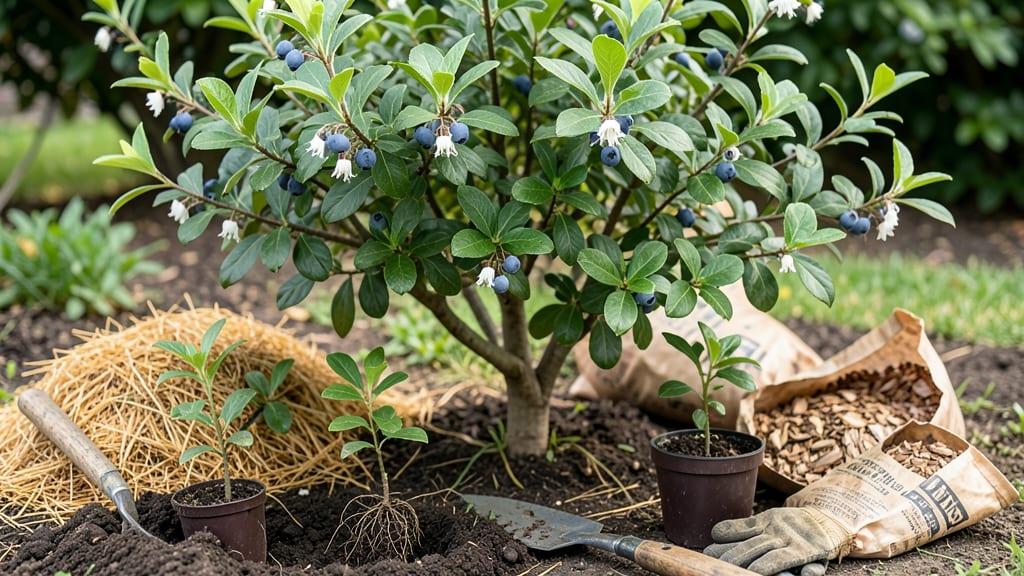
When to plant blueberry bushes in Alabama could mean the difference between a bountiful harvest and years of frustration. The state’s warm winters and hot summers create unique challenges for growers, especially when it comes to those all-important chill hours that blueberries need to fruit properly.
If you’ve ever wondered why your blueberry plants seem to struggle despite your best efforts, the answer likely lies in when you planted them.
Alabama’s USDA zones 7a-8b demand a careful balance—plant too early, and you risk frost damage; too late, and your bushes may not get enough winter chill to produce berries. Let me show you the exact windows that work best for Alabama’s climate.
From late fall to early spring, there’s a sweet spot for planting that aligns with your local frost dates and variety needs. Whether you’re growing highbush, rabbiteye, or southern highbush types, I’ll break down the ideal months and why they matter for your specific blueberry type.
Plus, I’ll share Alabama-specific tips to give your bushes the best possible start.
Ready to transform your garden into a blueberry powerhouse? Let’s dive into the science and strategies that will have you harvesting plump, juicy berries from May to July—without the guesswork. Your future breakfast bowls will thank you!
Best planting months in Alabama based on chill-hour needs
Alabama’s USDA zones 7a-8b create a unique challenge for blueberry growers. Unlike northern states, our mild winters mean chill-hour requirements (the number of hours below 45°F needed for flowering) dictate planting timing more than frost dates.
Most Alabama varieties need 200-1000 chill hours, but southern highbush types thrive with as few as 200-300 hours. This means fall planting (October-November) is ideal for most varieties, while spring planting (February-March) works for low-chill varieties only.
Timing matters because blueberries establish roots before flowering. Planting in late fall gives roots time to settle before Alabama’s mild winter (average lows of 35-45°F). Spring planting, however, risks early flowering before roots are strong enough to support fruit production.
For Alabama’s heat, late winter (February) is the safest spring window—after the last frost date (mid-March) but before summer heat stress kicks in.
Here’s the key: Northern Alabama (zones 7a-7b) can handle higher-chill varieties like 'Climax' (900 hours), while southern Alabama (zones 8a-8b) must stick to low-chill types like 'Misty' (300 hours). The transition zone (around Birmingham) offers flexibility for mid-range varieties like 'Powderblue' (500 hours).
Always check your local chill-hour map—Alabama’s Appalachian foothills get more chill hours than the coastal plain.
| Variety Type | Chill Hours Needed | Best Planting Window | Alabama Zones | Key Tip |
|---|---|---|---|---|
| Highbush | 600-1000 hours | Late October - November | 7a-7b (North) | Needs winter chill; avoid spring planting |
| Rabbiteye | 500-900 hours | November - Early December | 7a-8a (Central) | Drought-tolerant; plant before rains |
| Southern Highbush | 200-300 hours | February - March | 8a-8b (South) | Low chill; ideal for warm winters |
For fall planting, aim to get bushes in the ground 6-8 weeks before frost (by November 15th in most of Alabama). This gives roots time to establish before winter.
In northern Alabama, where frosts linger until mid-March, you can push planting to early December for high-chill varieties. Southern Alabama gardeners should finish by November 1st to avoid summer heat stress during root establishment.
Spring planting is riskier but works for low-chill varieties like 'O’Neal' or 'Misty'. Plant in February (after last frost) to give roots 6-8 weeks to grow before summer heat arrives.
Avoid planting after March 15th, as Alabama’s 90°F+ days can shock young plants. Always water deeply after planting—blueberries hate drought stress in their first year.
Pro tip: Soil temperature matters just as much as air temperature. Blueberries need soil temps above 45°F to root effectively. In Alabama, this typically means waiting until mid-February for spring planting.
Use a soil thermometer to check—roots won’t grow in cold soil, even if air temps are mild. Mulch heavily (3-4 inches of pine straw or wood chips) to insulate roots and maintain acidic soil conditions.
One common mistake Alabama gardeners make is planting too late in spring (April or May). By then, summer heat and limited rainfall can stress young bushes. If you miss fall, container growing is a great workaround—just move pots to partial shade during peak summer heat.
For in-ground planting, drip irrigation is a game-changer to keep roots moist during Alabama’s dry spells.
Remember: Blueberries are perennial, so getting them established correctly now means decades of harvests. In Alabama, where hurricanes and heat waves test plants, proper planting timing is your first line of defense. Whether you’re in Huntsville’s cooler hills or
Best planting months in Alabama based on chill-hour needs
Alabama’s USDA zones 7a-8b create a tricky balance for blueberry bushes, which need chill hours (32°F-45°F) to produce fruit. Most varieties thrive with 200-1000 chill hours, but Alabama’s mild winters mean careful timing is key.
Planting outside these windows can leave your bushes struggling to fruit—or worse, vulnerable to late spring frosts that damage new growth.
For fall planting (October-November), aim to get bushes in the ground 6-8 weeks before first frost (typically mid-November). This gives roots time to establish before winter dormancy. Spring planting (February-April) works too, but avoid planting after mid-April—your bushes may not get enough chill hours to fruit that year.
Here’s the breakdown of ideal planting windows for Alabama’s three main blueberry types, aligned with chill-hour needs and frost dates:
| Variety Type | Chill-Hour Needs | Best Planting Window | Why It Works |
|---|---|---|---|
| Highbush (e.g., 'Climax') | 600-900 hours | October-November or February-March | Balances chill hours with frost-free growth |
| RabbitEye (e.g., 'Powderblue') | 200-500 hours | November-December or March-April | Adapts to Alabama’s mild winters |
| Southern Highbush (e.g., 'Premier') | 300-500 hours | February-March or October-November | Tolerates heat better than northern varieties |
If you’re in northern Alabama (USDA 7a), prioritize fall planting to ensure bushes get enough chill hours. In southern Alabama (USDA 8b), spring planting in March works well for low-chill varieties like 'Powderblue,' which thrives with just 200-300 chill hours.
Pro tip: Check your local Alabama Cooperative Extension Service chill-hour map for precise data—it’s a game-changer for timing!
One more critical factor: soil temperature. Blueberry roots prefer 60°F+ for optimal growth. In Alabama, soil temps hit this mark by mid-March in most regions, making early spring a prime window.
If you plant in fall, ensure soil temps are above 50°F to avoid root stress. Use a soil thermometer to double-check—it’s a small investment for big results.
Timing your planting right isn’t just about the calendar—it’s about matching your blueberry variety to Alabama’s microclimates. Next, I’ll share the top 5 varieties that thrive here and their exact planting timelines to maximize your harvest. Trust me, your future blueberry pancakes will thank you!