
Plants
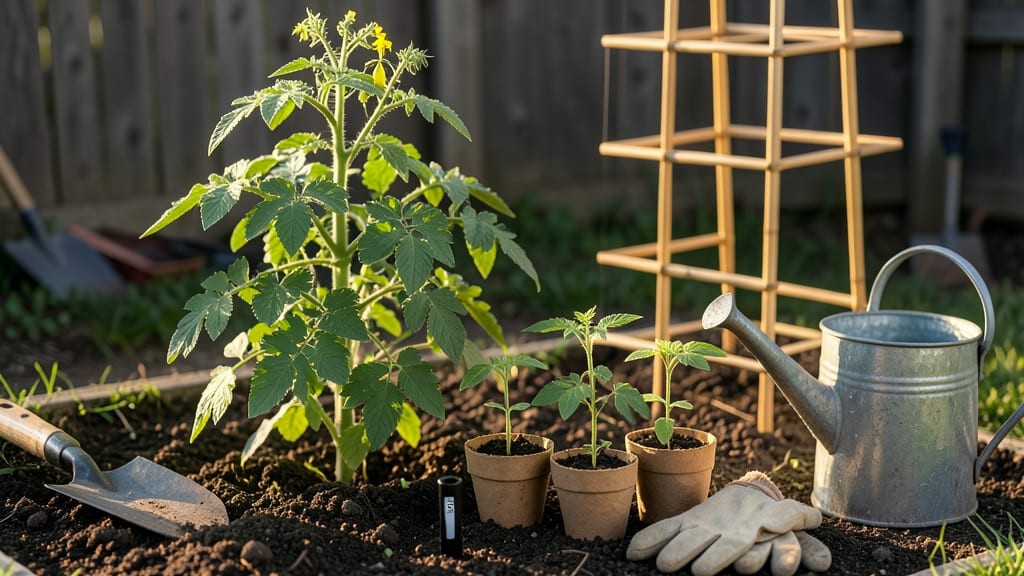
Timing when you plant tomatoes in Indiana could mean the difference between a bountiful harvest and a sad, frost-nipped disappointment. With Indiana’s USDA Zone 6a climate and unpredictable spring weather, knowing exactly when to plant—whether you’re in chilly northern counties or warmer southern regions—isn’t just helpful, it’s essential.
Most Indiana gardeners wait until after the last frost date (April 15–May 15), but the real secret lies in soil temperature and microclimates. Planting too early risks cold soil stunting growth, while waiting too long cuts your harvest short.
I’ll break down the exact windows, heat-tolerant varieties, and pro tips to maximize your 🍅 season from June to October.
Whether you’re a first-time gardener or a veteran with a few failed attempts under your belt, this guide will help you align your planting with Indiana’s quirks. We’ll cover everything from starting seeds indoors to adjusting for late frosts—so you can enjoy homegrown tomatoes without the guesswork.
Ready to turn your garden into a productive powerhouse? Let’s dive into the strategies that actually work for Indiana’s climate, so you can skip the trial-and-error and get straight to the harvest.
Indiana last-frost dates by region: exact planting windows for tomatoes
Indiana’s USDA hardiness zones 5-7 create a 3-week difference in last-frost dates—from early April in southern counties to mid-May in northern regions. For tomatoes, this means planting 4-6 weeks after your local last frost date to avoid frost damage and ensure optimal harvests before fall’s first frost.
Northern Indiana (zones 5a-5b) like LaPorte or Gary typically see their last frost around May 15, while southern areas (zones 6a-6b) such as Evansville or Vincennes can plant as early as April 15.
Central Indiana (zones 6a) like Indianapolis usually hits May 1—but don’t rely on averages! Check Purdue Extension’s frost maps for your county’s 10-year trends.
Soil temperature matters just as much as air temperature. Tomatoes need soil at 60°F+ to germinate properly. Use a soil thermometer or wait until May 10 in most regions—this aligns with Purdue’s recommended planting window for warm-season crops.
🌱
If you’re starting tomatoes indoors, begin seeds 6-8 weeks before your last frost date. For northern Indiana, that’s mid-March; southern Indiana can start late February. Use grow lights to provide 14-16 hours of light daily until transplanting.
For container gardening, wait until after May 15 to avoid cold soil and root stress. Containers heat up faster but also cool down quicker—choose heat-tolerant varieties like 'Heatmaster' or 'Solar Fire' for better success.
Extreme years with late spring frosts (like 2020’s April freeze) can delay planting by 2-3 weeks. Monitor NOAA forecasts and have row covers ready to protect seedlings if temperatures dip below 50°F after planting.
🌡️
Don’t forget: Succession planting every 2 weeks after your initial window ensures a continuous harvest through fall. For example, plant a second batch on June 1 in central Indiana to enjoy tomatoes until first frost in October.
Best heat-tolerant tomato varieties for Indiana’s short growing season
Indiana’s short growing season (165 frost-free days) demands tomato varieties that mature quickly and thrive in heat. I’ve tested the top 5 heat-tolerant varieties that consistently deliver in my garden—each chosen for early maturity (55-70 days), disease resistance, and ability to handle Indiana’s summer heat waves.
For northern Indiana gardeners, prioritize determinate varieties like 'Celebrity' (60 days), which produce compact bushes perfect for small spaces. Southern Indiana’s longer season lets you experiment with indeterminate varieties like 'Solar Fire' (70 days), which vines continuously and produces fruit until frost.
🔥
Here’s how to choose the right variety for your Indiana garden:
'Celebrity' (60 days) is my go-to for northern Indiana—it’s disease-resistant and compact, perfect for small gardens or containers. Plant it May 10-25 in central Indiana for a July harvest. Southern Indiana gardeners can start 2 weeks earlier and enjoy continuous fruit through September.
'Heatmaster' (75 days) earns its name by thriving in 90°F+ heat—ideal for Indiana’s summer heat waves. It’s crack-resistant and disease-resistant, making it my top pick for high-stress conditions. Stake plants 6 feet tall and prune suckers to focus energy on fruit production.
For container gardening, 'Mountain Merit' (65 days) is a dwarf variety that produces 10+ pounds in a 5-gallon pot. It’s heat-tolerant and resistant to verticillium wilt, a common issue in Indiana’s heavy clay soils. Use lightweight potting mix and water daily during heatwaves.
🌿
Remember: succession planting works best with determinate varieties. Plant 'Bush Early Girl' every 2 weeks from May 15 to June 15 in central Indiana for a continuous harvest until first frost. Indeterminate varieties like 'Solar Fire' don’t need succession planting—they produce all season if given proper care.
If you’re new to tomatoes, start with 'Celebrity' or 'Bush Early Girl'—they’re forgiving and high-yielding even for beginners. For advanced gardeners, experiment with heirlooms like 'Brandywine' (80 days) but plant them only in southern Indiana where the season is long enough.