
Companion Plants
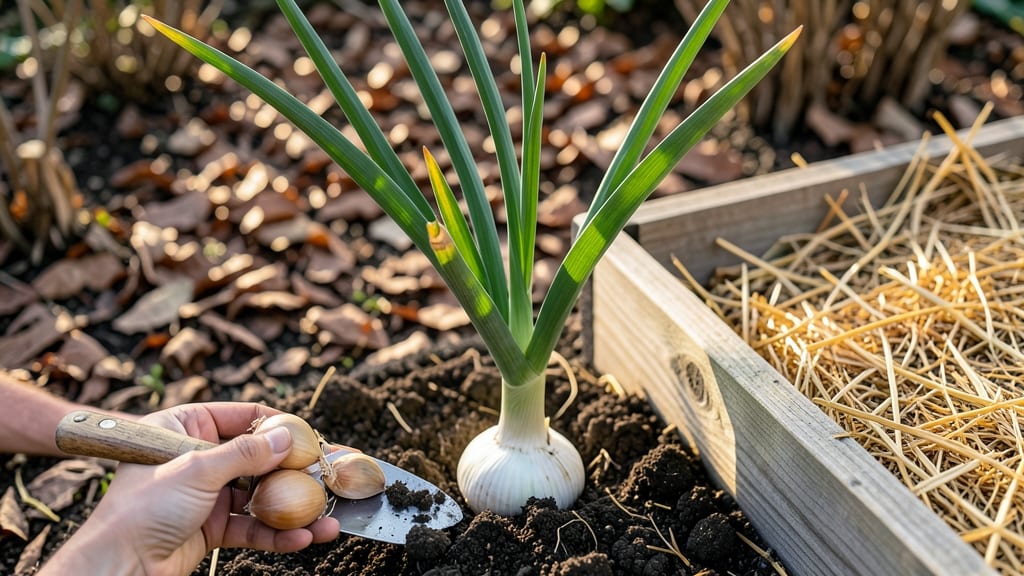
If you're wondering "when should I plant garlic in Michigan", timing is everything—especially for hardneck varieties that love our cold winters. Planting too early or late can mean the difference between a bountiful harvest and a disappointing flop, so getting it right matters more than you might think.
For Michigan gardeners in zones 5b-6b, fall planting between October and November is your best bet. This gives the cloves time to establish roots before the ground freezes, setting them up for a strong start in spring.
The key is planting 4-6 weeks before the first frost, which typically hits around mid-October.
Why fall? Garlic thrives in cooler weather, and planting early ensures it develops a robust root system before winter dormancy. Plus, Michigan’s unpredictable springs make fall the safer choice—no last-minute rushing when the snow melts. Let me show you exactly how to nail your planting window for the best results.
Ready to grow 🧄 garlic that rivals the pros? Stick with me, and I’ll walk you through the ideal timing, soil prep, and even how to handle Michigan’s quirky weather. Your harvest will thank you!
Best fall planting window for Michigan garlic (with soil temperature guide)
Michigan’s cold-hardy climate makes it ideal for growing hardneck garlic, but timing is everything. Planting too early or late can lead to poor bulb formation or even failure.
The optimal window is between mid-September and mid-October, when soil temperatures drop to 40–50°F. This gives roots time to establish before winter dormancy.
Why this timing? Garlic needs 6–8 weeks of cold exposure (a process called vernalization) to form bulbs properly. Michigan’s Zone 5b–6b climate delivers this naturally, but planting too late risks shallow roots or frost heaving.
The Upper Peninsula (Zone 4–5) may need to plant 2–3 weeks earlier than the Lower Peninsula.
Soil temperature is your best indicator. Use a soil thermometer to confirm readings between 40–50°F. If temperatures drop below 32°F before roots establish, mulch with straw or leaves (4–6 inches thick) to insulate the soil. This buffer can push your planting window slightly later if needed.
Here’s a regional breakdown for Michigan gardeners: Lower Peninsula: Aim for September 20–October 15. Upper Peninsula: Start by September 1–15 to account for earlier frosts.
| Region | Ideal Planting Window | Soil Temp Threshold | Last-Chance Date |
|---|---|---|---|
| Lower Peninsula (Zones 5b–6a) | Mid-September to mid-October | 40–50°F | October 15 |
| Upper Peninsula (Zones 4–5) | Early September to early October | 40–50°F | October 1 |
| Southern Michigan (Zone 6b) | Late September to early November | 40–50°F | November 1 |
🌱 Pro Tip: If you miss the fall window, early spring planting (March) is possible, but bulbs may be smaller.
Don’t wait until the first frost—that’s too late! Garlic needs time to root before the ground freezes solid. If you’re unsure about your last frost date, check the Michigan State University Extension for your county’s averages.
For most of the state, this falls around mid-October, so plan accordingly.
For urban gardeners or those with microclimates (like south-facing slopes), you might extend the window by 1–2 weeks. However, avoid planting after November 1 in most areas, as roots won’t have enough time to establish before winter.
One common mistake is planting too shallowly. Garlic cloves should be buried 2 inches deep (pointy end up) in well-draining soil. If your soil is heavy clay, amend it with compost or sand to prevent rot. After planting, water gently to settle the soil around the cloves.
Finally, label your rows if you’re testing different varieties. Michigan’s climate favors hardneck garlic like ‘German White’ or ‘Music’, but softnecks (like ‘Artichoke’) can also succeed in milder microclimates. Keep notes on which varieties perform best in your specific location.
With the right timing and soil prep, your Michigan garlic harvest could be the largest yet—just don’t wait until the snow flies! 🧄
Hardneck vs. softneck garlic: which thrives better in Michigan’s winters?
Michigan’s cold winters make hardneck garlic the clear winner for most gardeners. These varieties, like 'German White' or 'Music', actually need cold temperatures to form bulbs properly. Softneck types, like 'Silverskin', struggle in our Zone 5b-6b winters and often rot or produce smaller cloves.
Hardnecks also produce scape stalks—those curly shoots in summer—which you can harvest for flavorful greens. Plus, their bulbs have more cloves per head, giving you more bang for your buck. Softnecks, while milder and storing longer, just can’t compete in Michigan’s harsh conditions.
Here’s the key difference: hardnecks rely on vernalization (cold exposure) to trigger bulb formation, while softnecks don’t. That’s why they’re the gold standard for Michigan’s climate—especially in the Upper Peninsula, where winters are even colder.
- Thrives in cold winters (Zone 4-6)
- Produces scape greens for harvest
- More cloves per bulb (4-10)
- Strong flavor (spicier)
- Shorter storage life (6-8 months)
- Bulbs sprout faster in storage
- Longer storage life (12+ months)
- Milder flavor (better raw)
- More flexible planting (spring/fall)
- Poor winter survival in Michigan
- Fewer cloves per bulb (6-12)
- No scape harvest
For Michigan gardeners, hardneck varieties like 'Chesnok Red' or 'Silversmith' are your best bet. They’ll give you larger bulbs and better yields, even in snowy winters. If you’re set on softnecks, consider planting them in containers or greenhouses to extend their growing season.
Pro tip: Save seeds from your best hardneck bulbs each year. Michigan’s climate can alter garlic traits over time, so local adaptation pays off big. Just let a few bulbs replant themselves in your garden for next year’s crop!
🌱