
Plants
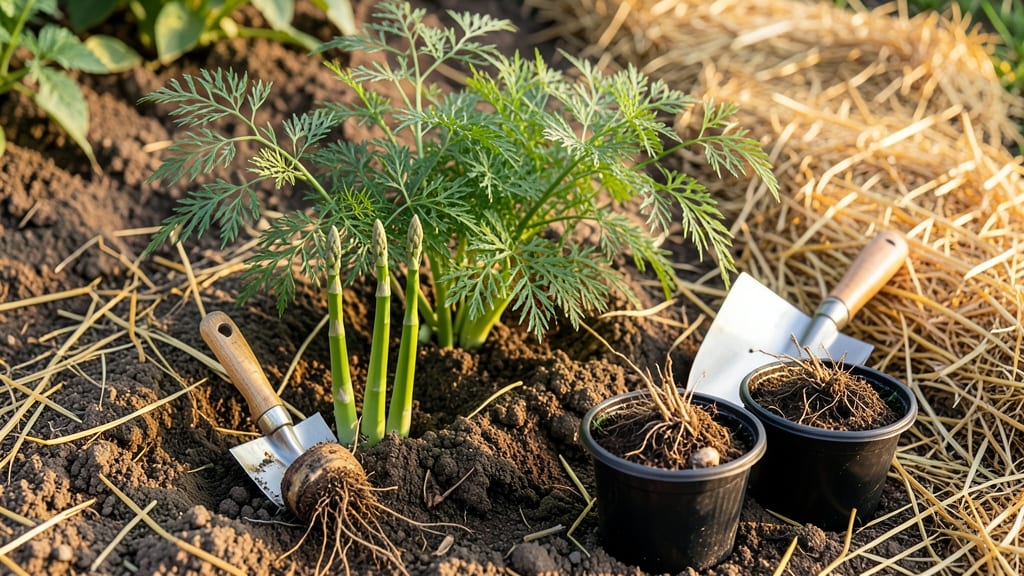
Timing your asparagus planting in North Texas isn't just about checking a calendar—it's about reading the soil's secret signals. When those temperatures hit 50°F and stay there, your crowns will finally take root after months of dormancy.
Miss this window, and you're gambling with weak plants that struggle to establish before summer's relentless heat arrives.
If you've ever watched your asparagus crowns sit idle in cold soil, wondering why they won't sprout, you're not alone. The key lies in understanding North Texas's unique USDA Zone 8a quirks—where late February brings frost risks but also the perfect soil warmth for planting.
We'll show you exactly when to dig, how to prep your soil, and which varieties will reward you with spears for years.
Most gardeners make one of two mistakes: planting too early and risking frost damage, or waiting too long and missing the ideal spring window. The solution? Learn to test soil temperature and adjust for your local microclimate—whether you're in Dallas, Lubbock, or Waco.
With the right approach, you'll be harvesting 6-8 inch spears by next spring, not waiting another year.
Ready to turn your patch into a perennial asparagus powerhouse? Let's break down the exact steps—from soil prep to variety selection—that will have your 🌱 asparagus thriving when others fail. Your future harvest starts with this one decision.
North Texas asparagus planting calendar: soil temperature rules for success
Asparagus crowns need soil temperatures above 50°F to thrive, but planting too early risks frost damage while waiting too long delays root establishment.
In North Texas (USDA Zones 7b-9a), this means timing your planting between late February and early March—just after the last average frost date of February 15.
Microclimates vary across North Texas: Dallas warms faster than Lubbock, so adjust your schedule accordingly. For example, Lubbock’s cooler nights may require waiting until early March to ensure consistent soil warmth.
Use a soil thermometer to confirm readiness—plant when temperatures stay above 50°F for 5+ days. This simple tool prevents guesswork and ensures your asparagus crowns establish strong roots before summer heat arrives.
🌱
| Region | Last Frost Date | Ideal Planting Window | Soil Temp Check |
|---|---|---|---|
| Dallas | Feb 15 | Late Feb - Early Mar | 50°F+ for 5 days |
| Lubbock | Feb 20 | Early Mar | 50°F+ for 7 days |
| Waco | Feb 18 | Late Feb - Early Mar | 50°F+ for 6 days |
If you miss the spring window, fall planting is possible in North Texas but risky due to early frost. Plant 6-8 weeks before your first frost (typically October 15-November 1) and use row covers to protect young crowns.
For container growing, start asparagus in pots 4-6 weeks before your last frost to give roots time to establish. Use 5-gallon containers with drainage holes and plant crowns 2 inches deep in well-draining potting mix.
After planting, mulch heavily with 2-3 inches of straw or wood chips to retain soil warmth and moisture. This mimics North Texas’ natural heat retention and reduces watering needs during the critical first growing season.
💧
Remember: Year 1 and 2 are all about root growth—no harvest! Focus on soil health and watering consistency to set up a decades-long harvest starting in Year 3.
How to prepare North Texas soil for asparagus: pH, amendments, and drainage secrets
North Texas soil can be heavy clay or sandy loam, both of which need amendments to grow asparagus successfully. The key is creating well-draining, fertile soil with a pH between 6.5 and 7.5.
Test your soil first using a home pH test kit—most garden centers sell them for under $10.
If your soil is too acidic (below 6.5), mix in 1-2 pounds of lime per 100 square feet and work it into the top 12 inches of soil 2-3 months before planting. For alkaline soil (above 7.5), add elemental sulfur or peat moss to lower the pH gradually.
🌱
Too much lime or sulfur can shock your soil. Test pH again 2 months after amending and adjust as needed. Asparagus roots are sensitive to sudden pH shifts, which can stunt growth.
Asparagus thrives in loose, well-aerated soil. If your North Texas garden has compacted clay, dig a 12-inch-deep trench for each row and mix in 3-4 inches of compost or aged manure. For sandy soil, add organic matter like leaf mold to improve moisture retention.
Drainage is critical—waterlogged soil causes root rot. If your yard has poor drainage, consider raised beds. Fill them with a mix of topsoil, compost, and perlite (50% topsoil, 30% compost, 20% perlite) to create an ideal growing medium.
Raised beds also warm up faster in spring, giving your asparagus a head start.
Before planting, remove all weeds and grass from the area. Asparagus has shallow roots and competes poorly with weeds. Lay down cardboard or black plastic 4-6 weeks before planting to smother weeds naturally. This also helps warm the soil faster in North Texas’ cooler early spring.
Finally, mulch heavily after planting with 2-3 inches of straw or wood chips. This keeps soil moist, cool, and weed-free while encouraging strong root growth. In North Texas’ hot summers, mulch also prevents soil from cracking and drying out.
💧