
Plants
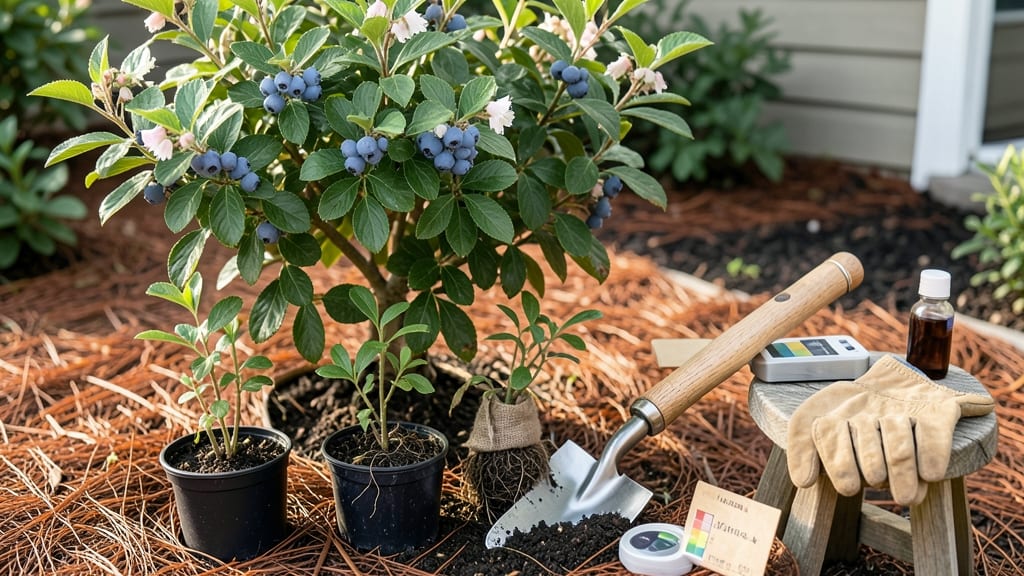
If you’ve ever planted blueberries 🫐 in New Jersey only to watch them struggle or fail to produce fruit, you’re not alone—and the culprit is likely timing.
The difference between a thriving blueberry bush and a disappointing one often comes down to planting at the right moment, when the soil is warm enough and the chill hours align perfectly with your variety’s needs.
New Jersey’s climate, with its 6a-7b hardiness zones, offers two prime windows for planting: late April through early June or October through November. But here’s the catch: not all blueberry varieties thrive on the same schedule.
Southern NJ’s milder winters demand earlier planting, while northern NJ’s colder zones benefit from fall’s cooler temperatures. Let’s break down the exact timing and variety matching for your location to ensure a reliable harvest.
You’ll also discover why soil prep and frost dates matter more than you think—and how to avoid the three biggest mistakes NJ gardeners make when planting blueberries. Whether you’re a first-timer or a seasoned grower, these insights will help you skip the guesswork and get straight to the juicy rewards.
The best part? With the right approach, your blueberry bushes could be bearing fruit by July or August, turning your backyard into a sweet, purple paradise. Ready to learn the secrets to success?
Best planting times for NJ blueberries by chill-hour requirements
New Jersey’s climate offers two prime windows for planting blueberries: late winter/early spring and fall. The key? Matching your blueberry variety to NJ’s chill-hour zones (4,000–8,000 hours). Southern NJ (e.g., Cape May) needs low-chill varieties, while northern NJ (e.g., Bergen County) thrives with high-chill types.
Planting at the wrong time risks frost damage or poor fruit set—so let’s break it down.
For spring planting, aim for late April to early June after the last frost (typically April 15). This gives roots time to establish before summer heat. Fall planting (October–November) is ideal for bare-root bushes, as cooler temps reduce transplant shock.
Southern NJ’s milder winters mean fall planting is riskier—opt for spring instead.
🌱 Chill-hour needs dictate your variety choice. Northern NJ (USDA Zone 6b) needs 8,000+ chill hours (e.g., ‘Bluecrop’), while southern NJ (Zone 7a) thrives with 4,000–6,000 hours (e.g., ‘Premier’). Planting the wrong variety = fewer berries or no fruit at all.
📅 Here’s your NJ blueberry planting timeline:
- Late April–Early June: Best for container-grown plants (less root shock).
- October–November: Best for bare-root bushes (cheaper, easier to plant).
- Avoid: Planting in summer (heat stress) or deep winter (frost risk).
| Planting Window | Best For | Chill-Hour Needs | NJ Regions | Key Tip |
|---|---|---|---|---|
| Late April–Early June | Container-grown plants | 4,000–8,000+ hours | All NJ zones | Water deeply post-planting |
| October–November | Bare-root bushes | 6,000–8,000 hours | Northern NJ (Zones 6b) | Mulch heavily for winter |
| September (early) | Southern NJ varieties | 4,000–6,000 hours | Cape May, Atlantic City | Avoid late fall—frost risk |
| December–February | Not recommended | N/A | All NJ zones | Roots freeze—wait for spring |
💡 Pro Tip: If you plant in spring, choose container-grown bushes—they establish faster than bare-root. For fall, prioritize northern NJ varieties (e.g., ‘Jersey’ or ‘Patriot’) to handle winter chill. Southern NJ gardeners? Stick to ‘Premier’ or ‘Top Hat’ (dwarf, low-chill).
🌡️ NJ’s microclimates matter: Coastal areas (like Sandy Hook) have warmer winters, so plant low-chill varieties 2–3 weeks earlier. Inland (e.g., Morristown), higher-chill bushes need the extra cold to fruit well. Check your last frost date—planting too early risks frost damage to new growth.
📌 Action Step: Before planting, test your soil pH (blueberries need 4.5–5.5). If your soil is alkaline, amend it with peat moss or sulfur 2–3 months before planting. This prep is non-negotiable—acidic soil = happy blueberries!
✅ Success Check: After planting, water deeply (1–2 gallons per plant) and mulch with pine needles (they’re acidic!). Monitor for new growth in spring—if your bushes are thriving, you’ve nailed the timing. If not, adjust next year’s schedule.
Best planting times for NJ blueberries by chill-hour requirements
New Jersey’s chill-hour zones (ranging from 4,000 to 8,000 hours) determine when you should plant blueberries for maximum success. Southern NJ (e.g., Atlantic City) typically has 5,000–6,000 chill hours, while northern NJ (e.g., Sussex County) sees 7,000–8,000 hours.
This means your planting window shifts depending on your location and the variety’s needs.
For southern NJ, aim to plant late April through early June to avoid late frosts that can damage tender new growth. Northern NJ gardeners have more flexibility, with October through November being ideal for fall planting, allowing roots to establish before winter dormancy.
Here’s the key: Spring planting (after last frost) works for both regions, but fall planting is riskier in southern NJ due to milder winters. If you choose fall, plant at least 6–8 weeks before the first frost—usually by mid-October in most of NJ.
| Region | Best Planting Window | Chill Hours | Key Consideration |
|---|---|---|---|
| Southern NJ (Zones 6b-7a) | Late April–Early June | 5,000–6,000 | Avoid late frosts; prioritize low-chill varieties. |
| Northern NJ (Zones 6a-6b) | October–November or Late April–Early June | 7,000–8,000 | Fall planting ideal; roots establish before winter. |
| Coastal NJ (Zones 7a-7b) | Late March–Early April | 4,000–5,000 | Early planting critical; use heat-tolerant varieties. |
If you’re unsure about your exact chill hours, check your county’s average using the NJ Agricultural Experiment Station’s climate data. For example, Bergen County (northern) averages 7,500 chill hours, while Cape May County (southern) sees only 5,200 hours.
Matching your variety to these numbers ensures blooming and fruiting on schedule.
Pro tip: Bare-root blueberries planted in early spring (after soil thaws) or fall (before ground freezes) establish faster than container-grown plants. For container-grown bushes, plant anytime except during winter’s freeze-thaw cycles, which can damage roots.
Timing isn’t just about the calendar—it’s about soil temperature. Wait until the ground reaches 45°F (7°C) at a depth of 4 inches to plant. Use a soil thermometer to check, especially in cooler microclimates like the Poconos or Pine Barrens.
Planting too early in cold soil can stunt root growth and delay fruiting by a full season.