
Plants
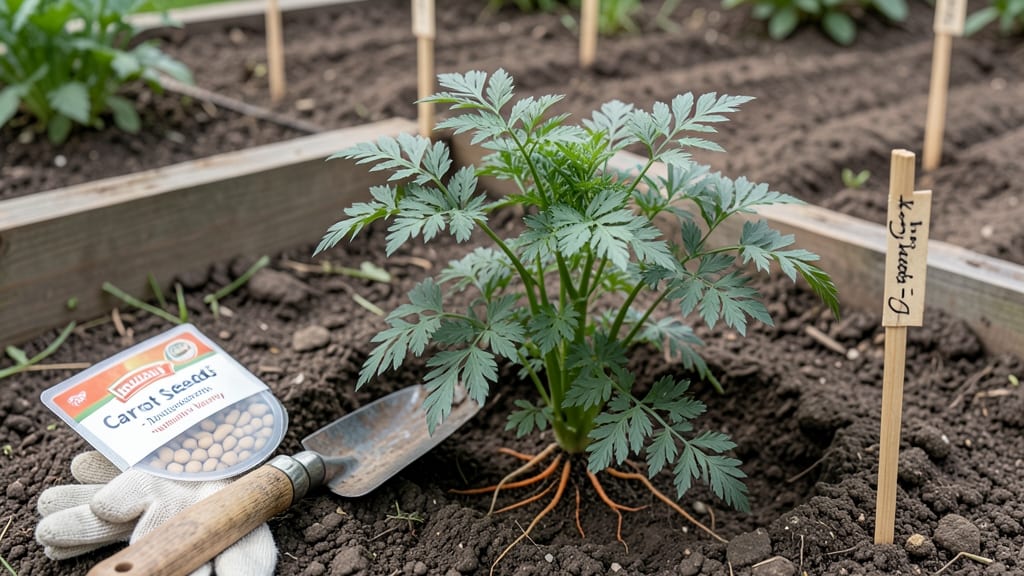
Timing your 🥕 carrot planting in Vermont isn’t just about the calendar—it’s about catching that sweet spot when soil warmth invites roots to grow instead of rot.
Skip the guesswork and you’ll end up with a bumper crop of sweet, straight carrots; miss the window, and you might as well toss those seeds into the compost pile.
Vermont’s 4b-5b climate throws curveballs with its unpredictable springs and early frosts, but the key lies in soil temperature—not just air temperature. Plant too early, and your seeds will linger in cold soil, waiting for conditions that never quite arrive.
Plant too late, and you risk bolting before you can even harvest. The difference between success and frustration often comes down to knowing when to pull the trigger.
I’ve grown carrots here for years, and let me tell you: the early spring window (March-April) and late-summer refresh (July-August) are your golden opportunities. But here’s the secret sauce—soil needs to hit 50-60°F before you even think about dropping those tiny seeds.
That’s where most gardeners go wrong, and it’s why so many end up with patchy, stunted harvests.
In this guide, I’ll walk you through the exact planting schedule tailored for Vermont’s microclimates, plus pro tips to extend your harvest season—whether you’re working with row covers, succession planting, or simply choosing the right varieties for your zone. Ready to turn your carrot dreams into reality?
Vermont carrot planting calendar: soil temperature triggers for success
Vermont’s USDA Zones 3-4 demand precision when planting carrots—timing isn’t just about months, but soil temperature. Cold soil (below 50°F) causes seeds to rot, while waiting too long risks bolting (premature flowering).
The sweet spot? 50-60°F soil, which typically arrives in late April to early May for most regions.
Northern Vermont (e.g., Burlington) often waits until mid-May due to later frost dates, while southern areas (e.g., Bennington) can start as early as early April. Use a soil thermometer—this $10 tool is your best friend for avoiding guesswork.
I’ve planted in March before, only to watch seeds turn to mush when a late frost hit.
For a continuous harvest, plan two plantings: one in early spring (under protection) and another in late summer (July-August). This strategy lets you enjoy fresh carrots from July through October, beating Vermont’s first frost (usually mid-October).
Pro Tip: Vermont’s microclimates matter. A south-facing bed warms 2-3 weeks earlier than a north-facing one. If your garden gets less than 6 hours of sun, opt for short-day varieties like ‘Paris Market’ or ‘Little Finger’—they tolerate partial shade better.
Here’s how Vermont’s planting windows break down by region and soil conditions:
| Region | USDA Zone | Soil Temp Trigger | First Planting Window | Second Planting Window | Notes |
|---|---|---|---|---|---|
| Northern VT (Burlington, St. Johnsbury) | Zone 3-4 | 50-60°F | Mid-May | July 15-August 1 | Use row covers for early starts |
| Central VT (Montpelier, Barre) | Zone 4 | 50-60°F | Early May | Late July | Soil warms faster than north |
| Southern VT (Bennington, Brattleboro) | Zone 4b-5a | 50-60°F | Early April (under cover) | June 15-July 1 | Longer growing season |
| All Regions | 3-5 | 50-60°F | Late April-May | July-August | Succession plant every 2 weeks |
If you’re new to Vermont gardening, don’t overlook seed spacing. Carrots need 1-2 inches apart in rows 12-15 inches apart to avoid crowding. I’ve seen beginners plant them too close, leading to forked or stunted roots.
Thin seedlings to 3 inches apart once they’re 2 inches tall—this gives them room to grow straight and sweet.
For container gardening, choose short varieties like ‘Baby Danvers’ or ‘Round Red’. Plant 4-5 seeds per 6-inch pot and thin to 1-2 plants. Containers warm up faster than garden beds, so you can start 2-3 weeks earlier than in-ground plantings.
Just ensure pots have drainage holes—carrots hate soggy feet!
Remember: Vermont’s unpredictable weather means flexibility. Keep a planting journal to track your soil temps and success rates. Last year, my July planting thrived because I used black plastic mulch to warm the soil faster—now it’s a must for my fall crops. 🌱
How to extend Vermont’s carrot growing season: frost-proofing and succession planting
Vermont’s short growing season means you can’t rely on a single planting to feed you all summer. The secret to a steady supply of 🥕 fresh carrots is succession planting—staggering your plantings every 2-3 weeks for a continuous harvest.
But with frost dates looming in both spring and fall, you’ll need a few extra tricks up your sleeve to protect those tender seedlings.
For spring plantings, start seeds indoors 4-6 weeks before your last frost date (mid-April for most of Vermont), then transplant seedlings into the garden once soil reaches 50°F.
In colder northern regions like USDA Zone 3, use frost cloth or mini tunnels to create a microclimate that’s 5-10°F warmer than the surrounding air.
Here’s my foolproof method for extending your harvest window: plant a second crop in late July for a fall harvest. Choose cold-hardy varieties like ‘Danvers Half Long’ or ‘Nantes’, which can tolerate light frosts. These varieties mature in 60-70 days, giving you time to harvest before winter sets in.
🌱 Step-by-Step Guide to Frost-Proofing Carrots
- Test soil temperature with a thermometer—wait until it hits 50°F before planting.
- Use straw mulch (4-6 inches thick) to insulate soil and retain warmth, especially in Zone 4 areas.
- Install row covers over seedlings if frost is forecasted within 5 days of planting.
- For late-summer plantings, choose shorter-day varieties to prevent bolting from long daylight hours.
- Harvest carrots before hard frosts (28°F) by pulling them gently and storing in the fridge.
Don’t make the mistake of planting too late in the season—aim to have carrots harvested 4-6 weeks before your first frost (mid-October).
If you’re in southern Vermont (Zone 4b), you might squeeze in a third planting in early August, but northern growers should stick to two plantings for reliability.
Pro tip: Interplant carrots with radishes—radishes mature in just 30 days, giving you an early harvest while carrots establish. Once radishes are pulled, you’ll have space to thin your carrots without disturbing their roots. This dual-purpose trick maximizes your garden’s productivity and minimizes wasted space.
Remember, carrots thrive in consistent moisture—so water deeply after planting and keep soil evenly moist. A drip irrigation system works wonders for maintaining even moisture without disturbing seedlings. With these techniques, you’ll enjoy homegrown carrots from late June through October, no matter where in Vermont you garden.