
Trees
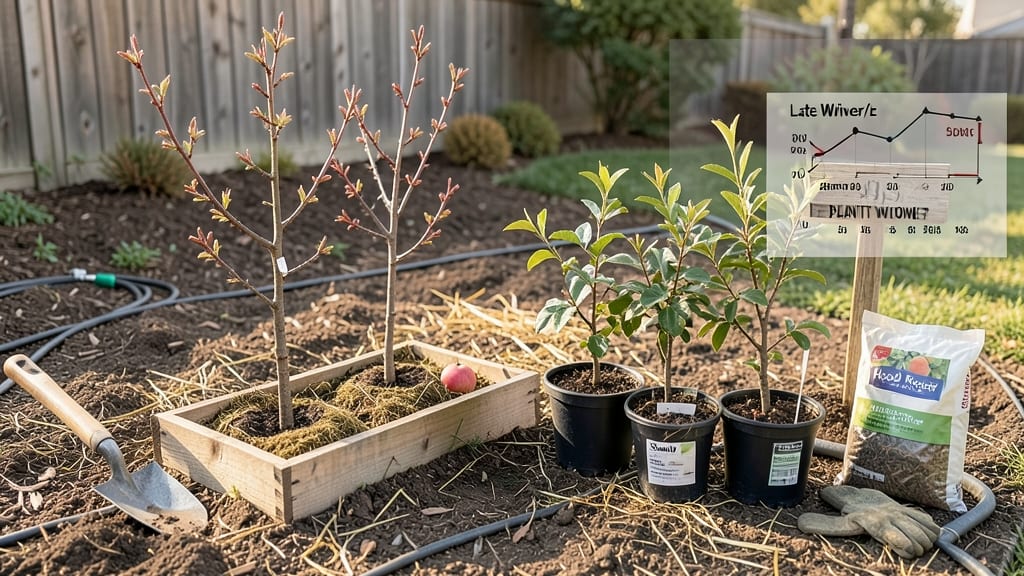
Timing your fruit tree planting in Colorado isn’t just about grabbing a shovel—it’s about matching varieties to chill hours, elevation, and frost dates. Get it wrong, and your 🍎 orchard could freeze before fruiting, leaving you with a sad (and expensive) lesson.
Most Colorado gardeners in zones 5-8 know spring and fall are the prime windows, but the real secret lies in understanding your specific microclimate.
Whether you’re in Denver’s urban heat pockets or the Western Slope’s cooler valleys, planting too early risks frost heave, while waiting too long can stunt root growth.
In this guide, I’ll break down the exact months to plant based on your fruit tree’s chill needs—from high-chill apples to low-chill figs—plus soil prep tips to ensure your trees thrive in Colorado’s alkaline dirt. No more guesswork, just a foolproof plan for a bountiful harvest.
Ready to turn your backyard into an orchard? Let’s dig into the perfect planting schedule tailored to your Colorado zone, so you can enjoy homegrown fruit for years to come.
Best planting months for Colorado fruit trees by chill-hour requirements
Colorado’s diverse elevations and chill-hour variations mean timing matters more than you might think. High-altitude areas like Denver (5,280 ft) need 500+ chill hours for apples, while Western Slope (6,000+ ft) can handle 300–400 hours for peaches. Planting outside these windows risks frost damage or poor fruit set.
Spring planting (March–April) gives young trees time to establish roots before summer heat, while fall planting (September–October) allows roots to grow in cool soil before dormancy. Both work—just adjust based on your microclimate and tree type.
Here’s how to match planting windows to chill-hour needs and elevation zones:
| Chill-Hour Category | Best Planting Window | Elevation Range | Example Varieties | Key Consideration |
|---|---|---|---|---|
| High-Chill (500+ hrs) | Early spring (March 1–April 15) | 5,000–8,000 ft (Front Range) | Honeycrisp apples, Lapins cherries | Wait for soil thaw (test with finger) |
| Moderate-Chill (300–500 hrs) | Spring (April 1–May 15) or fall (Sept 1–Oct 15) | 4,000–6,000 ft (Plains/Western Slope) | Elberta peaches, Santa Rosa plums | Fall planting needs 6–8 weeks before frost |
| Low-Chill (200–300 hrs) | Late spring (May 1–June 1) or early fall (Aug 15–Sept 15) | 6,500–8,500 ft (Mountain valleys) | Figs, pomegranates, 'Bonanza' apricots | Avoid late frosts in spring |
For Denver metro (USDA Zone 5b–6a), aim for March 15–April 15 in spring or September 1–October 15 in fall. In Colorado Springs (Zone 6a–7a), extend fall planting to October 30 to avoid early frosts. Always check your last frost date—local CoCoRaHS stations are your best resource.
Soil temperature matters just as much as air temperature. Use a soil thermometer—roots won’t grow well in soil below 45°F (7°C). In high-altitude areas, wait until soil warms to 50°F (10°C) for spring planting to prevent root rot.
Pro tip: Bare-root trees planted in fall establish deeper roots before spring growth, while container-grown trees can handle late spring planting. Just keep them well-watered for the first 30 days after transplanting.
If you’re in Zone 7 (Western Slope), don’t rush—low-chill varieties like figs or pomegranates can handle May planting, but protect them from late spring frosts with frost cloth.
Remember: Dwarf varieties (like Columnar apples) adapt faster to planting timing than standard-size trees. Their smaller root systems recover quicker, making them ideal for urban gardens with tight schedules.
Finally, mulch heavily (4–6 inches of straw or wood chips) after planting to retain moisture and regulate soil temperature. This is especially critical in dry Colorado summers.
Best planting months for Colorado fruit trees by chill-hour requirements
Colorado’s chill-hour requirements dictate your planting window—high-chill varieties like apples and cherries need 500+ hours below 45°F, while low-chill peaches and plums thrive with 200–400 hours. Planting outside these ranges risks poor fruit set or winter dieback.
For spring planting (best for most Colorado zones), aim for 2–4 weeks after your last frost date. In Denver (Zone 5–6), this is typically mid-April, while Grand Junction (Zone 7) can start as early as late March.
Fall planting (6–8 weeks before first frost) works too—just avoid late fall to prevent root stress.
Elevation matters: Trees at 5,000–7,000 ft (e.g., Colorado Springs) need 100–200 extra chill hours compared to plains regions (e.g., Pueblo). Always check your microclimate—urban areas like Aurora may have 10°F warmer nights than rural zones.
| Variety | Chill Hours | Best Planting Window | Elevation Notes |
|---|---|---|---|
| Apples (e.g., Honeycrisp) | 500–800 | Spring: April 1–15 | Fall: Sept 1–15 | Thrive below 6,500 ft; avoid high-altitude zones. |
| Cherries (e.g., Lapins) | 600–900 | Spring: April 15–May 1 | Fall: Aug 15–Sept 1 | Need cool nights; best in mountain valleys. |
| Peaches (e.g., Elberta) | 300–400 | Spring: March 15–April 1 | Fall: Sept 15–Oct 1 | Tolerate plains heat; avoid frost pockets. |
| Figs (e.g., Chicago Hardy) | 100–200 | Spring: April 15–May 15 | Fall: Sept 1–15 | Low-chill; plant in sheltered microclimates. |
Soil prep is just as critical as timing. Colorado’s alkaline soils (pH 7.5–8.5) stunt root growth—amend with peat moss or sulfur to lower pH to 6.0–6.5 before planting. For containers, use a well-draining mix with 50% compost to mimic ideal conditions.
Pro tip: Mulch heavily (3–4 inches of straw) to retain moisture and regulate soil temps. In dry years, drip irrigation is a game-changer—keep soil consistently moist but never soggy for the first 2 years after planting.
Remember: Bare-root trees (cheaper and hardier) must be planted immediately after arrival—soak roots in water for 1–2 hours before digging. Container-grown trees are more flexible but cost more. Either way, prune dead branches and stake young trees to prevent wind damage in Colorado’s unpredictable spring storms.