
How To
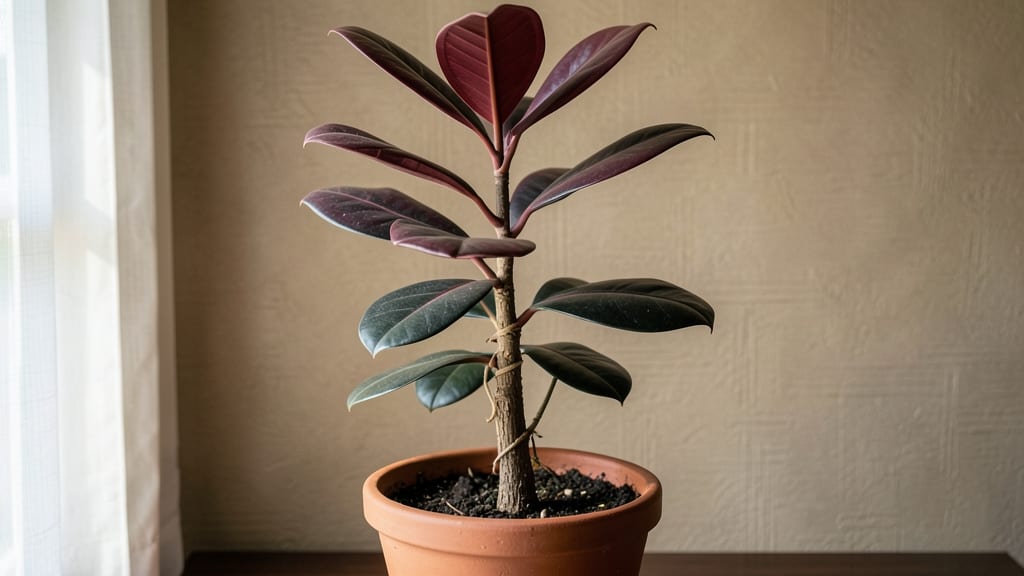
Ever wondered how tall a rubber plant can grow and whether yours will stretch toward the ceiling like a jungle vine or stay a manageable desk buddy? The answer isn’t just luck—it’s all about the variety you’ve got and how you’re caring for it.
Some rubber plants can tower over you, reaching heights of 10 feet or more, while others stay compact at just a few feet tall. If you’re curious about what to expect from your specific plant, you’re in the right place.
I’ll break down the growth habits of different varieties and share the secrets to controlling its height—whether you want a statement piece or a small-scale green friend.
Light, pruning, and even your watering routine play bigger roles than you might think. Too much shade? Your plant will stretch like it’s reaching for the sun. Skip the pruning?
Watch it grow leggy and unruly. Let’s cut through the guesswork so you can give your rubber plant the perfect conditions to thrive—exactly how you want it to.
Ready to learn how to shape your plant’s future? From dwarf varieties that stay under 3 feet to giants that need ceiling space, I’ll cover everything you need to know to keep your rubber plant happy—and the size you love.

Rubber plant height by variety: from dwarf to towering giants
Rubber plants (Ficus elastica) are famous for their striking foliage and dramatic growth potential, but their mature height can vary wildly depending on the variety and growing conditions. Some stay compact enough for shelves, while others become floor-filling giants in just a few years.
Understanding your plant's growth expectations helps you plan for its future size and care needs.
The average rubber plant height ranges from 3 to 10 feet, but most common varieties fall between 6 and 8 feet indoors with proper care.
Outdoor rubber plants in tropical climates can even exceed 10 feet, resembling small trees. Let’s explore how different varieties compare in height and growth habits.
| Variety | Mature Height (Indoors) | Growth Rate | Notes |
|---|---|---|---|
| Ficus elastica 'Decora' | 6–10 ft | Moderate (1–2 ft/year) | Classic dark green leaves; most common variety. |
| Ficus elastica 'Burgundy' | 5–8 ft | Slow to moderate | Deep purple-black foliage; slower growth than 'Decora'. |
| Ficus elastica 'Doescheri' | 3–6 ft | Slow (6–12 in/year) | Variegated cream/white leaves; stays bushier. |
| Ficus elastica 'Black Prince' | 4–7 ft | Moderate | Near-black leaves; compact growth habit. |
| Ficus elastica 'Robusta' | 8–12 ft | Fast (2+ ft/year) | Thick, glossy leaves; tallest indoor variety. |
If you’re wondering how tall your rubber plant will grow, consider its variety first. For example, the 'Robusta' variety can shoot up to 12 feet indoors if unchecked, while the 'Doescheri' stays under 6 feet and grows more slowly.
Even within the same variety, factors like light exposure, pot size, and pruning habits can shift height expectations by 2–3 feet in either direction.
Outdoor rubber plants in tropical climates (USDA Zones 10–12) can reach 15+ feet when grown as shrubs or small trees. In these conditions, they develop thick trunks and sprawling canopies, resembling a mini jungle.
However, most indoor rubber plants max out at 8–10 feet unless you’re intentionally cultivating a bonsai-style giant.
For compact growth, choose dwarf varieties like 'Tineke' (creamy variegation, 3–5 ft) or 'White Princess' (white-pink leaves, 4–6 ft). These stay manageable for shelves or small spaces.
If you love the look of a towering rubber plant but lack ceiling space, consider training it as a standard tree with a single trunk—this encourages upward growth while keeping the foliage dense.
Remember: Light is the #1 factor influencing height. A rubber plant in low light may grow leggy and slow (3–5 ft tall), while one in bright indirect light will reach its full potential.
Place your plant near an east or west-facing window for balanced growth, and rotate it weekly to prevent lopsided stretching.
Pro tip: If your rubber plant is growing too tall too fast, prune the top to encourage bushier growth. This doesn’t stunt its height permanently but redistributes energy to lower branches, creating a fuller, more balanced shape.
I’ve pruned my 10-foot 'Robusta' back to 6 feet twice, and it’s now a stunning centerpiece with multiple trunks!
🌿
How to control rubber plant height: pruning and growth habits explained
If you’re aiming for a compact rubber plant that fits your shelves or a tall statement plant for your living room, pruning is your secret weapon. Unlike some plants that grow wild, rubber plants respond beautifully to strategic pruning, letting you shape their height and encourage bushier growth.
The key is timing—prune at the right moment, and you’ll see fuller foliage and controlled growth within weeks.
Start by identifying the best time to prune: late spring or early summer, when your rubber plant is in its active growth phase. This is when it can bounce back fastest. Use clean, sharp pruning shears to avoid damaging the stem.
Cut just above a leaf node (the bump where leaves grow) to encourage new shoots to sprout from that spot. This simple technique turns a leggy plant into a bushy, vibrant centerpiece.
For height control, focus on the top of the plant. If your rubber plant is stretching toward the ceiling, trim the top few inches. This signals the plant to redirect its energy downward, producing new growth from lower nodes.
Repeat this process every few months to maintain your desired height. Just remember: the more you prune, the bushier your plant will become!
🌱 Pro Tip: Pruning for Bushier Growth
Want a fuller rubber plant? Cut back the top third of the stem and place the cutting in water. Within weeks, you’ll have a new plant—and your original will sprout multiple new shoots from the pruned area! This method works best in spring or summer when the plant is actively growing.
Light plays a crucial role in height control. If your rubber plant isn’t getting enough bright indirect light, it will stretch and grow leggy as it reaches for sunlight. Place it near an east or west-facing window where it can get 4-6 hours of gentle light daily.
Too much direct sun can scorch the leaves, while too little light slows growth and makes the plant weak. Balance is key!
Don’t forget about pot size—it directly impacts height. If your rubber plant is root-bound, it will grow faster (and taller) as it searches for nutrients. To slow vertical growth, repot into a container that’s only slightly larger than its root ball.
This encourages wider, bushier growth instead of rapid height increases. For dwarf varieties, use smaller pots to keep them compact.
With these techniques, you can keep your rubber plant at your ideal height—whether you love it as a small desk plant or a room-filling giant. The best part?
Pruning also gives you free plant cuttings to share with friends or propagate! Just remember: patience and consistency are your allies in shaping your rubber plant’s future.