
How To
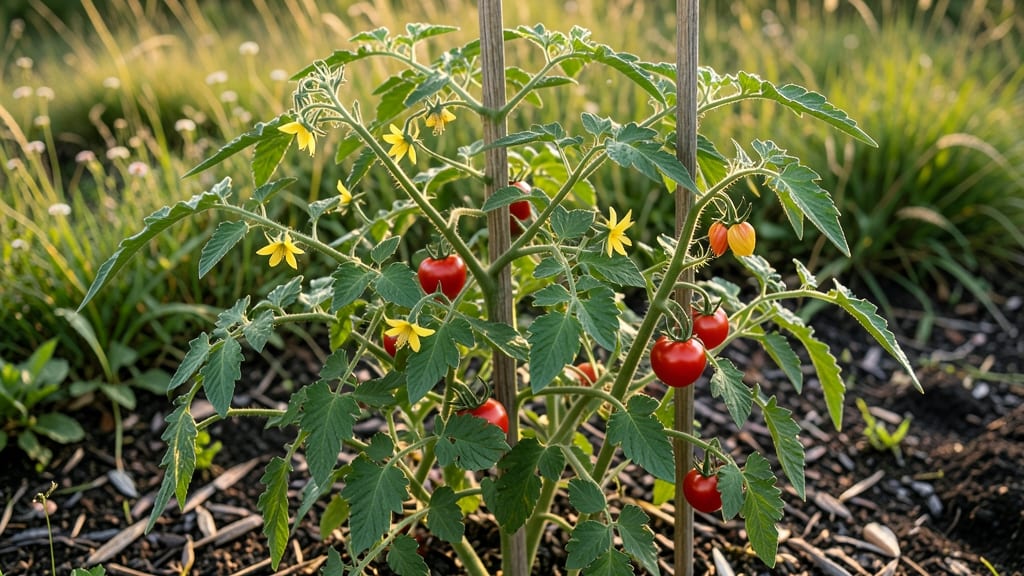
If you’ve ever wondered how tall a tomato plant will grow, the answer depends on one key factor: their variety. 🍅 Determinate tomatoes might top out at a manageable 3-5 feet, while indeterminate types can climb to 12 feet or more—and that makes all the difference in how you plan your garden layout.
Choosing the right variety isn’t just about height—it’s about yield, space, and even how much pruning you’ll need to keep things under control. Whether you’re working with compact Roma plants or sprawling Beefsteak vines, understanding these growth patterns helps you avoid overcrowding and maximize your harvest.
In this guide, I’ll break down the height ranges for common tomato types, explain how pruning and support structures affect growth, and share pro tips to keep your plants happy—no matter how tall they get. Ready to turn your garden into a tomato powerhouse?
Let’s dive into the varieties that will fit your space (and the ones that might need a trellis or two).

Tomato plant height by variety: determinate vs indeterminate growth explained
When planning your garden, knowing how tall tomato plants grow is key to choosing the right varieties for your space. The two main growth types—determinate and indeterminate—dictate everything from spacing to trellising needs.
Determinate varieties stay compact, while indeterminate types can stretch skyward, sometimes reaching heights you’d never expect in a home garden.
Determinate tomatoes, also called bush tomatoes, grow to a predictable height of 3 to 5 feet. These varieties produce fruit all at once, making them perfect for canning or sauces.
Popular examples include Roma and Celebrity, both staying within this compact range. Their growth habit is self-contained, so they rarely need staking unless heavy fruit causes them to topple.
Indeterminate tomatoes, on the other hand, are vining powerhouses that can grow 6 to 12+ feet tall if left unchecked. Varieties like Beefsteak or Sungold Cherry keep producing flowers and fruit all season long, but their vertical growth demands proper support.
Without a trellis or cage, these plants sprawl, risking disease and poor air circulation.
Here’s how these growth habits break down in real-world scenarios:
| Variety Type | Height Range | Growth Habit | Pruning Needs | Support Needed |
|---|---|---|---|---|
| Determinate | 3–5 ft | Bushy, self-supporting | Minimal (remove suckers) | Cages or stakes (optional) |
| Indeterminate | 6–12+ ft | Vining, continuous growth | Regular (suckers & leaves) | Trellis or tall stakes (essential) |
| Dwarf/Semi-Dwarf | 1–4 ft | Compact, bushy | Minimal | Small cages or pots |
If you’re growing cherry tomatoes like Sungold, expect indeterminate vines that can climb 8 to 10 feet with proper training. Meanwhile, heirloom varieties such as Brandywine often fall into the indeterminate category, requiring strong trellises to support their weight.
For container gardening, dwarf varieties like Tiny Tim (under 2 feet) are ideal, while semi-dwarf types like Patio Princess hit 3 to 4 feet—perfect for balconies.
Pruning plays a huge role in managing height. For indeterminate types, I recommend removing suckers (the small shoots between the stem and branches) to encourage stronger main stems and better airflow.
This can reduce height by 20–30% while boosting fruit quality. For determinate varieties, pruning is minimal—just enough to keep the plant from becoming top-heavy with fruit.
Support structures aren’t just for aesthetics; they’re critical for disease prevention and fruit production. A 6-foot trellis for indeterminate tomatoes can double your yield by keeping fruit off the ground.
For determinate types, 5-foot cages suffice, but adding a stake for extra support ensures no branches snap under the weight of ripe tomatoes.
Pro tip: If you’re short on vertical space, try espalier training—guiding indeterminate vines along a fence or wall in a flat plane. This keeps them manageable while maximizing your harvest in tight spaces. Just ensure you leave 12–18 inches between plants to avoid crowding, even with dwarf varieties.
🌱
How to estimate mature height before planting (and avoid crowding)
Predicting your tomato plant’s mature height before planting saves you from cramped gardens and flopping vines. Start by checking your seed packet or plant tag—most varieties label their expected height range.
For example, Roma tomatoes typically stay between 3-5 feet, while Beefsteak varieties can stretch up to 6 feet or taller. This upfront knowledge helps you plan spacing and support structures.
Next, consider your growing conditions. Plants in containers or hanging baskets often grow shorter due to root restrictions, while those in well-draining garden beds may reach their full potential.
If you’re in a hot, humid climate, indeterminate varieties might grow faster and taller than in cooler regions. Adjust your expectations accordingly to avoid overcrowding.
| Variety Type | Mature Height | Spacing Needs | Support Needed |
|---|---|---|---|
| Determinate (Bush) | 3–5 ft | 18–24 inches apart | Cages or stakes (optional) |
| Indeterminate (Vining) | 6–12+ ft | 24–36 inches apart | Trellis or tall stakes (required) |
| Dwarf Varieties | 1–3 ft | 12–18 inches apart | Small cages or pots |
For indeterminate varieties, plan for a trellis at least 6 feet tall—some can even reach 10–12 feet in ideal conditions. If space is limited, opt for dwarf or semi-dwarf varieties like 'Tiny Tim' or 'Patio Princess,' which max out around 2–3 feet.
These are perfect for balconies or small containers, as long as you provide sturdy support.
When planting, space your tomatoes based on their mature height. Determinate varieties need 18–24 inches between plants, while indeterminate types require 24–36 inches to prevent competition for nutrients and airflow. Overcrowding leads to disease risk and reduced yields, so always err on the side of extra space.
If you’re growing in containers, choose a pot at least 5 gallons for indeterminate varieties and 1–3 gallons for bush types. Place pots in a sunny spot and use a tomato cage or stake to guide vertical growth.
For vertical gardening, trellises or wall-mounted systems work wonders, freeing up ground space for other crops.
Finally, monitor your plants’ growth early on. If you notice vigorous vining or rapid stem elongation, it’s a sign your tomato is pushing toward its maximum height. Prune strategically to manage size—remove suckers (side shoots) and lower leaves to encourage upward growth and improve airflow.
This keeps your plants within your planned space while maximizing fruit production.