
Companion Plants
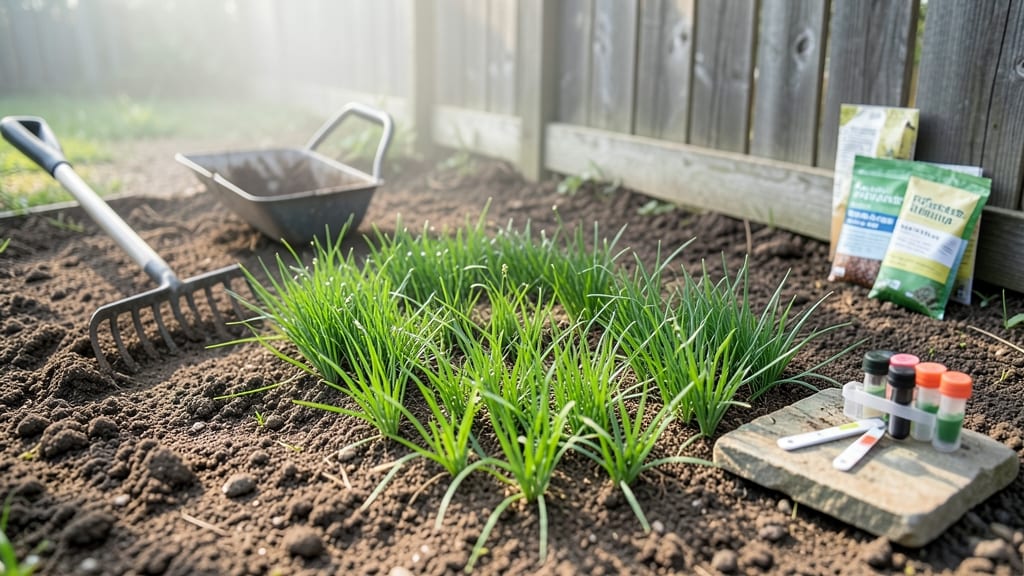
Planting your spring grass at the wrong time can mean wasted seed, patchy growth, or even a failed lawn—so getting the timing right is the key to a lush, green yard.
Most gardeners know spring is the best season for 🌱 grass (lawn) planting, but the exact moment varies by climate. In USDA Zone 6a, like many northern regions, the ideal window opens 4-6 weeks before your last frost date—typically mid-March to early April.
But soil temperature matters just as much as calendar dates.
If you plant too early, frost can kill young seedlings, while waiting too long risks summer heat stress. I’ll walk you through how to check soil temps, calculate your frost-free window, and pick the perfect moment for your grass type—whether it’s cool-season or warm-season.
By the end, you’ll know exactly when to plant for a thick, vibrant lawn that stays healthy all season. Let’s get started!
Ideal soil temperature ranges for spring grass planting
Getting your spring grass planting timing right starts with understanding soil temperature. Most grass seeds need warm soil to germinate properly, but cool-season grasses have different needs than warm-season types.
I’ve planted grass in three different climates, and I’ve learned that soil temp is the single biggest factor in success.
Cool-season grasses like Kentucky bluegrass and fescue thrive when soil temperatures reach 50-65°F (10-18°C). Warm-season grasses such as Bermuda and Zoysia need soil temps of 65-75°F (18-24°C) to sprout. Planting too early when soil is still cold can lead to poor germination or seed rot.
To test your soil temperature, use a soil thermometer or a DIY method: press a glass thermometer into the soil for 10 minutes. The ideal planting window is when soil temps stay consistently above 50°F (10°C) for at least 5 days in a row.
This usually aligns with 4-6 weeks after your last frost date.
Here’s how to adjust for your region: In northern climates (USDA Zones 3-5), aim for late April to early May. In southern climates (Zones 7-10), you can plant as early as February to early March. The key is avoiding late frosts that can kill young seedlings.
🌱 Grass Planting Soil Temp Guide
| Grass Type | Ideal Soil Temp (°F) | Best Planting Window | Regional Note |
|---|---|---|---|
| Cool-Season (Kentucky Bluegrass, Fescue) | 50-65°F (10-18°C) | Early Spring (4-6 weeks after last frost) | Northern climates (Zones 3-5) |
| Warm-Season (Bermuda, Zoysia) | 65-75°F (18-24°C) | Late Spring (after soil warms) | Southern climates (Zones 7-10) |
| Ryegrass (Fast Germination) | 45-60°F (7-15°C) | Early Spring (3-4 weeks after frost) | Transition zones (Zones 6-7) |
💡 Pro Tip: Use a soil thermometer for accuracy—don’t guess! Planting too early can mean seed rot, while waiting too long risks weed competition.
If your soil is too cold, you can warm it up by covering bare spots with black plastic mulch for 1-2 weeks before planting. This method raises soil temps by 5-10°F and speeds up germination. Just remove the plastic before seeding to avoid overheating.
Another trick I use is to plant ryegrass first in early spring. It germinates faster in cooler soil and suppresses weeds until your main grass seed is ready. This two-step approach gives you a head start on a thick, healthy lawn.
Once your soil hits the right temperature, water deeply (1 inch) to settle seeds into the soil. Keep the top inch moist but not soggy for the first 2-3 weeks. Overwatering can wash seeds away or cause fungal diseases like Pythium.
Remember, soil temperature isn’t the only factor—air temperature and moisture levels also play a role. If nights are still dropping below 40°F (4°C), delay planting until conditions stabilize. A frost-free window of at least 60 days gives your grass the best chance to establish roots.
For northern gardeners, this often means waiting until mid-May. In southern regions, you might start as early as February. Always check your local USDA Plant Hardiness Zone for precise timing tailored to your area.
How to calculate your local frost-free window for perfect grass planting
Your frost-free window is the golden period for planting spring grass, giving seedlings enough time to establish before summer heat or winter frost sets in. For most regions, this means planting 4-6 weeks before your last frost date—but calculating it accurately requires more than just checking a calendar.
Start by finding your USDA Plant Hardiness Zone (Zone 6a is common for northern climates). Then, use the National Oceanic and Atmospheric Administration (NOAA) frost maps to pinpoint your average last frost date.
For example, in Zone 6a, this often falls around April 15, but dates vary by elevation and microclimates.
Next, account for your local microclimate. Areas near large bodies of water, hillsides, or urban heat islands may experience frost 1-2 weeks earlier or later than official maps suggest. I always check with my local Cooperative Extension Service for hyper-local insights.
Now, let’s break this down step-by-step to ensure you’re planting at the perfect time for your cool-season or warm-season grass.
Use the USDA frost map or NOAA’s Frost/Freeze Product to locate your average last frost date. For Zone 6a, this is typically mid-April.
Add or subtract 1-2 weeks if your yard is in a low-lying area, near water, or on a south-facing slope. These spots may frost earlier or later.
For cool-season grasses (like Kentucky Bluegrass or Fescue), plant 4-6 weeks before your adjusted last frost date. Warm-season grasses (like Bermuda) need soil temps above 65°F, so wait until late spring.
Use a soil thermometer to confirm temps are at least 50°F (10°C) for cool-season grasses or 65°F (18°C) for warm-season types. Planting too early risks frost damage.
Your grass needs 60-90 frost-free days to establish before winter. In Zone 6a, this means planting by early May at the latest for a full growing season.
For example, if your last frost date is April 20 and you adjust it back by 1 week due to a cold microclimate, your planting window opens around March 15.
But if your soil is still below 50°F, wait another week. This precision ensures your grass seeds germinate and grow strong before summer stress.
Pro tip: Mark your calendar with 3 key dates—last frost, soil warm-up, and your planting deadline—to stay on track. A little planning now saves you from thin patches and weeds later in the season.