Companion Plants
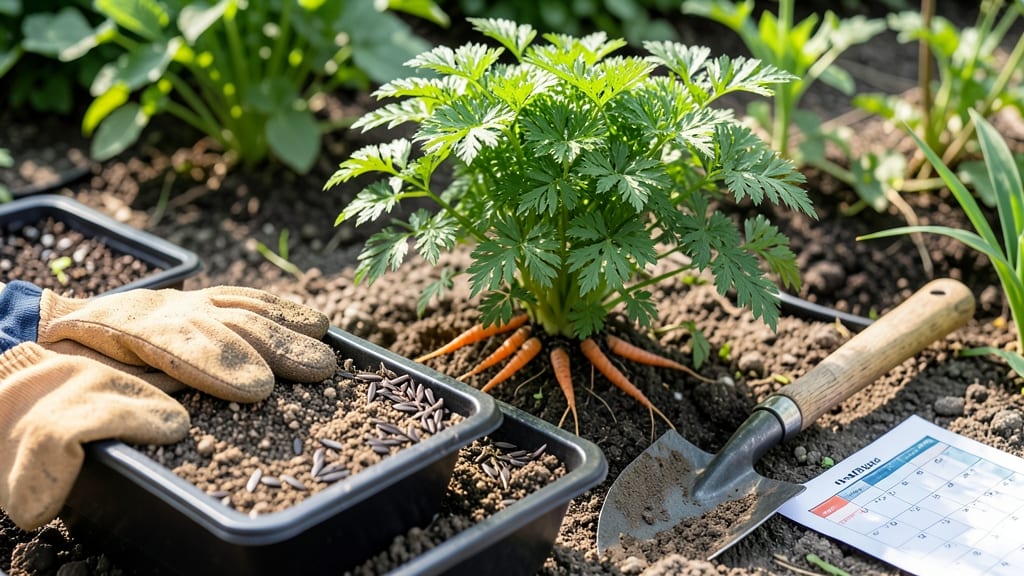
Knowing when to plant carrots in Zone 6 can mean the difference between a bountiful harvest of crisp, sweet 🥕 and a patch of bolting, bitter roots.
Too early, and frost will nip your seedlings before they sprout; too late, and your growing season might not deliver the full-sized harvest you crave.
In Zone 6, where the last frost typically lingers around mid-April, timing is everything. Planting too soon risks losing seeds to cold soil, while waiting too long cuts your harvest short before the first frost hits in mid-October.
The secret? A two-part strategy: early spring sowings for summer harvests and late summer plantings for fall roots.
I’ve grown carrots in Zone 6 for years, and the best results come from starting seeds 4-6 weeks before your last frost date—usually in late March or early April. But don’t stop there: succession planting in July gives you a second chance at harvest before winter sets in.
Ready to avoid the common mistakes and maximize your carrot yield? Let’s break down the exact planting windows, frost-free strategies, and variety picks that work best in your climate—so you can enjoy homegrown 🥕 from summer through fall.
Zone 6 carrot planting timeline: exact months and frost dates
Timing your carrot planting in Zone 6 is all about beating the last frost while avoiding summer's heat.
The average last frost date for Zone 6 falls around April 15, but this can vary by 1-2 weeks depending on whether you're in the northern or southern half of the zone.
For example, Chicago (Zone 5b-6a) might see frost until April 20, while Lexington, KY (Zone 6b) typically warms up by April 10.
Carrots thrive when soil temperatures reach 50°F (10°C)—this is your green light to start planting. Using a soil thermometer ensures you don’t plant too early. In Zone 6, this usually happens in late March to early April.
If you plant before the soil warms, seeds may rot, leaving you with empty rows instead of crisp roots.
For a continuous harvest, I recommend two planting windows: spring (March-April) and late summer (July-August). The late summer window works because carrots mature quickly—most varieties are ready in 60-80 days, giving them time to grow before the first frost (October 15) arrives.
This strategy lets you enjoy fresh carrots from summer through fall.
Here’s a quick rule of thumb: Count 100-120 frost-free days from your last frost date to determine your latest planting window. In Zone 6, this often lands in mid-July. If you’re unsure, opt for fast-maturing varieties like 'Early Nantes' or 'Paris Market' to maximize your harvest window.
| Planting Window | Soil Temp | Frost Risk | Days to Harvest |
|---|---|---|---|
| Early Spring (March 15 - April 15) | 50-60°F (10-15°C) | Moderate (use row covers) | 60-80 days |
| Late Summer (July 15 - August 15) | 60-70°F (15-21°C) | Low (first frost Oct 15) | 50-70 days |
| Fall (August 1 - September 1) | 55-65°F (13-18°C) | High (use cold frames) | 70-90 days |
✅ Pro Tip: Test soil temps daily with a thermometer for accuracy.
If you’re in northern Zone 6 (e.g., Minneapolis, MN), aim for April 1-15 to avoid late frosts. Southern Zone 6 gardeners (e.g., Nashville, TN) can start as early as March 15.
To extend your season, use black plastic mulch to warm the soil faster or cloches to protect seedlings from unexpected chills.
For fall planting, sow seeds by August 1 to ensure they mature before winter. Choose cold-hardy varieties like 'Danvers Half Long' or 'Chantenay', which tolerate cooler soils better than delicate heirlooms. In Zone 6, fall-planted carrots can often overwinter if mulched heavily with straw or leaves.
One common mistake is waiting until May to plant—by then, summer’s heat causes carrots to bolt (flower prematurely) or develop woody, bitter roots. Instead, prioritize early spring planting and succession sowing every 2 weeks for a steady harvest.
This method ensures you’re always harvesting fresh carrots without gaps in your garden.
Always check your local USDA Plant Hardiness Zone Map for precise frost dates, as microclimates can shift planting windows by weeks. For example, urban areas may warm up faster than rural zones due to the "heat island" effect. Adjust your timeline accordingly to avoid disappointment.
Finally, remember that carrot seeds are tiny and slow to germinate—don’t be discouraged if they take 2-3 weeks to sprout in cool soil. Thin seedlings to 2-3 inches apart once they’re 2 inches tall to prevent overcrowding, which leads to stunted, forked roots.
Patience and precision pay off with perfect harvests!
Zone 6 carrot planting timeline: exact months and frost dates
In Zone 6, your carrot planting window is short but sweet—just 165 frost-free days between the last spring frost (mid-April) and the first fall frost (mid-October).
To maximize your harvest, focus on two key planting periods: early spring for summer carrots and late summer for fall roots.
For spring plantings, start seeds indoors 4-6 weeks before your last frost (typically late March) or sow directly in the garden as soon as soil temperatures hit 50°F. In Zone 6, this usually means early April for most regions, though northern areas may wait until mid-April.
| Planting Stage | Zone 6 Timeline | Key Notes |
|---|---|---|
| Indoor Start | Late March | 4-6 weeks before last frost |
| Direct Sow Spring | Early to mid-April | Soil temp ≥50°F |
| Succession Planting | Every 2-3 weeks until June | Staggered harvests |
| Fall Planting | Late July to early August | For winter storage |
Don’t overlook fall plantings—this is your second chance for a harvest! Sow seeds in late July or early August for carrots that mature before the first frost.
These late-season carrots often develop sweeter flavors from the cooler weather and can even be stored in the ground with mulch for winter harvests.
If you’re in northern Zone 6 (like Zone 6a), aim for earlier plantings, while southern Zone 6 (like Zone 6b) can extend the season slightly later. Always check your local frost dates—they can vary by 1-2 weeks even within the same zone.
Pro tip: Use a soil thermometer to confirm soil temps are 50°F+ before planting. Cold soil delays germination, leading to thin, leggy carrots. If temps dip below 40°F, cover seeds with row fabric until conditions improve.
For continuous harvests, practice succession planting every 2-3 weeks until mid-June. This ensures you’re always pulling fresh carrots from the garden while avoiding a glut of mature roots at once.