
Plants
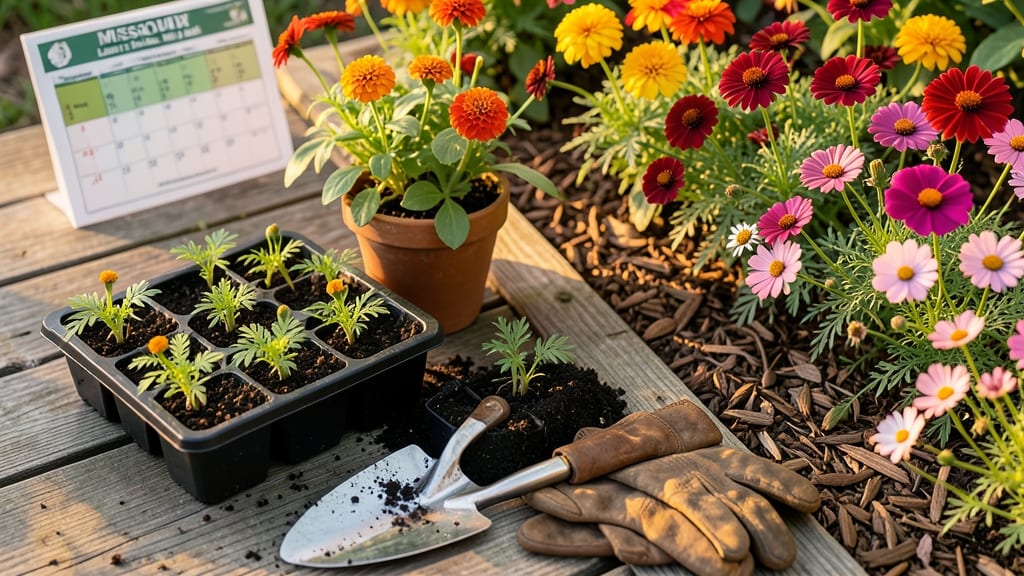
Timing your annuals planting in Missouri can mean the difference between a garden bursting with 🌸 vibrant blooms and one that struggles with frost damage. With the state's diverse microclimates—from St. Louis's urban warmth to rural areas with later frosts—getting the timing right is everything.
Most gardeners in Missouri's 5b-6b zones know the frustration of seeing delicate seedlings wiped out by a surprise late frost. But by following precise planting windows, you can avoid these heartbreaking losses and maximize your garden's potential.
In this guide, I'll break down the exact months to plant your annuals, whether you're growing heat-loving marigolds or cool-season pansies. You'll discover how to read your local frost dates, adjust for microclimates, and even extend your growing season with simple techniques.
Ready to transform your Missouri garden into a year-round showcase? Let's get started with the planting schedule that will give you zero frost risk and the most stunning annuals your neighborhood has ever seen.
Missouri planting zones & exact frost-free dates by region
Missouri spans USDA hardiness zones 5b through 7a, meaning frost dates vary dramatically between northern and southern regions. In Zone 5b (northwest Missouri), average last frost arrives around April 15, while Zone 7a (southeast Missouri) typically sees frost-free conditions by March 15.
These differences mean your St. Louis garden has a 2-week earlier planting window than Kansas City.
For precise planning, I recommend checking the Missouri Botanical Garden’s frost history data, which shows 10-year averages for your specific county. For example, Columbia’s last frost averages April 5, while Springfield’s is April 10.
Rural areas often experience earlier frosts than cities due to the urban heat island effect.
Here’s a region-by-region breakdown of critical frost dates to help you time your annual plantings perfectly:
| Region | USDA Zone | Avg Last Frost | Avg First Frost | Frost-Free Days |
|---|---|---|---|---|
| Northwest (Kansas City) | 5b | April 15 | October 20 | 188 |
| Central (Columbia) | 6a | April 5 | October 15 | 193 |
| Southeast (Poplar Bluff) | 7a | March 15 | November 5 | 205 |
| St. Louis Metro | 6b | April 1 | October 25 | 208 |
| Springfield | 6b | April 10 | October 18 | 201 |
Use these dates as your planting benchmarks. For cool-season annuals like pansies or lettuce, you can start seeds 4-6 weeks before your last frost date. Meanwhile, warm-season favorites such as marigolds or tomatoes should wait until 2 weeks after the last frost when soil temperatures exceed 60°F.
Pro tip: Monitor soil temperature with a soil thermometer—most annuals won’t thrive until the ground warms to 60°F. In Missouri’s Zone 5b, this often means waiting until mid-May for heat-loving plants like zinnias or sunflowers.
If you’re in Zone 7a, you can push your fall planting window later—some annuals like cosmos or sweet alyssum tolerate light frosts and can be sown as late as September 1 for autumn blooms. Always check your local cooperative extension service for year-specific updates.
For container gardening, you have even more flexibility. Potted annuals can be moved to protected microclimates (like near south-facing walls) to extend your growing season by 2-3 weeks in both spring and fall.
Remember: Frost dates are averages, not guarantees. Keep a frost cloth handy for late-season surprises, especially in Zone 5b where unexpected frosts can occur as late as May 10.
Best annuals to plant by month in Missouri (with heat tolerance notes)
Missouri’s spring and fall seasons offer perfect windows for planting annual flowers and vegetables, but timing varies dramatically between cool-season and warm-season varieties. In Zone 5b-6b, I’ve found that starting cool-loving plants in March-April and heat-tolerant varieties in May-June yields the longest, most vibrant blooms.
For cool-season annuals like pansies and snapdragons, I always plant 4-6 weeks before the last frost date—typically mid-March to early April.
These hardy beauties can even handle light frosts, making them ideal for Missouri’s unpredictable springs. Warm-season favorites like marigolds and zinnias, however, need to wait until after May 15 when soil temperatures consistently stay above 60°F.
🌱
Transplanting seedlings is often faster than direct sowing, but I’ve learned that direct-sown annuals like cosmos and sunflowers establish better in Missouri’s clay-heavy soils.
For vegetable annuals, I prioritize tomatoes and peppers in early May, while herbs like basil thrive when planted after Memorial Day once nighttime temperatures stay above 55°F.
Missouri’s fall planting window is just as valuable—August through early September lets you enjoy late-season blooms and harvests. Annuals like cosmos and bachelor’s buttons self-seed easily, giving you free plants next year if you leave the stems intact.
For vegetables, fast growers like radishes and lettuce do well when sown in late August for a fall harvest before frost.
Pro tip: Use row covers to extend your spring planting by 2-3 weeks if late frosts are forecasted. I’ve successfully grown cold-hardy annuals like sweet peas in Zone 6 by starting them in late February under protection.
The key is monitoring soil temperatures—most annuals need at least 50°F to germinate reliably.
Don’t forget to harden off seedlings for 7-10 days before transplanting—this toughens them up for Missouri’s windy conditions and prevents shock. With these precise planting windows, your annual garden will thrive from spring through fall, even in Missouri’s variable climate. 🌻