
Plants
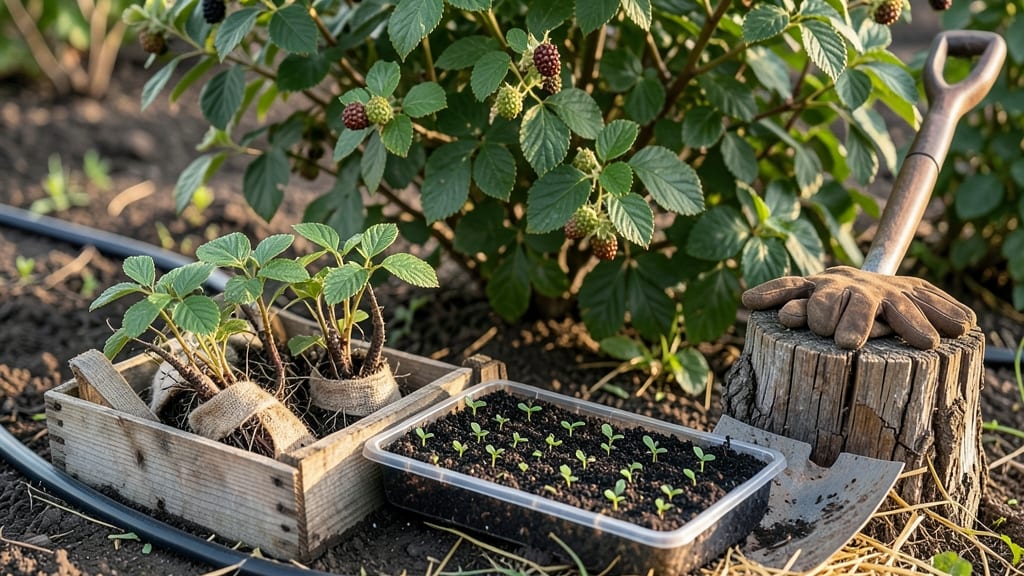
Timing your blackberry planting in Oklahoma isn’t just about the calendar—it’s about matching varieties to your region’s chill hours to guarantee a fruitful harvest. Skip this step, and you might end up with weak canes or no berries at all.
The key lies in understanding when to plant, whether you’re working with bare-root canes or potted bushes, to give your 🫐 bushes the best possible start.
Oklahoma’s USDA Zones 6a-7b create unique challenges, from early spring frosts in northern areas to warmer winters in the south. Planting too early risks frost damage, while waiting too long can stunt root growth before summer’s heat sets in.
I’ll break down the exact windows—late winter to early spring or fall—and how to prep your soil for Oklahoma’s clay-heavy conditions.
You’ll also discover why some gardeners swear by fall planting while others prefer spring, and how to tell if your chosen variety (like ‘Arapaho’ or ‘Navaho’) gets enough winter chill to thrive.
With the right timing and care, your blackberry bushes could reach 6-10 feet tall and produce berries by mid-summer.
Let’s dive into the step-by-step guide that’ll help you avoid common mistakes—like planting at the wrong time—and set your blackberries up for a bountiful harvest from June through August. Ready to get started?
Oklahoma blackberry planting zones: chill-hours breakdown by region
Oklahoma’s diverse climate zones—from the cooler Panhandle (Zone 6a) to the warmer Southeast (Zone 7b)—mean your blackberry planting window depends on where you live. Chill-hours (below 45°F) are critical: most blackberries need 500-1,000 hours to break dormancy. Northern Oklahoma (like Enid or Woodward) gets enough chill, while Southern Oklahoma (like Oklahoma City or Tulsa) may struggle with ‘Navaho’ or ‘Arapaho’ varieties without proper timing.
For Zone 6a (North), aim for fall planting (September-October) to let roots establish before winter. Zone 7b (South) gardeners should plant in late winter (February-March) to avoid summer heat stress. Microclimates matter: a hilltop in Oklahoma City may frost earlier than a valley in Tulsa.
Here’s how chill-hour needs align with Oklahoma’s regions:
| Region | USDA Zone | Avg. Chill-Hours | Best Varieties | Planting Window |
|---|---|---|---|---|
| North (Panhandle) | 6a | 900-1,200 | Arapaho, Navaho, Cheyenne | Sep-Oct (fall) or Feb-Mar (spring) |
| Central (Oklahoma City) | 6b-7a | 700-900 | Arapaho, Ouachita | Feb-Mar (spring) or Sep (early fall) |
| South (Tulsa) | 7b | 500-700 | Navaho, Prime-Ark Freedom | Feb-Mar (spring only) |
If you’re in Zone 7b, avoid ‘Cheyenne’—it needs 1,000+ chill-hours and may fail to fruit.
Instead, opt for ‘Prime-Ark Freedom’, a low-chill hybrid bred for Southern Oklahoma’s milder winters. Test your chill-hours using a chill-hour calculator (like the one from Purdue Extension) to match varieties to your location.
Timing isn’t just about frost dates—it’s about soil temperature. Blackberries need soil temps above 50°F to root properly. In Northern Oklahoma, soil warms by late March, while Southern Oklahoma may not hit this until mid-April. Use a soil thermometer to confirm readiness before planting.
Pro tip: Mulch heavily in fall-planted regions to protect roots from freeze-thaw cycles. Use straw or wood chips (not leaves, which mat down). This mimics Oklahoma’s native prairie cover and keeps roots 5-10°F warmer during winter dips.
For container growing in Oklahoma’s urban areas (like Norman or Edmondlate February to give roots time to establish before summer’s 100°F+ heat. Containers dry out 3x faster than ground soil, so use self-watering pots and drip irrigation.
Remember: Blackberries are perennial, so planting at the wrong time means 3+ years of poor yields. But get the chill-hours and soil temps right, and you’ll enjoy juicy berries for decades.
🌱
Step-by-step planting timeline: when to order bare-root vs. container plants
Choosing between bare-root canes and container-grown blackberries depends on your planting timeline and Oklahoma’s last frost dates. Bare-root plants are cheaper and widely available in late winter to early spring, but container plants give you more flexibility if you’re planting outside the ideal window.
I recommend ordering bare-root canes by February 15 for spring planting or September 1 for fall.
For spring planting, aim to get your bare-root canes in the ground by March 15—before Oklahoma’s average last frost (March 15 in most areas). If you miss this window, opt for container-grown plants, which can handle transplanting later.
Fall planting works best from September 15 to October 15, giving roots time to establish before winter.
- Feb 15: Order bare-root canes for spring planting
- Mar 15: Plant bare-root canes in well-drained soil
- Apr 1: Fertilize with 10-10-10 for new growth
- Sep 1: Order bare-root or container plants for fall
- Sep 15-Oct 15: Plant in prepared beds with mulch
- Oct 30: Apply 2-3 inches of mulch to protect roots
Before planting, amend Oklahoma’s clay-heavy soil with compost and sand to improve drainage. Dig a trench 12 inches deep and space canes 4-6 feet apart to allow for their 6-10 foot mature height.
Prune any damaged canes and soak roots in water for 2-3 hours before planting to reduce transplant shock.
After planting, water deeply every 7-10 days to encourage root growth. Avoid overhead watering to prevent fungal diseases like anthracnose, which thrives in Oklahoma’s humid summers. Mulch around the base with straw or wood chips to retain moisture and suppress weeds.
Container-grown blackberries can be planted up to 2 weeks later than bare-root plants, making them ideal if you miss the ideal window. Just ensure the container isn’t root-bound and water thoroughly before transplanting.
For both types, avoid planting when soil temps drop below 50°F, as cold stress can stunt growth.
Monitor your plants for new shoots by late spring, which signal successful establishment. If planted in fall, focus on watering and mulching to protect roots during winter. With the right timing and care, your blackberries will reward you with harvest-ready berries by June or July.