
Plants
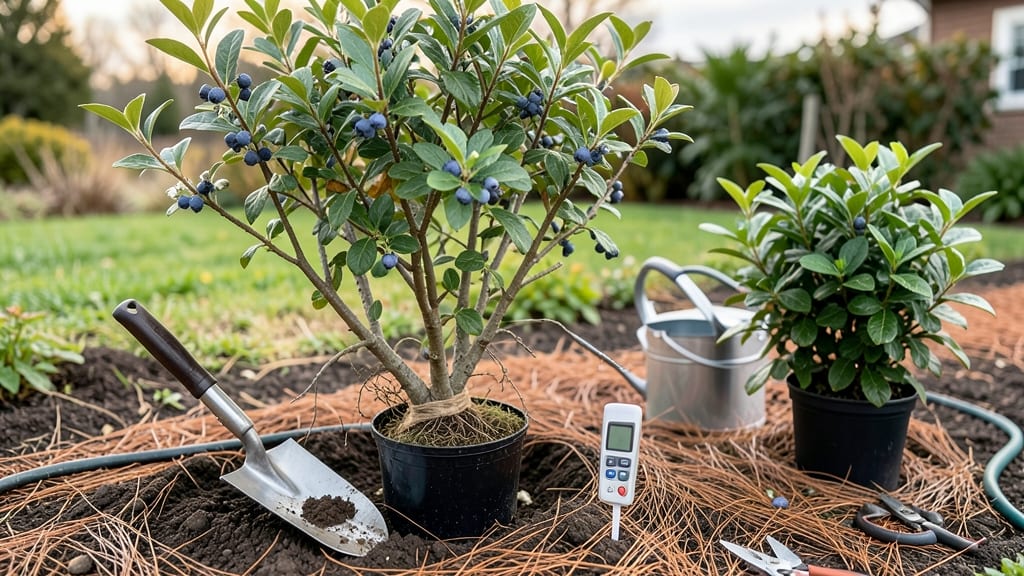
Timing your blueberry planting in Colorado can mean the difference between a thriving 🫐 bush and a sad, struggling shrub. With our state’s dramatic temperature swings and varied elevations, getting it wrong might leave your bushes vulnerable to frost or stunted growth.
I’ve seen firsthand how late winter to early spring (March–April) and early fall (September–October) are the sweet spots for planting—when soil is workable but not scorching, and roots can establish before harsh weather hits.
But Colorado’s USDA zones 5-7 (like Denver’s 5b-6a or Colorado Springs’ 5b) add another layer of complexity.
In this guide, I’ll break down the exact windows for your region, whether you’re planting bare-root shrubs or container-grown blueberries. You’ll learn how to match varieties to your microclimate, prep soil for acidic-loving bushes, and avoid the 5 biggest mistakes that kill Colorado blueberry dreams.
Ready to turn your backyard into a blueberry goldmine? Let’s get those bushes in the ground at the perfect moment—so you can enjoy sweet, plump berries by next summer.
Colorado’s chill-hour zones: matching blueberry varieties to planting timing
Colorado’s diverse climate—from the Front Range’s 500–700 chill hours to the mountain regions’ 900+ chill hours—means not all blueberry varieties thrive equally. Northern Highbush types (like 'Bluecrop') need 600–900 chill hours, while Southern Highbush (e.g., 'Top Hat') tolerate 300–500 chill hours. Rabbiteye varieties (like 'Tifblue') struggle in Colorado’s climate unless planted in microclimates with extended cold snaps.
Your planting window hinges on chill-hour requirements and last frost dates.
In Denver (Zone 5b–6a), aim for late March–early April for spring planting or September–October for fall. High-altitude areas like Aspen (Zone 4–5) should delay until May or early June to avoid late spring frosts that can kill young shoots.
Soil pH is non-negotiable—blueberries demand acidic soil (pH 4.5–5.5). Test your soil 6–8 weeks before planting and amend with peat moss or sulfur if needed. Container gardening is a great workaround for alkaline Colorado soils, letting you control pH with acid-loving mixes.
Colorado’s unpredictable weather complicates timing. A false spring (warm spells in winter) can trick plants into blooming too early, only to be fried by late frosts. Hardiness zones are a starting point, but microclimates (e.g., urban heat islands in Denver vs. cooler mountain valleys) demand local adjustments.
For bare-root plants, plant in late winter/early spring while dormant. Container-grown bushes can go in early fall (September–October) to establish roots before winter. Root growth slows below 40°F, so avoid planting when soil temps drop.
Here’s how chill hours dictate your choices:
| Chill-Hour Zone | Best Varieties | Spring Planting Window | Fall Planting Window | Key Consideration |
|---|---|---|---|---|
| 500–700 (Denver, Colorado Springs) | Bluecrop, Jersey, Legacy | Late March–Early April | September–October | Watch for late frosts |
| 700–900 (Fort Collins, Boulder) | Duke, Patriot, Elliott | Early April–Mid-May | Late September | Soil stays cold longer |
| 900+ (Aspen, Steamboat) | Jersey, Bluegold (dwarf) | Mid-May–June | Not recommended | Short growing season |
| 300–500 (Low desert, Pueblo) | Top Hat, Sunshine Blue | Early March | October–November | Heat-tolerant but needs irrigation |
If you’re in Zone 5 or colder, prioritize Northern Highbush varieties like 'Bluecrop' or 'Duke'. They handle extended cold snaps and late frosts better than Southern types. Dwarf varieties (e.g., 'Top Hat') are ideal for containers or small spaces and mature faster.
For high-altitude gardens, extend your season by planting blueberries near a south-facing wall to capture extra sunlight. Mulch heavily with pine needles or straw to insulate roots from freeze-thaw cycles. In arid Front Range areas, drip irrigation is a must—blueberries wilt quickly in dry soil.
Pro tip: Acclimate container-grown plants for 1–2 weeks before transplanting in fall. Harden them off by gradually reducing water and exposing to outdoor temps. This reduces transplant shock in Colorado’s temperature swings.
🌱
Step-by-step planting schedule for Colorado’s mountain vs. Front Range climates
Colorado’s Front Range (Denver, Boulder) and mountain regions (Aspen, Steamboat Springs) have wildly different frost dates and soil conditions, so your planting schedule must adapt. In lower elevations, aim for late March to early April for bare-root plants or September to early October for container-grown bushes.
Meanwhile, high-altitude areas (above 7,000 ft) should wait until mid-April to May to avoid late frosts.
I’ve planted blueberries in both zones and learned that soil temperature is the real game-changer. Use a soil thermometer—roots need soil at 45°F+ to thrive. In Denver’s 5b-6a zone, this usually aligns with mid-April, while Steamboat’s 4a-5a zone may require waiting until late May.
🌱 Visual Guide: Here’s your tailored planting timeline for Colorado’s two climates, including soil prep and frost protection tips.
Test pH (aim for 4.5-5.5), amend with peat moss or sulfur, and till to 12" deep
Plant bare-root bushes when soil is workable; mulch heavily to retain moisture
Wait for last frost date (avg. May 15); use frost cloth if nights dip below 28°F
Best for container-grown plants; roots establish before winter dormancy
Water deeply 2x/week for first month; apply 3" mulch to conserve moisture
Pro tip: If you’re in Zone 5a or colder (like Grand Junction), opt for Northern Highbush varieties like ‘Bluecrop’ or ‘Jersey,’ which handle 500+ chill hours. For warmer Front Range areas (Zones 6a-7a), ‘Duke’ or ‘Premier’ thrive with 300-500 chill hours.
After planting, monitor for late spring frosts—even in May! Use row covers if temps drop below 28°F, especially for young bushes still establishing roots. I’ve lost count of how many times I’ve rushed to cover my blueberries after a 50°F night—don’t make my mistake!
💧 Watering hack: In Colorado’s dry climate, drip irrigation is your best friend. Set it to deliver 1-2 gallons per plant twice weekly, and always water in the morning to prevent fungal issues. Your bushes will thank you with bigger berries next summer.