
Plants
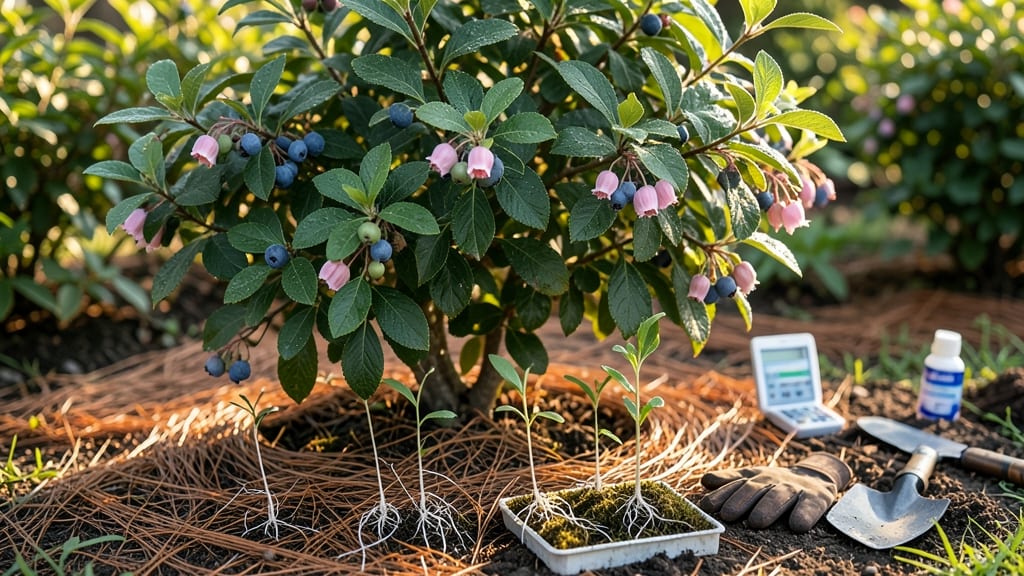
If you're dreaming of a backyard bursting with juicy 🫐 blueberries but live in Mississippi's warm climate, timing your planting could make or break your harvest.
The right window isn't just about months—it's about matching your blueberry variety to the state's unique chill-hour zones, where 8a-9a means Southern Highbush types thrive while others struggle.
Most gardeners assume spring is the only option, but Mississippi's mild winters actually give you two prime chances to plant: late winter or early spring.
I'll show you why February-March beats fall for most varieties here, and how to prep your soil to avoid the #1 mistake that kills blueberry bushes in the South.
You'll discover how to pick the perfect spot—whether in-ground or containers—while dodging Mississippi's tricky frost dates. With the right variety and timing, you could be harvesting sweet berries by May or June, turning your yard into a blueberry paradise.
Let's dive into the exact steps that'll have your blueberries growing strong, no matter where you are in the state. Your first harvest could be closer than you think!
Mississippi’s chill-hour Zones: how to choose the right blueberry variety
Mississippi’s USDA Zones 7-9 create unique challenges for blueberry growers, but the solution lies in understanding chill-hour requirements. These hours—when temperatures stay between 32°F and 45°F—are critical for blueberries to produce fruit. In Mississippi, chill hours range from 400 to 1,000+ hours, depending on your location.
Northern Mississippi (Zones 7b-8a) typically gets 500-800 chill hours, while southern areas (Zones 8b-9a) often see 300-500 hours. This means choosing the wrong variety can leave you with bushes that bloom but don’t fruit or struggle to survive the heat.
Here’s how to match your blueberry variety to Mississippi’s chill zones for peak performance:
| Variety | Chill Hours Needed | Best for Mississippi Zones | Planting Window | Notes |
|---|---|---|---|---|
| Southern Highbush | 300-500 hrs | Zones 8b-9a (South MS) | Feb-Mar or Sep-Oct | Dwarf varieties like 'Peach Sorbet'; heat-tolerant |
| Rabbiteye | 500-800 hrs | Zones 7b-8a (North MS) | Feb-Mar (best) | Large berries; needs well-drained soil |
| Half-High | 400-600 hrs | Zones 7a-8b (All MS) | Sep-Oct (fall) or Feb | Mid-height; 'Tifblue' is a top pick |
For Northern Mississippi (e.g., Tupelo, Oxford), Rabbiteye varieties like 'Climax' or 'Powderblue' thrive with their higher chill-hour needs. In Southern Mississippi (e.g., Gulf Coast, Jackson), Southern Highbush types such as 'Emerald' or 'Jewel' are your best bet—they fruit reliably with fewer chill hours.
If you’re unsure about your chill hours, check your local Cooperative Extension Service or use a chill-hour calculator with your area’s weather data. For example, Hattiesburg (Zone 8a) averages around 600 chill hours, making it ideal for Half-High varieties.
Pro tip: Container growing gives you flexibility to move bushes to cooler microclimates during winter if needed. Just ensure your pots have drainage holes and use acidic potting mix (pH 4.5-5.5).
Once you’ve picked the right variety, the next step is timing your planting. Fall (September-October) or early spring (February-March) are your two best windows, but each has trade-offs we’ll explore next.
🌱
Best planting months in Mississippi: fall vs. early spring breakdown
Mississippi’s climate offers two prime windows for planting blueberries: late fall and early spring. Each has distinct advantages depending on your location within the state—whether you're in the cooler north near USDA Zone 8a or the warmer south in Zone 9a.
Let’s break down the pros and cons of each to help you decide what works best for your garden.
For northern Mississippi, September through October is ideal for fall planting. The soil remains warm enough to encourage root growth before winter dormancy sets in. In contrast, southern Mississippi’s milder winters make February through March the safer bet—avoiding late frosts that can damage young plants.
Timing matters because blueberries are sensitive to cold snaps during their first growing season.
Here’s a quick comparison to help you choose: Fall planting gives roots a head start in warm soil, while spring planting avoids winter stress but requires careful frost monitoring. Both methods work, but your local microclimate will dictate which is best for you.
Fall Planting (September-October)
- Establishes roots in warm soil before winter
- Reduces transplant shock in cooler months
- Ideal for Northern MS (Zone 8a)
- Risk of late frost damage in Southern MS (Zone 9a)
- Requires winter mulching for protection
- Limited time to prep soil before frost
Spring Planting (February-March)
- Avoids winter stress entirely
- Better for Southern MS (Zone 9a)
- More time for soil preparation
- Slower root establishment in early spring
- Risk of late frost if planted too early
- Requires consistent watering during dry spells
Regardless of when you plant, soil preparation is non-negotiable. Mississippi’s native soil is often alkaline, but blueberries demand acidic soil (pH 4.5-5.5). Amend your soil with peat moss or sulfur at least 4-6 weeks before planting.
For container growers, use a pre-mixed acidic potting mix to avoid these issues entirely.
After planting, mulch heavily with pine straw or wood chips to retain moisture and regulate soil temperature. This is especially critical in Mississippi’s heat, where soil can dry out quickly. Water deeply 2-3 times per week during the first growing season, ensuring the root zone stays moist but not waterlogged.
Pro tip: If you’re in a transitional zone (like central Mississippi), plant in early March to balance frost risk and root establishment. Monitor your local frost-free date—aim to plant at least 2 weeks before the average last frost in your area.
With the right timing and care, your blueberry bushes will reward you with bountiful harvests for years to come. 🫐