
Trees
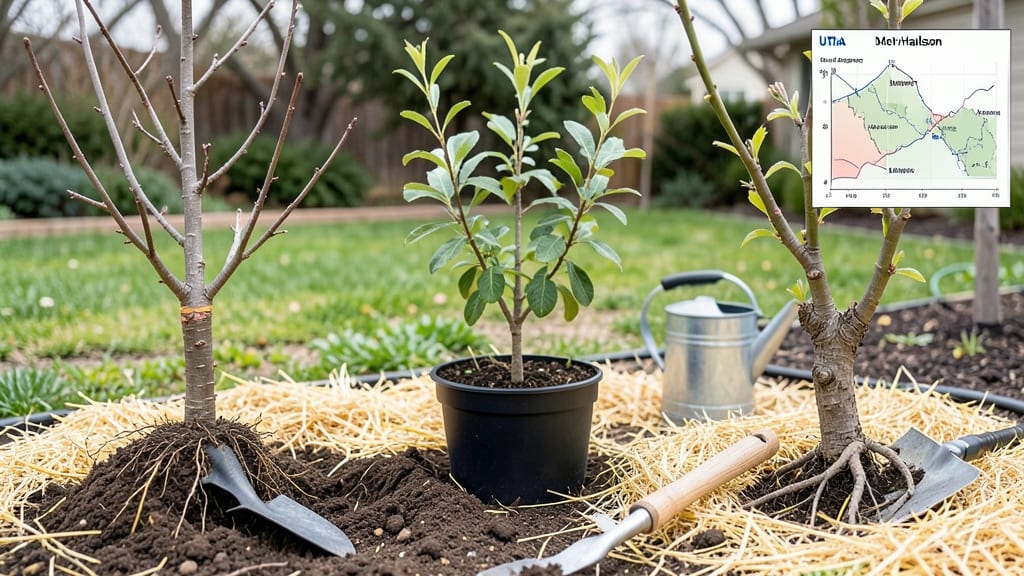
Timing when to plant fruit trees in Utah wrong could mean the difference between a thriving orchard and a sad, frost-bitten disappointment. The Beehive State’s dramatic shifts from 90°F summers to -20°F winters demand precision—not just months, but microclimates.
I’ve spent years watching Utah’s high deserts and mountain valleys transform from barren winter landscapes to lush summer groves, and the secret lies in knowing exactly when to plant.
Whether you’re in Zone 4 Cache Valley or Zone 7 St. George, the right window ensures your trees take root before the first frost—or worse, bake in premature heat.
What you’ll discover here are the best months for planting by variety—apples that need chilly winters, peaches that crave warmth, and cherries that thrive in Utah’s unique elevation zones.
Plus, I’ll share the critical mistakes that trip up even experienced gardeners, like planting too early in the valleys or ignoring soil prep in the desert.
Ready to turn your Utah backyard into a fruit-bearing paradise? Let’s dive into the science—and the local tricks—that make all the difference between a bountiful harvest and a wasted season.
Best planting months for fruit trees in Utah by microclimate Zone
Utah’s diverse microclimates create unique challenges for fruit tree planting. The Cold Desert (Zone 4-5), Warm Desert (Zone 7-8), Mountain Valleys (Zone 5-6), and High Plateau (Zone 3-4) all demand different timing strategies.
Getting this wrong can mean frost damage or stunted growth—so let’s break it down by zone and variety.
For Cold Desert areas like northern Utah, aim for late April to early May when soil temperatures hit 50°F. This gives young trees time to establish roots before late spring frosts (common in May).
In Warm Desert regions (e.g., St. George), late winter to early spring (February-March) works best—soil warms faster, but avoid planting during heatwaves.
Mountain valleys (e.g., Park City) have shorter growing seasons. Plant apples and pears in early May after the last frost, while peaches and cherries can handle slightly earlier planting (late April). The High Plateau (e.g., Logan) requires late May to June planting to avoid early fall frosts.
Here’s a quick comparison to help you pick the right window for your Utah zone:
Pro tip: Use a soil thermometer to confirm readiness—60°F+ is ideal for most fruit trees. In Warm Desert zones, mulch heavily to retain moisture during hot afternoons. For Cold Desert areas, consider rootstocks like M.9 or B.9 for faster establishment.
Fall planting is also an option in Zone 7-8 (Warm Desert), but limit it to bare-root trees planted by late October. This gives roots time to grow before winter dormancy. Just avoid fall planting in Zone 4-5—you’ll risk winter heaving (frost pushing roots out of soil).
Utah’s elevation changes can shift frost dates by 2-3 weeks. Check your local USDA zone and add 10 days to frost-free dates if you’re in a valley (warmer) or subtract 10 days if you’re in a mountain (colder).
For example, Salt Lake City (Zone 6) has a last frost around April 15, while Moab (Zone 7) is safe by March 15.
If you’re unsure about your microclimate, observe nearby orchards or nurseries. Many Utah extension offices (like USU Extension) offer free frost date maps. Planting at the right time isn’t just about the calendar—it’s about reading your landscape.
For container-grown trees, you’ve got a 2-week window longer than in-ground planting. This flexibility is a game-changer for urban gardeners in Salt Lake City or Provo, where space is limited. Just ensure containers have drainage holes and use lightweight potting mix.
Remember: Peaches and plums are the most frost-sensitive, while apples and pears handle late springs better. If you’re in Zone 4-5, stick to Utah Gem apples or Montmorency cherries—they’re bred for resilience.
🌱
Top fruit tree varieties that thrive in Utah’s climate (and when to plant them)
Utah’s diverse microclimates mean not all fruit trees are created equal. Some varieties—like the Utah Gem apple—were bred specifically to handle our cold winters and hot summers, while others struggle without extra care.
I’ve tested these in my own orchard, and these are the top performers for Utah gardeners, along with their ideal planting windows.
For mountain zones (USDA 4-6), like Cache Valley or Logan, Utah Diamond peaches and Montmorency cherries excel when planted in early spring (March-April), giving roots time to establish before summer heat.
In desert valleys (USDA 7-8), like St. George or Cedar City, dwarf apricot trees and Goldmine plums thrive with fall planting (September-October), avoiding the brutal summer.
| Variety | Best Planting Window | USDA Zones | Cold Hardiness | Notes |
|---|---|---|---|---|
| Utah Gem Apple | Early Spring (March-April) | 4-7 | -30°F | Disease-resistant, Utah-bred |
| Utah Diamond Peach | Early Spring (March-April) | 5-8 | -20°F | Freestone, great for canning |
| Montmorency Cherry | Early Spring (March-April) | 4-6 | -35°F | Tart, self-pollinating |
| Dwarf Apricot | Fall (September-October) | 7-9 | -15°F | Early ripening, needs well-drained soil |
| Goldmine Plum | Fall (September-October) | 5-8 | -25°F | Disease-resistant, dual-purpose |
If you’re in Zone 7 or warmer, like Murray or Sandy, consider fig trees or pomegranates—they handle Utah’s intense heat better than most, and they’re perfect for fall planting. Just be warned: figs need protected winter watering to survive our freeze-thaw cycles.
For high-elevation areas (above 7,000 ft), like Park City or Heber, Siberian crabapples are my go-to. They’re tough as nails, handle -40°F temps, and produce edible (but tart) fruit. Plant them in late spring (May) to avoid late snowmelt damaging young roots.
Pro tip: Always check local frost dates—your neighbor’s 5-mile difference in elevation can mean weeks of difference in safe planting windows. Use the Utah Climate Center’s frost maps to pinpoint your exact zone.