Plants
If you're dreaming of harvesting bold, aromatic ginger in Zone 9, timing is your secret weapon—plant too early, and you risk bolting; too late, and your rhizomes may rot before they mature.
The perfect window for ginger planting in Zone 9 is late winter to early spring, when soil temperatures are just right for root establishment.
Why does this matter? Unlike cooler climates, Zone 9’s warm weather means ginger won’t tolerate cold snaps, and summer heat can stress young plants.
By planting in February or March, you give your ginger rhizomes the ideal conditions to thrive without rushing into bolting or succumbing to fungal issues common in humid Zone 9 summers.
I’ll walk you through the exact steps to prepare your rhizomes, choose the right soil, and avoid common mistakes that sabotage harvests. Whether you’re a coastal gardener or inland, these tips will help you grow ginger that’s plump, flavorful, and ready to harvest by fall.
Ready to transform your garden into a ginger powerhouse? Let’s dive into the game-changing techniques that will make your harvest the envy of every Zone 9 gardener.
Best months to plant ginger in Zone 9 for maximum yield
Zone 9’s warm climate means ginger thrives year-round—but timing still matters. The ideal planting window is late winter to early spring (February–March), when soil temperatures hover between 60–70°F. This gives rhizomes time to establish roots before summer’s intense heat.
Coastal areas can plant slightly earlier (January–February) due to milder microclimates, while inland regions should wait until March to avoid bolting.
Fall planting (September–October) is also possible in Zone 9, but harvest timing shifts. Rhizomes planted in fall mature slower and may not reach full size before winter dormancy.
If you choose this route, opt for smaller rhizomes that can establish quickly. Avoid planting after June, as the heat accelerates growth and reduces rhizome quality.
Ginger bolts (sends up flower stalks) when stressed by heat or drought. In Zone 9, bolting is more likely if planted too early (December–January) or too late (May–June).
The sweet spot is March–April, when daytime temps are 75–85°F and humidity remains moderate. Use shade cloth if planting in peak summer to prevent premature bolting.
Soil temperature is your best indicator. Use a soil thermometer to confirm temps are above 60°F before planting. In Zone 9, this typically aligns with late February to early March.
If your soil is cooler (e.g., in shaded or elevated areas), delay planting until mid-March to ensure proper root development.
| Planting Window | Soil Temp (°F) | Zone 9 Microclimate | Risk Level |
|---|---|---|---|
| Late Winter (Feb) | 55–65°F | Coastal: Safe Inland: Delay |
Moderate (bolting risk) |
| Early Spring (Mar–Apr) | 60–70°F | All regions | Low (ideal) |
| Fall (Sep–Oct) | 65–75°F | Coastal: Best Inland: Limited |
High (slow growth) |
| Summer (May–Jun) | Above 75°F | Avoid | Critical (bolting/rot) |
Inland Zone 9 areas (e.g., Phoenix, Las Vegas) experience hotter, drier conditions and should prioritize shade and irrigation. Coastal regions (e.g., San Diego, Santa Barbara) benefit from milder temps and higher humidity, making them ideal for earlier planting.
Test your soil’s drainage before planting—ginger rots in waterlogged soil, a common issue in humid coastal gardens.
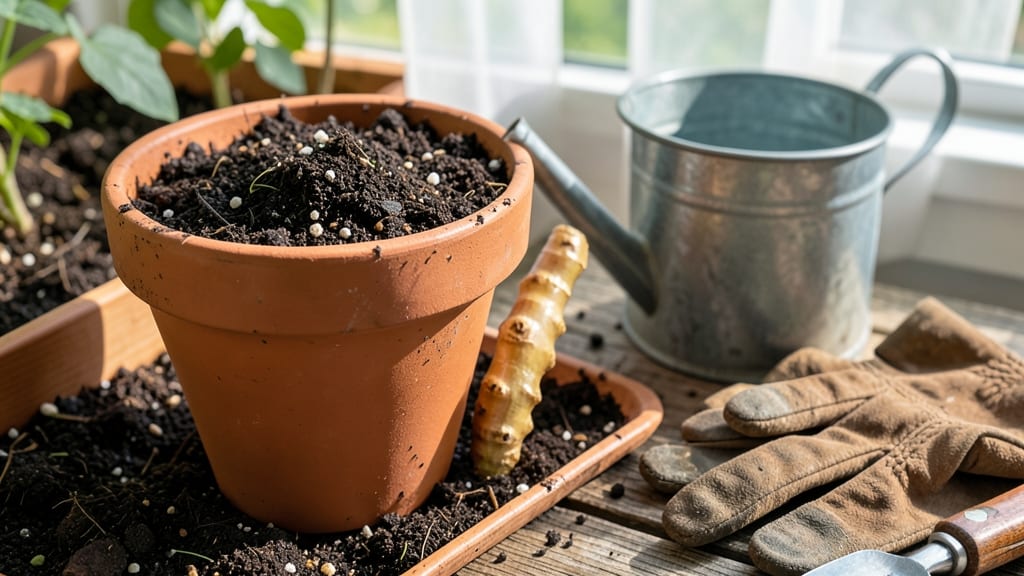
For container growing in Zone 9, plant in March–April to avoid overheating. Use 5-gallon pots with well-draining mix (50% potting soil, 30% compost, 20% perlite). Move pots to partial shade during 11 AM–3 PM to prevent rhizome stress.
Containers dry out faster in Zone 9’s heat, so water every 5–7 days.
Harvest timing varies by planting month. Spring-planted ginger (March–April) is ready by October–December, while fall-planted rhizomes (September–October) mature by next spring. Look for yellowing leaves and plump rhizomes as signs of readiness.
In Zone 9, harvest before first frost—though frost is rare, sudden temperature drops can stunt rhizome growth.
Pro tip: Mark your calendar for March 15–April 15 as the sweet spot for Zone 9 planting. This window balances soil warmth, rainfall, and humidity to maximize yields. Pair planting with a mulch layer (straw or wood chips) to retain moisture and regulate soil temps.
If you miss the spring window, don’t despair—ginger is perennial in Zone 9. Rhizomes left in the ground can re-sprout annually, though yields may decrease over time.
For year-round harvests, plant two batches: one in March and another in September, rotating locations to prevent soil depletion.
Best months to plant ginger in Zone 9 for maximum yield
Zone 9’s warm climate means ginger thrives year-round, but timing still matters to avoid bolting (flowering prematurely) or rhizome rot. The ideal planting window is late winter to early spring, when soil temperatures hover between 60-75°F—perfect for root establishment without heat stress.
For coastal Zone 9 (e.g., Southern California), plant February to March to escape summer’s intense humidity. Inland areas (e.g., Arizona) can extend planting to April, but avoid May’s scorching heat, which stresses young rhizomes.
Fall planting is risky in Zone 9—ginger needs 8-10 months to mature, and late autumn rains can rot rhizomes before harvest. If you must plant in fall, choose September only in high-desert microclimates with excellent drainage.
🌱 Zone 9 Ginger Planting Timeline
| Season | Best Months | Soil Temp (°F) | Key Action |
|---|---|---|---|
| Spring | February–April | 60–75°F | Plant rhizomes 2" deep in enriched soil |
| Summer | May–August | 75–90°F | Mulch heavily; water deeply 2x/week |
| Fall | September (high-desert only) | 65–70°F | Use raised beds for drainage |
⚠️ Pro Tip: Test soil moisture weekly—Zone 9’s humidity accelerates rot if soil stays soggy.
Microclimates play a huge role in Zone 9. Coastal areas (e.g., San Diego) benefit from ocean breezes that lower afternoon heat, while inland valleys (e.g., Phoenix) need shade cloth to protect ginger from 100°F+ temperatures.
Even a 10-foot difference in elevation can shift your ideal planting window by 2-3 weeks.
Watch for soil temperature cues: Use a soil thermometer to confirm 60°F+ before planting. Cold snaps below 55°F stunt growth, so avoid planting after March 15th in most of Zone 9. For container growing, extend your window by 2 weeks—pots warm faster in spring.
Harvest timing aligns with planting: Spring-planted ginger matures by October-December, while fall-planted (if attempted) harvests in late spring. Look for yellowing leaves and plump rhizomes—these signal readiness. Skip the harvest if rhizomes feel shriveled or soft, as they’ve likely rotted.