
Plants
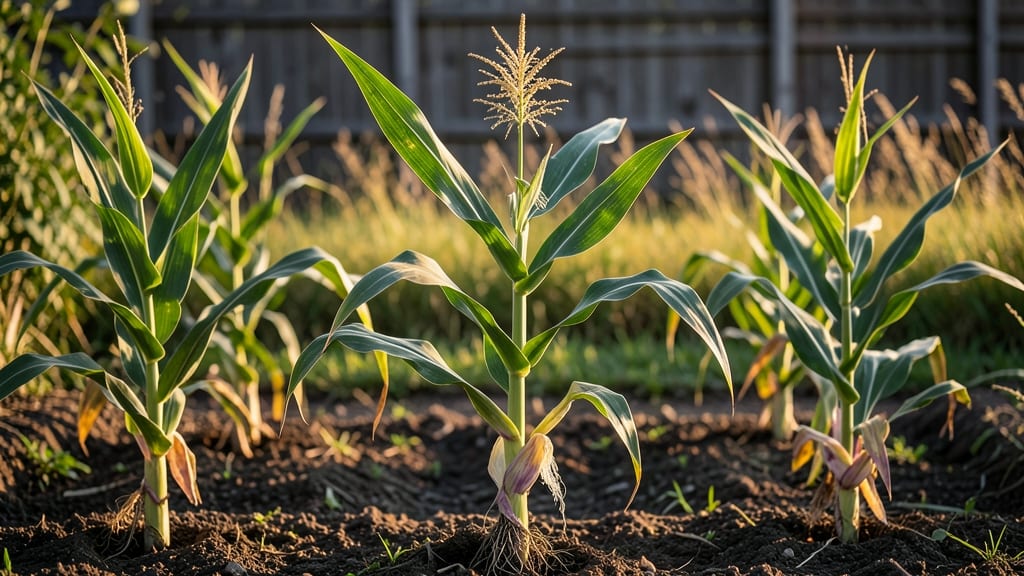
If you’ve ever planted corn and watched it grow this tall overnight, you’re not alone—this summer staple can reach heights that surprise even seasoned gardeners.
The answer to "how tall does a corn plant grow" depends entirely on the variety, with some dwarf types barely clearing your waist while others tower over your fence like 10-foot skyscrapers.
For most gardeners in Zone 6a, sweet corn varieties like the classic 'Golden Bantam' stay between 3-5 feet, making them perfect for small spaces or containers.
But if you’re growing heirloom types such as 'Mammoth Melting,' expect stalks stretching toward the sky—sometimes 12 feet or more when given ideal conditions.
Sunlight, soil quality, and spacing play a huge role in how tall your corn grows. Too little nitrogen? Your plants might stay short and scraggly. Too much water? You could end up with weak stalks that flop over like overgrown weeds.
The key is balance—6+ hours of sun, rich soil, and proper spacing to give your corn the room it needs to reach its full potential.
Whether you’re dreaming of a backyard corn maze or just want a few ears for summer meals, understanding these height ranges helps you plan your garden layout and care routine.
Let’s break down exactly what to expect from your corn plants this season—and how to encourage (or control) their growth for the best harvest possible.

Corn plant height by variety: from dwarf to giant stalks
Corn plants don’t grow uniformly—their height can vary from 3 feet to over 12 feet, depending on the variety you choose. If you’re working with limited space, dwarf varieties like Golden Bantam (3-5 ft) are perfect for containers or small gardens.
These compact stalks produce sweet, flavorful ears without dominating your yard.
On the opposite end, field corn varieties like Mammoth Melting can reach 10-12 feet, making them ideal for large farms or homesteads where space isn’t a concern. Even ornamental corn, like Glass Gem, can grow 6-8 feet tall while adding vibrant color to your garden.
The height of your corn plants directly impacts yield, pollination, and harvest ease. Taller varieties often produce more ears but require stronger stalks and proper spacing to avoid lodging (falling over). Shorter varieties, while easier to manage, may yield fewer ears per plant.
Here’s how different corn types stack up in height—and why it matters for your garden:
| Variety Type | Height Range | Best For | Notes |
|---|---|---|---|
| Dwarf Sweet Corn | 3–5 ft | Containers, small gardens | Early harvest, less space needed |
| Semi-Dwarf Sweet Corn | 5–7 ft | Backyard gardens, urban plots | Balanced height for easy harvest |
| Standard Sweet Corn | 6–10 ft | Large gardens, homesteads | Higher yield, needs staking |
| Field Corn | 8–12 ft | Farms, livestock feed | Tallest variety, requires wide spacing |
| Ornamental Corn | 4–8 ft | Landscaping, decorative use | Colorful kernels, not edible |
When selecting corn varieties, consider your garden layout and goals. For example, Golden Bantam is a favorite among beginners because its 5-foot height makes it easy to harvest without bending over. Meanwhile, Country Gentleman (7-9 ft) is a crowd-pleaser for its sweetness and manageable size.
If you’re growing corn for pollination, taller varieties can create a "wind tunnel" effect, helping pollen travel between plants. However, if your garden is windy, shorter stalks may lodge less easily. Always check the spacing recommendations for each variety—taller corn needs 36 inches between rows to avoid shading.
Pro tip: Mix dwarf and standard varieties in your garden to extend your harvest season. Dwarf corn matures faster, while taller varieties may take 10-15 extra days to reach peak sweetness. This staggered approach ensures you enjoy fresh ears for weeks!
🌽
Factors that determine corn plant height: soil, sun, and care
Corn plants don’t grow to their full potential by chance—their height is heavily influenced by soil quality, sunlight exposure, and your care routine. I’ve learned that even the same variety can vary by 3-4 feet depending on these factors.
For example, a Mammoth Melting corn might only reach 8 feet in poor soil but tower to 12 feet with ideal conditions. Let’s break down what truly makes the difference.
First, nitrogen-rich soil fuels rapid stem growth, but too much can lead to weak stalks that lodge (fall over). I’ve seen corn plants grow 2 feet taller in amended soil compared to unfertilized beds. However, phosphorus and potassium are equally critical—they support root development and ear formation.
A simple soil test before planting can reveal deficiencies and help you adjust with compost or balanced fertilizer like 10-10-10 NPK.
Sunlight is non-negotiable: corn needs 6-8 hours of direct sun daily to reach its mature height. In my garden, plants in partial shade (like near a fence) grew 1-2 feet shorter than those in full sun.
If you’re growing corn in containers or small spaces, prioritize the sunniest spot—even a south-facing window won’t cut it for tall varieties like Country Gentleman.
Watering habits also play a surprising role. Corn is thirsty during pollination (when tassels emerge), and drought stress can stunt growth by up to 30%. I water deeply every 2-3 days in summer, aiming for 1-2 inches per week.
Morning watering is key—it reduces fungal risks and ensures roots absorb moisture efficiently.
Too much nitrogen (especially from synthetic fertilizers) can cause excessive leafy growth at the expense of stalk strength. I once saw corn plants grow 4 feet taller but snap under their own weight. Always follow package instructions and side-dress with compost instead of overdoing it.
Spacing matters too—corn plants need room to photosynthesize efficiently. Crowding them too closely (less than 12 inches apart) can reduce height by 1-1.5 feet per plant.
In my raised beds, I space dwarf varieties like Golden Bantam at 8 inches apart but give standard types 36 inches between rows to prevent competition.
Finally, temperature and wind can’t be ignored. Corn thrives in warm soil (60°F+) and struggles in cool springs. I’ve noticed stunted growth when nights dip below 50°F. Wind also weakens stalks—using stakes or trellises for tall varieties can add 1-2 feet of stability and height by reducing lodging.