Companion Plants
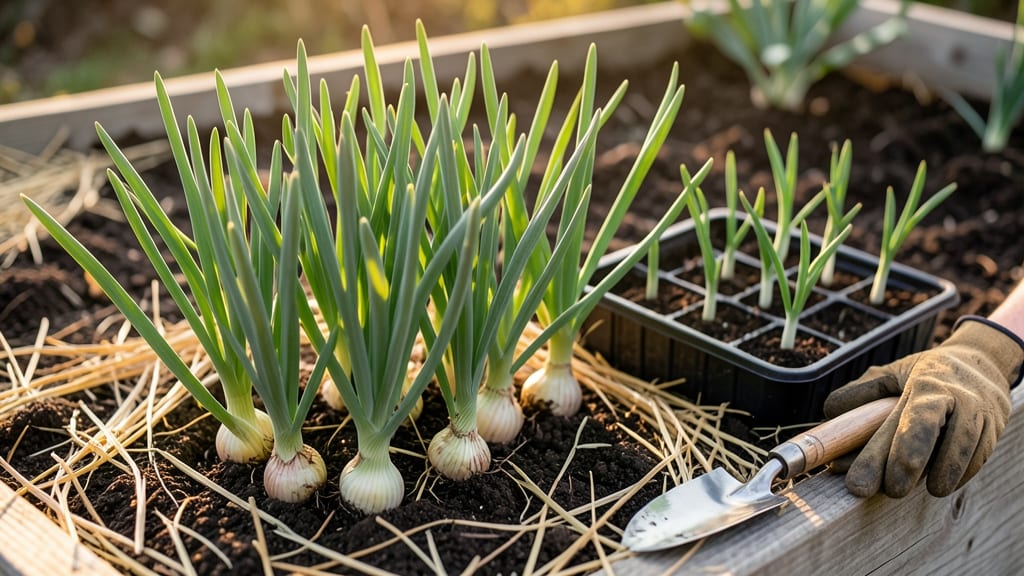
If you've ever planted onions in Zone 6 only to watch them bolt or struggle before producing a decent bulb, you're not alone. The key to growing strong, flavorful 🧅 onions lies in knowing the exact weeks to plant them before your last frost—something many gardeners overlook.
Timing isn't just about avoiding frost; it's about giving your onions enough time to establish roots and develop bulbs before summer heat sets in.
In Zone 6, where the last frost typically arrives around April 15, you have two main windows to plant onions: early spring or late summer. But here's the catch—spring planting requires precision, as onions need 4-6 weeks of cool soil to get started.
Miss this window, and you might end up with bitter, small bulbs or no harvest at all. I'll show you how to calculate the perfect planting dates for your specific sub-zone, whether you're in 6a or further south.
Whether you're starting seeds indoors or sowing sets directly in the garden, understanding your local frost dates and soil temperatures is the game-changer for a successful onion harvest.
We'll break down the exact weeks to plant for both spring and fall crops, plus how to adjust for urban gardens, raised beds, or heavy clay soils that can delay planting. No more guesswork—just data-driven timing for onions that thrive.
Ready to grow onions that store well and pack big flavor? Let's dive into the most important details you need to know before you grab your seeds or sets. From soil prep to succession planting, I've got the step-by-step guide to ensure your Zone 6 onions grow strong and bountiful.
Zone 6 onion planting timeline: exact weeks before last frost
Timing your onion planting in Zone 6 is all about avoiding late frosts while giving bulbs enough time to mature.
The last average frost date in most of Zone 6 falls around April 15, but your exact window depends on whether you're growing short-day, intermediate-day, or long-day varieties. Plant too early, and you risk bolting (flowering prematurely); too late, and your harvest suffers.
For spring planting, aim to have onions established 4-6 weeks before the last frost. This means setting out onion sets or transplanting seedlings in late March to early April. If starting from seed, begin indoors 8-10 weeks before transplanting—typically in February—to ensure they’re ready by early spring.
Zone 6 gardeners can also try a fall planting for overwintering onions. Plant shallots or hardneck onions in late August to early September, allowing them to develop roots before winter. These varieties handle cold better and often produce sweeter bulbs in spring.
Soil temperature plays a critical role: onions prefer 45-65°F soil. In Zone 6, soil usually reaches this range by mid-March, making it the ideal window for direct sowing. Use a soil thermometer to confirm—cold soil delays germination and weakens seedlings.
📅 Zone 6 Onion Planting & Harvest Timeline
| Stage | Action | Timeframe (Zone 6) | Notes |
|---|---|---|---|
| Indoor Seed Start | Sow seeds | February (8-10 weeks before last frost) | Use grow lights; keep soil moist |
| Transplant Seedlings | Move outdoors | Late March–Early April | Hardening off required |
| Direct Sow Sets | Plant sets | Late March–Early April | Space 4-6" apart |
| Fall Planting | Plant shallots/hardnecks | Late August–Early September | Overwinter for spring harvest |
| Harvest | Pull bulbs | July–September | When tops yellow and fall |
🌱 Pro Tip: Use row covers in early spring to protect seedlings from late frosts.
Choose your onion variety wisely—Zone 6 gardeners should prioritize intermediate-day types like 'Candy' or 'Sweet Sandwich', which adapt to the region’s daylight changes. Long-day varieties (e.g., 'Yellowstone') bolt faster in Zone 6’s longer summer days, while short-day types (e.g., 'Texas Early White') may not bulb properly.
Succession planting is key for a continuous harvest. After your first planting in March, sow additional sets every 2-3 weeks until mid-May. This staggered approach ensures onions mature at different times, preventing glut and waste.
For green onions, you can even plant them as late as June—they tolerate cooler weather better than bulb onions.
Watch for frost warnings in late spring. If temperatures dip below 28°F after planting, cover seedlings with frost cloth or old blankets. Onions are surprisingly hardy but can suffer damage if exposed to prolonged cold. Mulch with straw or shredded leaves to insulate roots and retain moisture as soil warms.
Remember: Zone 6’s growing season is short—about 165 frost-free days. Plan your onion varieties to mature within 90-120 days to avoid missing the harvest window. Longer-maturing types may need to be started indoors earlier or chosen for fall planting.
For urban gardeners with limited space, container-growing works well. Use pots at least 6 inches deep and fill with well-draining potting mix. Plant in late April after soil warms, and place containers in full sun.
Containers dry out faster, so monitor moisture closely—especially in Zone 6’s hot summers.
Zone 6 onion planting timeline: exact weeks before last frost
Onions in Zone 6 thrive when planted at the right time—typically 4-6 weeks before your last frost date, which averages around April 15 for most of the region. But here's the catch: your choice of onion variety (short-day, intermediate-day, or long-day) dramatically changes your planting window.
Short-day onions, like Texas Early White, can handle warmer conditions, while long-day varieties like Sweet Sandwich need cooler soil to form bulbs properly.
For spring planting, aim to have your onion sets or seedlings in the ground by mid-March to early April. This gives them enough time to establish roots before summer heat arrives.
If you're starting seeds indoors, begin 8-10 weeks before transplanting, typically around late January to early February. Fall planting is also an option—sow seeds or sets in late August for a late harvest before winter sets in.
Soil temperature is just as critical as frost dates. Onions prefer cool soil between 45°F and 75°F. If your soil warms too quickly, your onions may bolt (send up flowers) instead of forming bulbs.
Use a soil thermometer to monitor temperatures, especially in urban gardens where pavement can heat up the soil faster.
🌱 Onion Planting Timeline for Zone 6
| Variety Type | Spring Planting Window | Fall Planting Window | Soil Temp Requirement |
|---|---|---|---|
| Short-Day | Mid-March to early April | Late August | 45°F–65°F |
| Intermediate-Day | Late February to mid-March | Early September | 50°F–70°F |
| Long-Day | Early March | Not recommended | 45°F–60°F |
If you're in Zone 6a (colder end of the spectrum), err on the earlier side—plant by late February for spring onions. For Zone 6b (warmer), you can push it to early April.
Always check your local frost-free date and adjust accordingly. A general rule: count backward from your last frost date, allowing 100-120 days for bulb formation.
For succession planting, stagger your sowings every 2-3 weeks in spring to ensure a continuous harvest. This works especially well for green onions, which mature faster.
If you're using onion sets (small bulbs), plant them 1 inch deep and 4 inches apart in rows spaced 12 inches apart to allow for airflow and bulb development.