
Plants
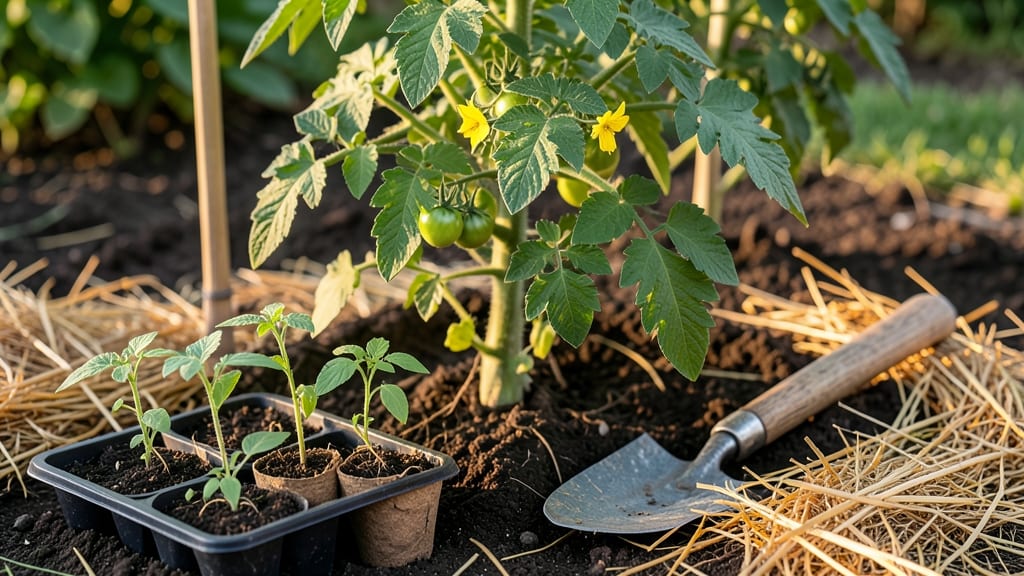
If you've ever watched your tomatoes 🍅 wilt after a surprise frost or struggled with blight because of late planting, you know timing is everything in Indiana's unpredictable climate.
The difference between a bumper crop and a disappointing harvest often comes down to knowing exactly when to put those seedlings in the ground.
For Indiana gardeners in USDA Zone 6a, the sweet spot for planting tomatoes falls between April 15 and June 1—but there's more to it than just dates.
Soil temperature, frost risk, and even your specific region (north vs. south) play crucial roles in giving your plants the best possible start.
I've spent years perfecting the timing for my own Indiana garden, and what I'm about to share will help you avoid common mistakes that waste time, money, and effort.
Whether you're starting seeds indoors or planting transplants directly, you'll learn the exact window that maximizes your harvest from June through October.
Ready to transform your tomato-growing game? Let's break down the science behind Indiana's frost-free window, soil temperature secrets, and how to adjust for your specific location so you can enjoy homegrown tomatoes all summer long.
Indiana’s frost-free dates & soil temperature requirements for tomatoes
Indiana’s tomato planting success hinges on two critical factors: frost-free dates and soil temperature. Northern Indiana (Zones 5a-5b) faces later last frosts—often mid-to-late May—while Southern Indiana (Zones 6a-6b) can start as early as early April. These dates create a 100-day window difference that determines your harvest timing.
Tomatoes thrive when soil temperatures reach 55-65°F. Below 55°F, seeds struggle to germinate, and roots grow poorly. Use a soil thermometer to confirm—Indiana’s clay-heavy soils warm slowly, especially in spring. Northern gardens may need row covers or black plastic mulch to accelerate warming by 5-10°F.
To find your exact last frost date, check the USDA Plant Hardiness Zone Map for Indiana. The National Weather Service also offers local frost calculators that factor in your county’s microclimate.
For example, Gary (Zone 6a) averages its last frost on April 15, while South Bend (Zone 5b) waits until May 10.
Pro tip: Plant cold-tolerant varieties like ‘Stupice’ or ‘Glacier’ 2-3 weeks earlier if you’re pushing the envelope. These early-season tomatoes can handle 40°F temperatures without damage, giving you a 2-week head start on the growing season.
🌱 Indiana Tomato Planting Quick Reference
| Region | Last Frost Date | Ideal Planting Window | Soil Temp Requirement |
|---|---|---|---|
| Northern Indiana (Zones 5a-5b) | May 10–20 | Late May–Early June | 60–65°F |
| Southern Indiana (Zones 6a-6b) | April 1–15 | Early April–Mid-May | 55–60°F |
| All Regions | N/A | Last possible date: June 1 | Minimum 60°F |
💡 Note: Adjust for microclimates (e.g., urban heat islands plant 1–2 weeks earlier).
If you’re starting tomatoes indoors, begin seeds 6–8 weeks before your last frost date. For Northern Indiana, that’s mid-March; for Southern Indiana, early March. Use grow lights to provide 14–16 hours of light daily—tomatoes need longer days to thrive indoors.
For direct sowing outdoors, wait until soil temperatures consistently stay above 60°F. Test this by placing a thermometer in the ground at 4-inch depth for 3 days.
If it dips below 60°F at night, delay planting. Black plastic mulch can raise soil temps by 5–10°F, making early planting feasible in cooler regions.
Indiana’s first frost typically arrives in mid-October, but some years it hits as early as September 15. To extend your harvest, choose fast-maturing varieties (60–70 days) or use row covers to protect plants until October 15.
Varieties like ‘Early Girl’ or ‘Celebrity’ are ideal for fall extensions.
Monitor local weather forecasts the week before planting. A 5-day forecast predicting 40°F nights means delay planting or use row covers for protection. Indiana’s unpredictable spring weather can turn a perfect planting day into a frost disaster overnight.
🌱
Step-by-step planting timeline for Indiana tomatoes (with regional adjustments)
Indiana’s climate varies dramatically from north to south, so your tomato planting timeline depends on whether you’re in Northern Indiana (USDA Zone 5) or Southern Indiana (Zone 6).
In colder regions, wait until late May for outdoor planting, while gardeners in warmer southern areas can start as early as mid-April. Even then, soil temperature is your best guide—never plant until it reaches 60°F or warmer.
For a head start, begin indoor seedlings 6-8 weeks before your last frost date. Southern Indiana gardeners should start seeds by March 15, while Northern Indiana gardeners should wait until April 1.
Use grow lights if natural light is limited, and keep seedlings in 70-75°F conditions during the day and 60-65°F at night.
🌱
- March 15 (Southern IN) / April 1 (Northern IN): Start indoor seedlings in seed trays with sterile potting mix. Use grow lights for 12-14 hours/day.
- April 15 (Southern IN) / May 1 (Northern IN): Harden off seedlings by placing them outside for 2-3 hours/day for 1 week. Acclimate to wind and sun.
- April 30 (Southern IN) / May 15 (Northern IN): Transplant seedlings 18-24 inches apart in full sun after soil warms to 60°F+. Bury stems 1/3 deep for stronger roots.
- June 1 (Both Regions): Direct sow heat-tolerant varieties (like ‘Celebrity’ or ‘Better Boy’) if you missed transplanting. Use row covers for early protection.
- July 15: Begin succession planting for fall harvests. Choose determinate varieties (like ‘Roma’) that ripen faster.
- August 15: Use black plastic mulch or straw mulch to extend soil warmth for late-season plants. Water deeply every 2-3 days.
If you’re aiming for a fall harvest, plant heat-tolerant varieties like ‘Solar Fire’ or ‘Mountain Merit’ in late July. These varieties thrive in warmer temperatures and can produce fruit even as summer fades.
For extra protection, use row covers to shield plants from early autumn frosts, which can hit as early as mid-October in Northern Indiana.
Pro tip: Mark your calendar for Indiana’s average first frost dates—October 15 in the south and October 1 in the north. If you have unripe tomatoes on the vine, harvest them and let them ripen indoors. Green tomatoes can be fried or baked into salsa once picked!
🌿