
Plants
Planting blackberries at the wrong time in North Carolina can mean the difference between a thriving 🫐 bush and years of disappointment—and the best window is narrower than you might think.
If you've ever wondered why some gardeners in zones 6a-8b get lush, productive bushes while others struggle, timing is the key. The ideal months for planting blackberries in NC are late winter to early spring (February-March) or fall (September-October), when soil temperatures cooperate and frost risks fade.
But here's what most gardeners miss: the exact timing depends on your variety and microclimate. Coastal areas have different frost dates than the Piedmont, and thornless varieties need slightly different care than traditional types. I'll break down the best months for each scenario so you can plant with confidence.
Ready to grow blackberries that produce year after year? Let's dive into the planting schedule that works for NC's unique growing conditions—and how to prepare your soil months in advance for maximum success.
Best planting months for blackberries in NC by variety type
North Carolina’s diverse climate—from the Coastal Plain to the Mountains—means blackberry planting windows vary by USDA Zone 6a-8b. Most gardeners succeed by planting in either late winter/early spring or fall, but the best time depends on your blackberry variety type and local frost dates.
Thornless varieties, like Natchez or Cheyenne, thrive with slightly more flexibility, while traditional thorned types need precise timing to avoid frost damage.
For spring planting, aim for February to early March in most of NC, but adjust for your region: Mountain gardeners should wait until mid-March to avoid late frosts, while Coastal Plain areas can start as early as January.
Fall planting—my top recommendation—opens from late August to October, giving roots time to establish before winter. The key is planting 6-8 weeks before your first frost, which averages November 15 but varies by zone.
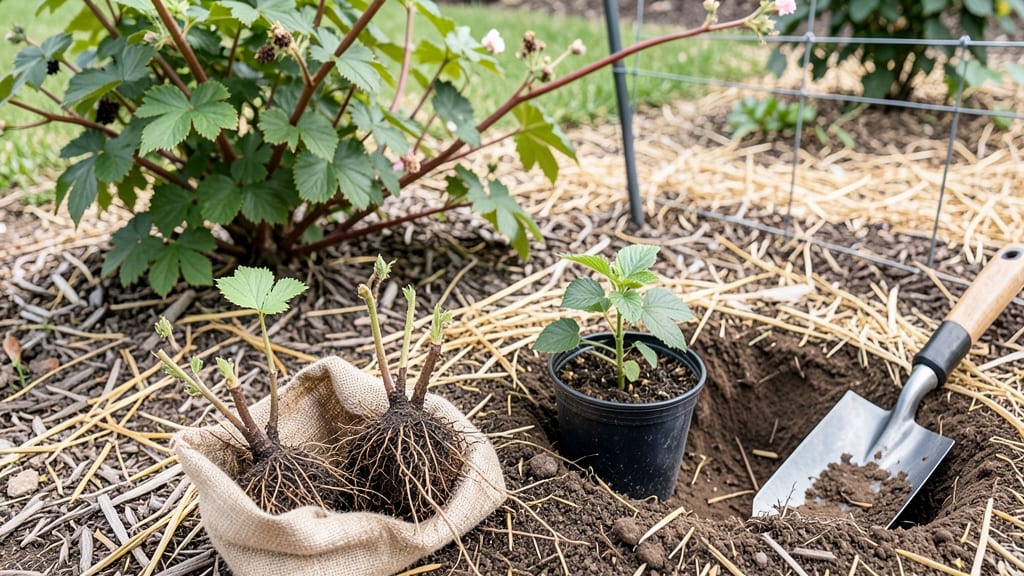
If you’re planting bare-root canes—the most common and cost-effective method—spring planting requires soaking roots overnight before installation. For potted blackberries, fall planting gives them a head start, but avoid transplanting when soil temps drop below 40°F.
Pro tip: Use black plastic mulch in spring to warm soil faster and extend your planting window by 2-3 weeks.
Timing isn’t just about months—it’s about soil temperature. Blackberries need soil at least 50°F for root growth. In NC’s Piedmont, this typically aligns with mid-March, while Coastal areas hit it by February.
Use a soil thermometer to confirm before planting; cold soil can stunt root development for months.
For fall planting, prioritize September to early October to allow roots to establish before winter dormancy. This method often yields 25% larger canes by spring because roots grow undisturbed.
In NC’s Mountains, where first frosts hit by October 15, aim for late August to September. Coastal gardeners have until early November due to milder winters.
One common mistake? Planting too late in fall or too early in spring. Late fall plants may not root before frost, while early spring canes face dormant-season stress. My rule of thumb: Plant when daytime temps consistently exceed 50°F and nights stay above 35°F.
Check your local Cooperative Extension Service for hyper-local frost data—it’s a game-changer for NC’s microclimates.
Variety choice also shifts timing. Early-season varieties like Chester need planting 4-6 weeks before last frost to fruit earlier, while late-season types like Triple Crown can wait until mid-March without sacrificing yield.
Always match your variety to your harvest goals—early pickers give you berries by June, while late types extend harvests into August.
Don’t overlook container planting if your yard lacks space. Potted blackberries can be planted anytime soil temps stay above 50°F, but fall remains ideal. Use 5-gallon containers with drainage holes and plant in full sun.
Containers warm up faster in spring, letting you plant 2-3 weeks earlier than ground planting.
Remember: Fall planting > Spring planting for NC’s climate.
Critical factors that determine NC blackberry planting success
North Carolina's diverse climate—from the Coastal Plain to the Piedmont and Mountain regions—means planting times can vary by 100+ miles. The three biggest factors are soil temperature, last frost dates, and your specific USDA hardiness zone (NC ranges from 6a-8b).
Blackberry roots need soil temps above 50°F (10°C) to establish properly. In the mountains (Zone 6a), this might not happen until mid-April, while coastal areas (Zone 8a-8b) can plant as early as late February. Waiting for the right soil temp prevents root rot and stunted growth.
Here’s where most gardeners go wrong: they plant too early based on calendar dates rather than actual soil conditions. A simple soil thermometer (just $10) can save you from wasted plants. Stick it 6 inches deep—that’s where blackberry roots will grow.
⚠️ Critical Warning: Planting Too Early
Planting blackberries before soil reaches 50°F (10°C) causes:
- ✅ Root rot from cold, soggy soil
- ✅ Stunted growth due to dormancy
- ✅ Fungal diseases like botrytis
Solution: Test soil temp 2-3 days before planting. Use a soil thermometer or check local NC State Extension frost/freeze maps.
Frost dates are your second critical guide. The average last frost in NC ranges from March 1 (mountains) to April 1 (coastal). Planting bare-root canes too early risks frost damage to new shoots, while waiting too late delays root establishment.
For potted plants, you have slightly more flexibility (up to 2 weeks later).
Regional microclimates add another layer. The Piedmont (Zone 7a-7b) typically plants in mid-March, while the Coastal Plain can start in late February. Mountain gardeners should wait until after April 15 to avoid late frosts. Check NC A&T State University’s frost maps for your exact location.
Pro tip: If you’re in a warmer microclimate (like a south-facing slope), you can plant 2-3 weeks earlier than the average. Conversely, cold pockets (valleys, shaded areas) need 1-2 weeks later. Always err on the side of waiting—blackberries recover better from delayed planting than from frost damage.
Finally, match your blackberry variety to your planting window. Thornless varieties (like 'Natchez') establish faster and can handle slightly later plantings, while thorned types (like 'Triple Crown') need perfect timing. Plan ahead by choosing varieties suited to your USDA zone and local climate.