Plants
Planting broccoli 🥦 in Indiana at the wrong time means watching your garden turn into a sad, bolted mess instead of a thriving harvest. With Indiana's 6a climate and unpredictable frosts, timing is everything - get it right, and you'll enjoy crisp, flavorful heads all season.
Most gardeners assume spring planting is their only option, but Indiana's climate actually rewards two planting windows: early spring and late summer. The key is understanding your last frost date (April 15 in most areas) and working backward from there to avoid those bitter bolting disappointments.
I've grown broccoli in Indiana for years, and what I'm about to share will help you maximize your harvest whether you're planting in cool spring soil or hot summer conditions.
We'll cover the exact weeks to plant, how to extend your season, and which varieties perform best in our Hoosier climate.
Ready to go from struggling to successful? Let's dive into the precise planting schedule that will give you bolt-free broccoli heads from May through October - no guesswork required.
Best spring planting times for broccoli in Indiana (avoiding bolting)
Indiana’s spring frost dates are the #1 factor in timing your broccoli planting. The average last frost for most of the state falls around April 15, but northern Indiana (like Fort Wayne) can see frosts lingering until May 1.
This variability means your planting window must be flexible—too early, and frost will kill seedlings; too late, and your broccoli will bolt before harvest.
For bolt-free broccoli, aim to plant transplants 4–6 weeks before your last frost date. In central Indiana (Indianapolis), that’s mid-March to early April. Northern Indiana gardeners should wait until late April, while southern Indiana (Evansville) can start as early as February 20 under row covers.
Direct seeding is riskier—plant seeds 2–3 weeks after your last frost when soil temps hit 40°F+.
Here’s the golden rule: Broccoli bolts when exposed to temperatures above 80°F for extended periods. In Indiana’s heat-prone summers, this means spring planting must finish by late May to avoid stress.
Use shade cloth if temperatures spike early, or opt for fast-maturing varieties (50–60 days to harvest) for a quicker turnaround.
🌱
| Region | Last Frost Date | Ideal Transplant Window | Direct Seed Window | Key Risk |
|---|---|---|---|---|
| Northern IN (Fort Wayne) | May 1 | Late April | Early June | Late frosts |
| Central IN (Indianapolis) | April 15 | Mid-March to April | Late April | Heat stress |
| Southern IN (Evansville) | March 20 | February 20–March 15 | Early March | Early bolting |
If you’re direct seeding (planting seeds outdoors), choose fast-maturing varieties like ‘Waltham 29’ (50 days) or ‘Calabrese’ (60 days) to beat the heat. Start seeds indoors 6–8 weeks before your last frost for a head start.
Harden off seedlings by placing them outdoors in partial shade for 2–3 hours daily, increasing exposure by 1 hour every 2 days.
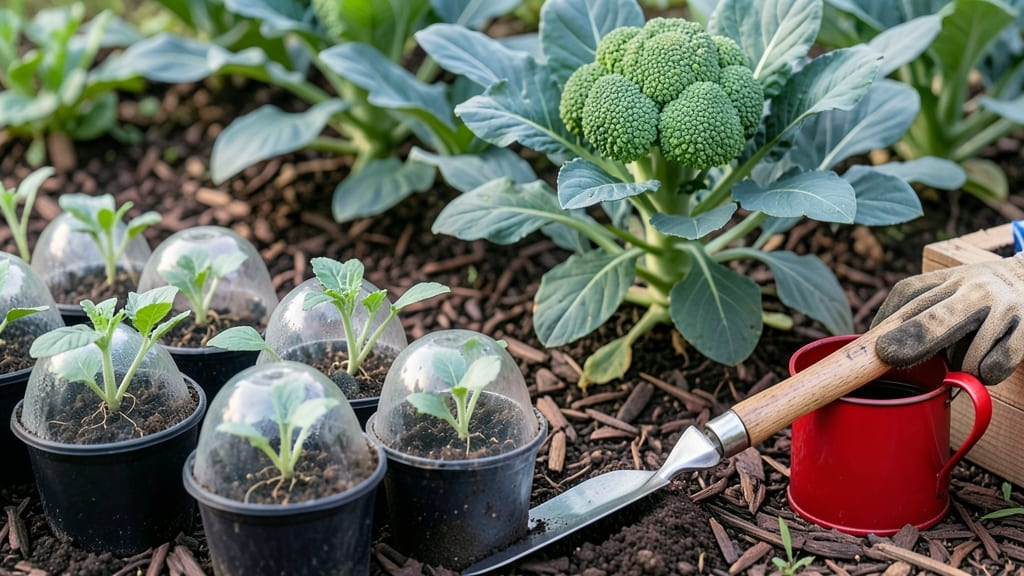
For container gardening, use 5-gallon pots with well-draining soil and plant 2–3 weeks earlier than in-ground planting. Containers warm up faster in spring, so monitor soil temps closely—broccoli roots prefer 55–75°F. Add compost to the soil mix to retain moisture and provide nutrients.
Pro tip: Mulch heavily after transplanting with 2–3 inches of straw to keep soil temps stable and moisture consistent. This is especially critical in Indiana’s unpredictable spring weather, where swings from 30°F to 80°F in a week can stress plants. Mulch also suppresses weeds, reducing competition for nutrients.
Watch for cabbage worms and aphids, which thrive in Indiana’s humid springs. Apply neem oil or row covers at the first sign of pests. Rotate crops annually to prevent soil-borne diseases like black rot, which can devastate broccoli yields.
🌿
Fall broccoli planting schedule for Indiana’s second harvest (cool-season secrets)
Fall planting gives Indiana gardeners a second chance at broccoli 🥦 harvests when summer heat fades. The key is timing your seeds or transplants so they mature before first frost (October 15) but avoid the brutal summer heat that triggers bolting.
I’ve found that planting in late July through early August works best for most of Indiana’s USDA Zone 6a.
For a successful fall harvest, aim to plant 90 days before your first frost date. That means if you’re in Northern Indiana, your window closes around July 15, while Southern Indiana gardeners can push it to early August.
The goal is to let plants establish strong roots before temperatures drop below 50°F at night.
Here’s my proven fall planting timeline for Indiana:
Test soil pH (aim for 6.0–7.0) and amend with compost to improve drainage. Fall broccoli needs fertile soil to recover from summer heat.
Sow seeds ¼-inch deep, spacing them 18–24 inches apart. For faster results, use 4–6 week old transplants from a nursery.
Use shade cloth (30–50%) during peak heat (10 AM–4 PM) to prevent bolting. Mulch with straw to keep roots cool.
Apply row covers when nights dip below 40°F. Harvest before hard frosts hit—broccoli tastes sweeter after light frosts!
One of my biggest mistakes was planting fall broccoli too late—by mid-August, the heads barely formed before frost. Instead, I now prioritize early August for Southern Indiana and July 20–30 for Northern zones. This gives plants enough time to bulk up before cooler weather sets in.
For container gardeners, choose compact varieties like ‘De Cicco’ and plant in 5-gallon pots with well-draining mix. Move containers to a protected spot (like a garage or basement) if frost threatens early. With these adjustments, you can enjoy fall broccoli until mid-October—just in time for holiday meals!
Pro tip: Mark your calendar for September 15—that’s when I start checking heads for readiness. A quick pinch test (heads should feel firm, not mushy) tells me it’s harvest time. Happy gardening! 🌿