
Plants
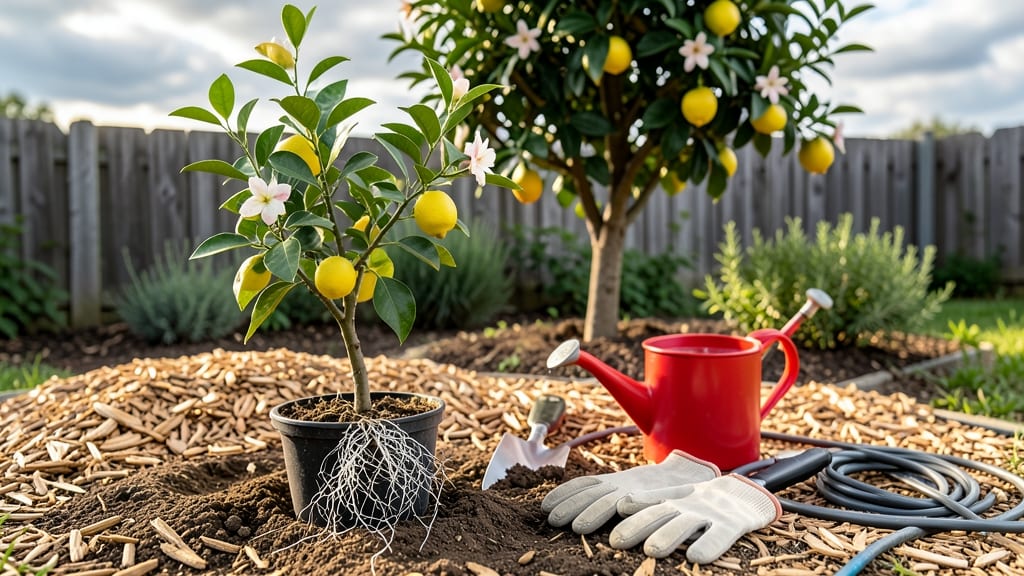
Timing your 🍊 citrus planting in Arizona isn't just about avoiding frost—it's about giving your tree the best shot at thriving in the desert's intense heat.
Plant too early, and you risk transplant shock from summer's brutal sun; too late, and your tree may struggle to establish roots before the next growing season kicks in.
Here's the key: Arizona's 9b climate gives you a 5-month window—from November through March—where temperatures are mild enough for root development but not so extreme they stress young plants. This isn't just theory; I've seen citrus trees planted outside this window either wilt or grow stunted in Phoenix's microclimates.
What makes this window work? It's all about the balance: cool enough nights for healthy growth, but warm enough days to prevent cold damage. Plus, you'll avoid the hottest months when water evaporates faster and soil stays rock-hard, making it nearly impossible for roots to take hold.
In this guide, I'll break down exactly which months work best for your specific Arizona location, how to prep your soil for maximum drainage, and which citrus varieties handle the heat like champs. Let's get your 🍊 citrus off to a strong start—the right way.
Optimal citrus planting months in Arizona’s heat zones (9a-11b)
Arizona’s USDA zones 9a-11b create a near-perfect climate for citrus—but timing is everything. Plant too early, and winter frosts can kill young trees. Plant too late, and summer heat stress weakens roots before they establish.
The ideal window spans November through March, when soil stays warm enough for root growth but nights are cool enough to prevent transplant shock.
Most of Arizona’s low desert regions (9a-10a) experience their last frost around January 15, while higher elevations (10b-11b) may see occasional frost until February 15. To play it safe, aim to plant 4-6 weeks before your area’s average last frost date.
For example, in Phoenix (Zone 10a), November is prime time, while Flagstaff (Zone 7b) gardeners should wait until late May—but only with microclimate protection.
Here’s the breakdown: November-December offers the best balance of cooler temps and moist soil, while January-February works for hardier varieties like Carrizo citrange.
March is riskier unless you’re in Zone 11b, where frosts are rare. Container planting extends your window slightly—you can plant 3-4 weeks later since pots warm up faster in spring.
| Month | Zone 9a (Low Desert) | Zone 10a (Valleys) | Zone 11b (High Desert) | Container Planting |
|---|---|---|---|---|
| November | ✅ Best time (soil ~65°F) | ✅ Best time (soil ~68°F) | ✅ Best time (soil ~70°F) | ✅ Ideal (3-4 weeks earlier) |
| December | ✅ Safe (frost risk low) | ✅ Safe (frost risk low) | ⚠️ Risky (occasional frost) | ✅ Safe (move indoors if frost) |
| January | ⚠️ High risk (frost possible) | ⚠️ Risky (frost possible) | ❌ Avoid (frost likely) | ✅ Safe (hardy varieties only) |
| February | ⚠️ Risky (late frosts) | ✅ Safe (Zone 10a+) | ✅ Safe (Zone 11b) | ✅ Safe (move indoors if frost) |
| March | ❌ Avoid (summer heat stress) | ❌ Avoid (summer heat stress) | ✅ Safe (Zone 11b only) | ❌ Avoid (too hot for roots) |
| Soil Temp | 60-70°F (ideal) | 65-75°F (ideal) | 70-80°F (ideal) | 60-70°F (containers warm faster) |
Signs your Arizona soil and climate are ready for citrus trees
Arizona’s desert climate might look harsh, but it’s actually perfect for citrus—once you know what to look for. The first key sign your soil is ready is a pH between 6.0 and 7.5.
Citrus trees hate alkaline soil, so grab a soil test kit (available at local nurseries) and check before planting. If your soil tests higher than 7.5, you’ll need to amend it with elemental sulfur or peat moss to lower the pH gradually.
Next, assess your soil’s drainage ability. Citrus roots rot in soggy conditions, so dig a hole and fill it with water. If it drains completely within 1-2 hours, your soil is ideal.
If water pools after 4+ hours, amend with sand or perlite to improve drainage. I’ve seen citrus trees planted in heavy clay soil struggle—don’t let that be your tree!
🌱 Key Takeaways for Arizona Citrus Planting
- 🔹 Soil pH: 6.0-7.5 (test first!)
- 🔹 Drainage: Water drains in <1-2 hours
- 🔹 Sunlight: 6+ hours of direct sun daily
- 🔹 Microclimate: Avoid cold air pockets
- 🔹 Wind: Protect young trees from dry winds
Don’t overlook microclimate factors. Arizona’s urban areas can be 10°F warmer than rural zones, so check your specific location.
If you’re in a low-lying area, you might experience rare frost even in Zone 9b. Plant near a south-facing wall or use windbreaks to protect young trees from desert winds, which dry out soil and stress plants.
Finally, confirm your sunlight exposure. Citrus trees need 6-8+ hours of direct sun daily—no exceptions. If your yard has afternoon shade, consider container planting near a sunny patio or balcony.
I’ve successfully grown citrus in containers on my Phoenix balcony using reflective surfaces (like white walls) to bounce extra light onto the plants.
One last pro tip: Mulch heavily after planting to retain moisture and regulate soil temperature. Use 3-4 inches of organic mulch (like wood chips or straw) but keep it 6 inches away from the trunk to prevent rot.
This simple step can double your tree’s survival rate in Arizona’s intense heat.
When you’ve checked all these boxes—soil pH, drainage, sun, and microclimate—your citrus tree will have the best possible start. Now it’s time to choose the right variety for your specific Arizona conditions!