
Plants
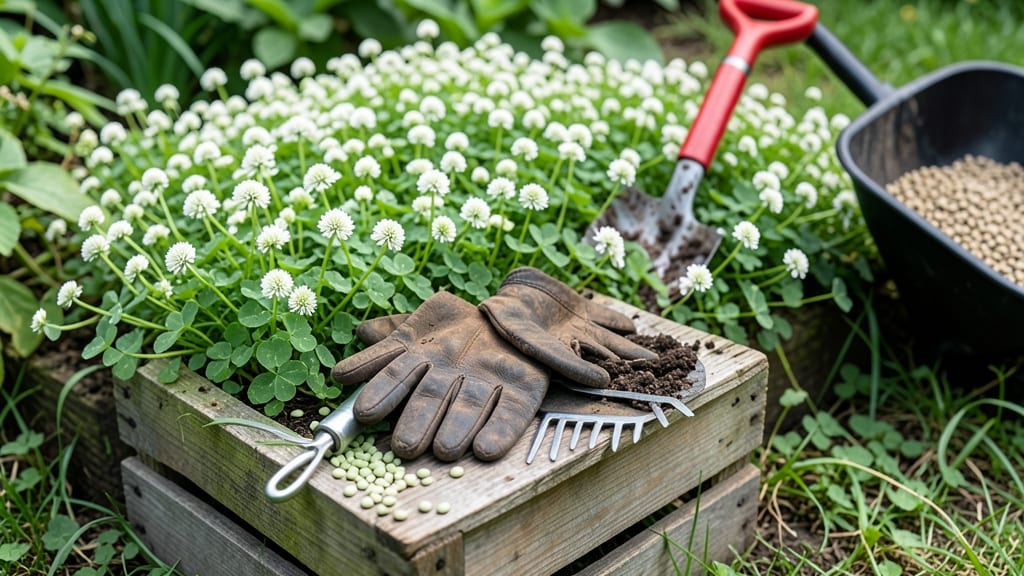
If you’ve ever struggled to get your Minnesota lawn to look thick and green, planting clover at the right time could be your game-changer.
Unlike grass, clover thrives when soil temperatures hit 45°F+, meaning you can start as early as March—but timing it wrong means wasted seeds and missed opportunities.
The key to fast, lush clover growth in Minnesota’s 3b-5b zones is planting either in early spring (March-April) or early fall (August-September). This gives your 🌱 clover the best shot at establishing roots before summer heat or winter frost sets in.
I’ll show you exactly how to sync your planting schedule with Minnesota’s unpredictable weather patterns.
You might think spring is the only option, but fall planting actually gives clover a head start in cooler months. The secret? Waiting until soil temperatures stabilize—no more guessing games. Let’s break down the best months, soil prep tips, and how to protect your clover from late frosts.
Ready to transform your yard into a weed-resistant, nitrogen-rich haven? By the end of this guide, you’ll know exactly when to plant clover in Minnesota for fast establishment—no more trial and error. Let’s get started!
Minnesota soil temperature zones for planting clover (with exact months)
Minnesota’s cool climate and variable frost dates demand precise timing for planting clover seeds. Unlike warmer climates, success hinges on soil temperature thresholds—typically 45°F or above—and avoiding late spring frosts that can kill young seedlings.
Northern Minnesota’s USDA Zone 3b has a shorter window than southern Zone 5b, so regional adjustments are critical.
For most of Minnesota, the optimal planting window spans early spring (March–April) and early fall (August–September). Spring planting should occur 2–4 weeks before the last frost date, while fall planting must finish 6–8 weeks before the first frost to allow roots to establish.
Using a soil thermometer is my top tip—plant only when readings consistently hit 50°F+ at 2-inch depth.
Here’s how Minnesota’s three key regions differ in timing and risk factors:
| Region | USDA Zone | Last Frost Date | First Frost Date | Spring Planting Window | Fall Planting Window |
|---|---|---|---|---|---|
| Northern MN (e.g., Duluth) | 3b | May 10–20 | September 20–October 5 | April 15–May 5 | August 1–15 |
| Central MN (e.g., Minneapolis) | 4a | May 1–10 | October 1–15 | April 1–April 30 | August 15–September 5 |
| Southern MN (e.g., Rochester) | 5b | April 25–May 5 | October 10–20 | March 20–April 15 | August 20–September 15 |
If you’re planting in March or early April, use frost blankets or row covers to protect seedlings from late frosts, which are common in Minnesota’s Zone 4a. In the Twin Cities metro, aim for April 15 as your cutoff—any later risks stunted growth.
For fall planting, prioritize August to give clover roots time to anchor before winter.
Soil temperature is more critical than air temperature. Test your garden bed with a soil thermometer—clover seeds won’t germinate reliably below 45°F. In northern Minnesota, wait until May for spring planting unless you’re using cold-hardy varieties like Alsike clover, which tolerates cooler soils.
Pro tip: Mix clover seeds with sand for even distribution and better contact with warm soil.
Minnesota’s unpredictable weather means flexibility is key. If a hard freeze hits after planting, cover seeds with straw mulch (2–3 inches thick) to insulate them. Monitor 7-day forecasts—planting 2 weeks before a predicted warm spell often yields better results than rushing during a brief thaw.
For lawn establishment, overseeding in late summer (August) reduces weed competition and leverages residual soil warmth.
One common mistake? Planting too early in February or March when soils are still frozen. Clover seeds need moist, thawed soil to germinate. Use the "finger test": Push your finger 2 inches deep—if the soil feels dry and crumbly, it’s ready.
If it’s icy or muddy, wait. In southern Minnesota, March 20 is often safe, but northern gardens should wait until April 15.
For organic lawns, clover thrives when planted with ryegrass or fescue for early ground cover. Mix seeds at a 1:3 ratio (clover to grass) to balance nitrogen fixation and quick establishment.
Water lightly daily after planting to keep soil moist until germination (10–21 days, depending on temperature). Avoid heavy watering, which can wash seeds away or cause soil crusting.
Best clover varieties for Minnesota’s climate and when to plant each
Minnesota’s cool summers and harsh winters demand clover varieties that thrive in USDA Zones 3b-5b. Choosing the right type ensures fast germination and year-round soil health. Whether you’re aiming for weed suppression or pollinator support, timing matters just as much as variety.
White clover (Trifolium repens) is the hardiest option for Minnesota, surviving light frosts and spreading aggressively. It’s ideal for late spring planting (May) or early fall (August-September) when soil temps hover around 50°F. Its shallow roots make it perfect for lawns and ground cover.
Red clover (Trifolium pratense) is better suited for warm-season growth and should be sown in early spring (April) or late summer (July). It thrives in full sun and adds nitrogen-rich biomass to soil, but it’s less cold-tolerant than white clover.
Plant it after the last frost to avoid seedling damage.
Alsike clover (Trifolium hybridum) is a drought-tolerant choice for southern Minnesota (Zone 4+), but it’s frost-sensitive and should only be planted after the last frost (mid-May). Its deep taproots improve soil structure, but it’s short-lived, lasting just 1-2 years.
For maximum success, match your clover variety to your planting window and microclimate. Northern Minnesota gardeners should lean toward white clover for its cold resilience, while southern regions can experiment with red clover for summer blooms.
Always prepare the soil with compost to help seeds establish quickly.
Pro tip: Mix white clover with ryegrass for early spring cover, or pair red clover with alfalfa for nitrogen fixation. Adjust planting dates by 2-3 weeks if your area experiences late frosts or unusually warm springs.
Timing isn’t just about months—it’s about soil temperature and frost risk. Use a soil thermometer to confirm 50°F+ before seeding, and monitor weather forecasts for late spring freezes. With the right variety and timing, your Minnesota clover will thrive year after year.