Plants
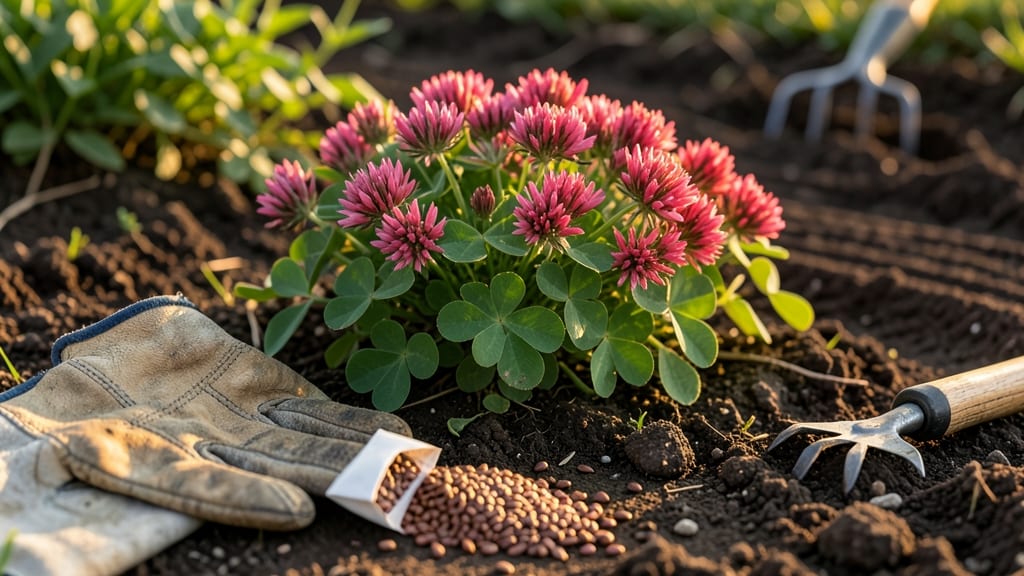
Planting Crimson Clover 🌸 in Texas at the wrong time can mean wasted effort—or worse, struggling seedlings that never take root.
The key to success lies in those crisp fall months when summer’s brutal heat finally fades, giving your cover crop the perfect window to establish strong roots before winter sets in.
If you’ve ever watched your Crimson Clover seeds sprout only to wither under Texas’s scorching sun or freeze before they can thrive, you know timing is everything.
The ideal planting window—September through November—aligns with cooler temperatures and moisture levels that encourage germination and growth, setting your soil up for a healthier spring.
But here’s the catch: North Texas and South Texas don’t play by the same rules. Frost dates, soil conditions, and even microclimates can shift your perfect planting window by weeks.
I’ll break down exactly when to plant in your specific region, so you can avoid common pitfalls and get the most out of your Crimson Clover.
Ready to transform your soil, suppress weeds, and attract pollinators? Let’s dive into the exact steps to plant Crimson Clover at the right time—no guesswork, just results.
Ideal fall planting windows for Crimson Clover in Texas regions
Texas spans three distinct climate zones, each with unique frost patterns and soil conditions that dictate the perfect crimson clover planting window. In North Texas (USDA Zones 7b-8a), where first frosts hit by November 15, aim to plant between mid-September and early October.
This gives seedlings 6-8 weeks to establish roots before winter dormancy.
For Central Texas (Zones 8a-8b), with average first frosts around November 22, extend your window to late September through mid-November. The milder winters here allow slightly later planting while still ensuring strong root development before cold snaps.
In South Texas (Zones 9a-10b), where frosts rarely occur before December 15, you’ve got flexibility until early December. However, planting after November 15 risks overly vigorous fall growth that may struggle with winter temperatures, even in southern regions.
Soil temperature is your best friend—wait until soil temps drop below 85°F but stay above 60°F at planting time. Use a soil thermometer to check; 70-75°F is ideal for germination. In North Texas, this typically aligns with late September, while South Texas can wait until October.
Seedling establishment is critical—crimson clover needs 4-6 weeks to develop a strong root system before winter sets in. In North Texas, planting by October 15 ensures roots harden off before December frosts.
In South Texas, you can push it to November 15, but monitor weather forecasts for unexpected cold snaps.
Here’s the comparison-table breaking down planting windows by Texas region, including frost dates and soil temperature thresholds:
Pro tip: Use a frost date calculator specific to your Texas county for precise timing. For example, Dallas (Zone 8a) has an average first frost of November 18, while Houston (Zone 9a) rarely sees frost before December 10.
Planting 6 weeks before your local first frost date maximizes success.
If you miss fall, early spring planting (February-March) is your second chance. However, spring-planted crimson clover may bolt to seed quickly in Texas’s heat, reducing cover crop benefits. For spring plantings, focus on North Texas first, where cooler temperatures linger longer.
Always test your soil’s moisture before planting—dry soils delay germination, while waterlogged soils cause rot. Aim for moist but not soggy conditions. In clay-heavy soils (common in East Texas), plant when soils are slightly dry to prevent compaction.
For sandy soils (West Texas), water deeply 2-3 days before planting to ensure moisture reaches seed depth. Crimson clover’s taproots need depth, so avoid planting during drought conditions, even in fall.
Finally, mix seeds with sand before broadcasting to ensure even distribution and prevent clumping. In large fields, use a seed drill for precision, while small gardens benefit from hand-broadcasting followed by light raking.
Signs your Texas soil is ready for Crimson Clover planting
Before you even reach for your Crimson Clover seeds, your Texas soil needs to meet three critical conditions: the right temperature, adequate moisture, and minimal weed competition. Skipping these checks can leave your seeds struggling to germinate or your seedlings weak and vulnerable to drought or pests.
I’ve planted Crimson Clover in everything from heavy clay to sandy loam, and these signs have saved me from countless failed attempts.
First, check your soil temperature—it should be between 60°F and 75°F at a depth of 2 inches. Use a soil thermometer (they’re cheap and worth it!) to test in the late afternoon.
If your soil is still above 80°F, wait a few more weeks. Crimson Clover seeds germinate best in cooler conditions, and hotter soils can cause them to rot before sprouting.
Next, assess moisture levels by grabbing a handful of soil and squeezing it. If it crumbles easily, it’s too dry—water deeply until moisture reaches 6 inches down. If it stays clumped, it’s too wet, and you risk seed rot.
Aim for soil that feels like a damp sponge: moist but not soggy. In Texas, this often means waiting for a light rain or irrigating just before planting.
Weed pressure is another silent killer. Crimson Clover seedlings are tiny and delicate, so they can’t compete with established weeds like crabgrass or dandelions. Walk your garden and pull any weeds that are already flowering or have deep roots.
If you see more than a few weeds per square foot, consider spot-treating with vinegar or a targeted herbicide 1–2 weeks before planting to give your clover a fighting chance.
Don’t overlook soil pH—Crimson Clover thrives in slightly acidic to neutral soil, ideally between 6.0 and 7.0. Test your soil with a kit (available at garden centers) and adjust with lime (to raise pH) or sulfur (to lower it) if needed.
I once planted clover in soil with a pH of 7.5, and the growth was stunted until I amended it—don’t make that mistake!
Finally, pay attention to the weather forecast. Look for a stretch of 5–7 days with no rain after planting. Crimson Clover seeds need consistent contact with moist soil to germinate, but too much rain can wash them away or create a muddy mess.
If heavy rain is predicted, delay planting until conditions stabilize. This is especially critical in South Texas, where sudden downpours are common in fall.
Once your soil passes these checks, it’s time to plant! But remember: Crimson Clover is a fast grower, so don’t wait too long after these conditions are met.
The window between ideal soil conditions and the first hard frost in your region can be narrow—especially in North Texas, where frosts arrive earlier. Mark your calendar and act quickly to maximize your cover crop’s potential.
Key Takeaways for Planting Crimson Clover in Texas
- Soil Temp: 60°F–75°F (test 2" deep)
- Moisture: Damp sponge-like (not soggy)
- Weeds: Pull flowering weeds 1–2 weeks before planting
- pH Level: 6.0–7.0 (test and amend if needed)
- Forecast: Plant during a 5–7 day dry spell