
Plants
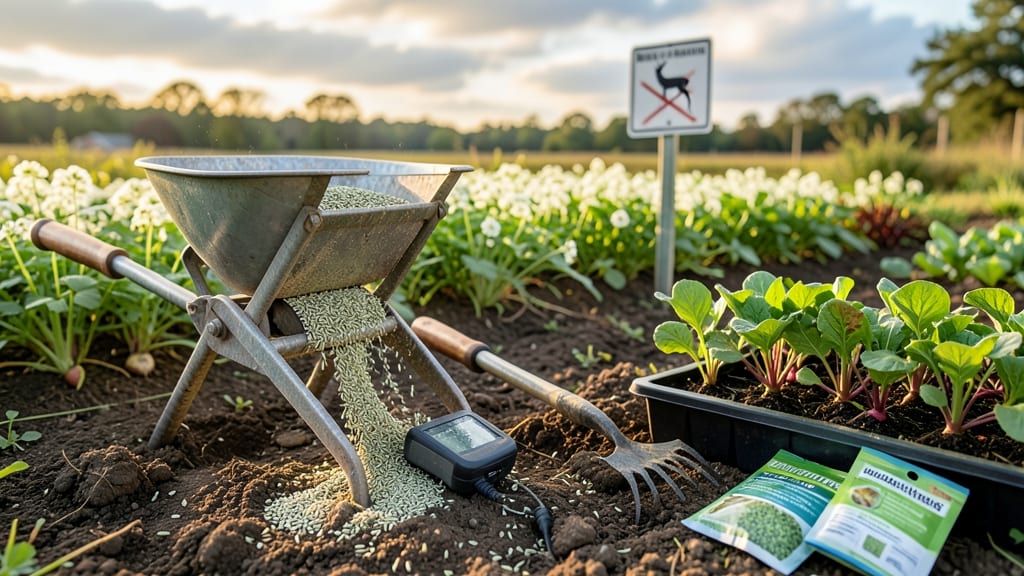
If you’ve ever wondered why some hunters fill their tags while others struggle to get a single look at deer, the answer might be hiding in your fall planting calendar—specifically, when to plant fall food plots in Georgia.
In Georgia’s 7a-8b zones, timing your 🌾 fall food plots just right turns your property into a whitetail buffet—right when bucks are most active during the rut.
Most hunters assume planting in September is enough, but that’s only half the story. The ideal window actually spans from late August through mid-October, giving you flexibility based on your region—North Georgia’s cooler climate vs. South Georgia’s warmer stretches.
Miss this window, and you’ll either face frost damage or miss peak deer activity entirely.
I’ve tested these strategies across Georgia’s diverse landscapes, and the results speak for themselves: plots planted in early September provide lush forage by October, while late October plantings still deliver when food is scarce.
The key? Understanding your local frost dates and soil conditions to maximize growth before winter sets in.
Ready to transform your property into a deer magnet? Let’s break down the exact months, crops, and prep work needed to make your food plots irresistible—without wasting a single seed.
Georgia’s ideal fall food plot planting calendar by region
Georgia’s diverse climate means your fall food plot timing should match your region. In North Georgia (USDA zones 7a-7b), cooler temperatures arrive earlier, while South Georgia (zones 8a-8b) stays warmer longer. Central Georgia falls in between, offering a moderate window.
The key is planting when soil temps hit 60-65°F and before the first hard frost—typically mid-October in the north and early November in the south.
For peak deer activity during the rut (October-November), aim to have your plots established and thriving by late October. This means starting seed in late August to early September for North Georgia and stretching into mid-October for South Georgia.
Soil prep is just as critical—test your pH (6.0-6.5) and till at least 6 inches deep to break up compacted layers.
Here’s how the planting windows break down by region, including frost risks and ideal soil temperatures:
| Region | USDA Zone | Ideal Planting Window | Soil Temp Threshold | First Frost Risk |
|---|---|---|---|---|
| North Georgia | 7a-7b | Late August – Early September | 60-65°F | Mid-October |
| Central Georgia | 7b-8a | Early September – Mid-October | 60-65°F | Late October |
| South Georgia | 8a-8b | Mid-September – Mid-October | 65-70°F | Early November |
Pro tip: Use a soil thermometer to confirm temps before planting. If soil is too cold, seeds may rot instead of sprouting. In North Georgia, cover seeds lightly with straw to retain warmth, while South Georgia plots benefit from a light mulch to conserve moisture as temps drop.
Don’t overlook moisture management—fall is unpredictable. Water deeply 2-3 times per week after planting to encourage root growth, but avoid waterlogging. Drainage is critical, especially in low-lying areas where frost can linger longer.
For maximum deer appeal, rotate crops yearly to prevent soil depletion. If you planted clover last fall, switch to brassicas or winter wheat this year. This keeps nutrients balanced and attracts deer with varied forage options during the rut.
Timing your food plots also means planning for hunting pressure. Plant high-protein crops like turnips or chicory in early September to ensure they’re mature by October, when bucks are most active. In South Georgia, extend your window into early November—deer stay active longer in warmer microclimates.
Finally, mark your calendar for late October in North Georgia or early November in South Georgia to apply a nitrogen boost if growth slows. This gives plants a second wind just as deer are most food-deprived.
By aligning your planting schedule with these regional guidelines, you’ll create a deer-proof buffet that keeps whitetails visiting well into winter—just don’t forget to scout your plots regularly for signs of browsing!
Georgia’s ideal fall food plot planting calendar by region
Georgia’s diverse climate means fall food plot timing varies dramatically from North Georgia’s cooler highlands to South Georgia’s warmer lowlands. Planting too early or late can ruin your chances of attracting deer during the rut season (October-November). Let’s break down the perfect planting windows for each region.
In North Georgia (USDA Zones 7a-7b), where first frost often hits by mid-October, aim to plant clover and brassicas between late August and early September. This gives plants 6-8 weeks to establish before winter. Winter wheat and rye can wait until early October for a late-season boost.
🌾 Georgia Fall Food Plot Planting Calendar
| Region | Best Planting Window | Key Crops | Soil Temp Threshold |
|---|---|---|---|
| North Georgia (7a-7b) | Late August–Early September | Clover, Brassicas, Winter Wheat | 55–65°F |
| Central Georgia (7b-8a) | Early–Mid September | Brassicas, Rye, Turnips | 60–70°F |
| South Georgia (8a-8b) | Mid–Late September | Sorghum-Sudangrass, Millet, Clover | 65–75°F |
Central Georgia (Zones 7b-8a) offers the most flexibility, with early-to-mid September being ideal for brassicas and rye. These crops thrive in 60–70°F soil and provide peak forage in October, just as bucks hit their prime rut. Turnips and radishes can even be planted as late as mid-October for a quick harvest.
For South Georgia (Zones 8a-8b), where frost is rare before November, focus on warm-season crops like sorghum-sudangrass and millet planted in mid-to-late September.
These handle warmer soils (65–75°F) and stay lush longer. Clover mixes can also be sown here but require late September planting to avoid summer stress.
Regardless of region, soil temperature is your best guide. Use a soil thermometer to confirm 55°F+ before planting—cold soil slows germination. Test your soil pH too; deer love plots with a 6.0–6.5 pH, which maximizes nutrient uptake.
Pro tip: Plant in phases—sow fast-growing brassicas first (early September), followed by clover and wheat (mid-September). This ensures continuous forage from October through December, when deer are most active. 🌿