
Plants
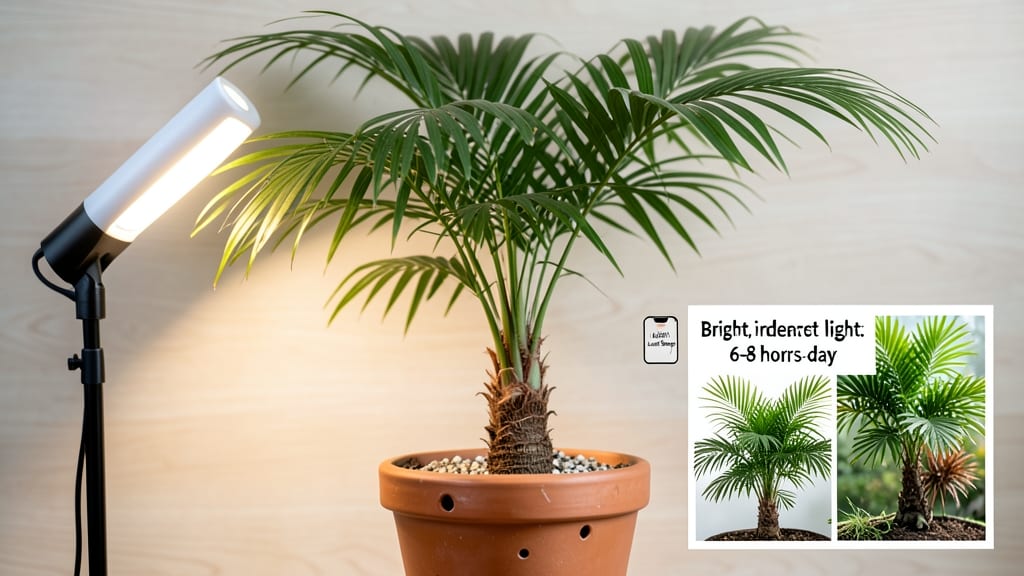
How much light does a palm plant need to thrive? If your 🌴 has been struggling with yellowing fronds or stunted growth, you're not alone—most palm owners get this wrong. The truth is, these tropical beauties crave bright, indirect sunlight, but too much direct exposure can fry their leaves faster than you can say "sunburn."
Picture this: Your palm wilting near a west-facing window or browning under harsh afternoon rays. That's not just bad luck—it's a light mismatch. The key lies in understanding your palm's specific needs, whether it's a low-light tolerant Kentia or a sun-loving Majesty palm.
I'll show you exactly how to spot the signs of light stress and adjust your space to keep those fronds lush and vibrant.
What happens when you nail the lighting? A palm that grows taller, stronger, and healthier than ever. We'll cover everything from optimal window placement to artificial light solutions for those dimmer corners of your home.
No more guessing—just science-backed tips to turn your palm from a struggling survivor into a showstopping centerpiece.
Ready to transform your indoor jungle? Let's dive into the secrets of palm lighting that'll have your plant reaching for the sky—literally. You'll learn which species need what, how to diagnose light problems, and even how to create the perfect microclimate for your tropical friend.
Your palm's best days are ahead!

Ideal light requirements for different palm plant types: sun vs. shade needs
Not all palm plants thrive under the same light conditions—some crave bright indirect sunlight while others tolerate low light better. Understanding your palm's specific needs prevents common issues like yellowing fronds or stunted growth.
Let’s break down the light requirements for popular palm varieties and how to spot when they’re getting too much or too little sun.
Palms generally fall into three light categories: low-light tolerant, medium-light adaptable, and sun-loving. The key is matching your palm’s type to your home’s natural light.
For example, a Kentia palm will wilt in direct sun, while a Canary Island date palm will suffer without it. Let’s explore the specifics.
🌴 Visual Guide: Palm Light Needs
| Palm Type | Ideal Light | Signs of Too Much Sun | Signs of Too Little Light |
|---|---|---|---|
| Kentia Palm | Bright indirect light (50-70%) | Brown crispy leaf tips | Leggy growth, pale fronds |
| Parlor Palm | Low to medium indirect light (20-50%) | Yellowing fronds, dry patches | Slow growth, dark green leaves |
| Majesty Palm | Medium to bright indirect light (50-80%) | Scorched leaf edges | Drooping fronds, weak stems |
| Areca Palm | Bright indirect light (70-80%) | Brown spots, curled leaves | Stunted growth, sparse fronds |
| Canary Island Date Palm | Full sun (6+ hours direct) | Bleached fronds, leaf drop | Slow growth, pale color |
If your palm’s leaves are turning yellow or brown, it’s often a light-related issue. For example, yellowing fronds on a Majesty Palm usually mean too much direct sun, while pale, sparse leaves on an Areca Palm signal insufficient light.
Rotate your palm every few weeks to ensure even growth and expose all sides to light.
For outdoor palms, morning sun with afternoon shade is ideal in hot climates. If you notice crispy leaf edges, move your palm to a shadier spot immediately. Conversely, if growth slows dramatically, consider supplementing with a grow light or relocating to a sunnier area.
Indoor palms often struggle with low-light conditions, especially in north-facing rooms. If your palm isn’t thriving, try placing it near a south- or west-facing window where it can receive filtered sunlight. Avoid placing it directly in a window where it could get scorching afternoon rays.
Pro tip: Use a light meter or observe your palm’s reaction to light over a week. If you see new growth and vibrant green leaves, you’ve hit the sweet spot. Adjust gradually—palms can’t handle sudden changes in light exposure.
Remember, dwarf palms like the Parlor Palm are more forgiving in low light, while tropical palms like the Areca need consistent brightness. Tailor your care to your palm’s specific needs, and you’ll see a noticeable difference in its health within weeks.
🌿
How to adjust your home’s lighting for palm plant success: natural vs. artificial solutions
Not all homes have the perfect south-facing windows or bright spaces needed for palms. If your palm’s fronds are stretching toward the light or turning yellow, it’s time to optimize your indoor lighting.
The good news? With a few simple adjustments, you can create the ideal bright indirect sunlight environment even in dimmer spaces.
Start by evaluating your home’s natural light sources. East-facing windows provide gentle morning sun, while west-facing windows offer afternoon warmth—both great for palms that prefer filtered sunlight. If your space lacks natural light, artificial solutions like LED grow lights can bridge the gap without overheating your plant.
Natural Light Solutions
- ✅ East/West Windows: Best for moderate light lovers like Kentia palms.
- ✅ Sheer Curtains: Diffuse harsh direct sunlight to prevent leaf burn.
- ✅ Rotate Pots: Ensure even light exposure on all sides.
Artificial Light Solutions
- ✅ LED Grow Lights: Mimic full-spectrum sunlight for 12-14 hours/day.
- ✅ Adjustable Height: Keep lights 6-12 inches above fronds.
- ✅ Timers: Automate light cycles for consistency.
For low-light tolerant palms like the Parlor Palm, position them 3-5 feet from a north-facing window. If your palm is near a window but still struggling, try reflective surfaces like mirrors or white walls to bounce extra light onto the fronds.
This trick can increase light exposure by up to 30% without moving the plant.
Seasonal changes also affect light availability. During winter months, shorter daylight hours mean your palm may need supplemental light. Move indoor palms closer to windows or add a grow light for 4-6 hours daily.
In contrast, summer’s intense rays can scorch leaves, so use sheer curtains or move palms slightly away from windows to avoid leaf burn.
If you’re using artificial lighting, invest in full-spectrum LED bulbs designed for plants. These mimic natural sunlight and are energy-efficient. Place the light 12-18 inches above the palm and adjust as it grows. For larger palms, consider multiple light sources to ensure even coverage across all fronds.
Pro tip: Monitor your palm’s response to lighting changes. If new growth appears darker green and upright, you’ve found the sweet spot. If fronds continue to yellow or stretch, it’s time to tweak your setup—whether that means moving closer to a window or adjusting your grow light’s intensity.