
How To
If your Arrowhead Plant 🌿 looks like it’s throwing a temper tantrum—droopy leaves, pale stems, or sudden yellowing—chances are, its light needs aren’t being met.
This adaptable houseplant can handle everything from dim corners to bright indirect sun, but getting the balance right is the key to keeping those signature arrow-shaped leaves vibrant and healthy.
Most beginners assume "bright light" means harsh sunlight, but for Arrowhead Plants, that’s a recipe for crispy edges and stress. The truth? They thrive in moderate to bright indirect light, like the soft glow of an east-facing window or a few feet back from a south-facing one.
Too little light, and your plant stretches out like it’s reaching for a hug; too much, and you’ll end up with sunburned patches.
What’s even better? Different varieties have their own quirks—variegated types, for example, need a touch more light to keep their patterns popping, while solid green leaves are more forgiving.
I’ll show you how to spot the signs of light stress and adjust placement season by season, so your Arrowhead Plant stays lush year-round.
Ready to stop guessing and start growing? Let’s break down exactly how much light your Arrowhead Plant needs—and how to tweak its environment for faster, happier growth, no matter where you live in USDA Zone 6a.

Arrowhead plant light requirements: ideal spectrum for healthy growth
The arrowhead plant (Syngonium podophyllum) thrives in bright indirect light, but its adaptability makes it a favorite for beginners. Unlike sun-loving succulents, this tropical beauty tolerates low-light conditions—though it won’t reach its full potential.
The key is finding that sweet spot between dim corners and harsh midday rays, where leaves stay vibrant and growth stays lush.
Most arrowhead plants perform best with 4-6 hours of bright, filtered light daily. Think of it like a morning coffee—too little leaves you sluggish, and too much scorches your day. South-facing windows can be too intense, while north-facing rooms often provide the perfect gentle glow.
If you’re unsure about your space, I’ll show you how to test it in just a few minutes.
Here’s how to spot the signs: Yellowing leaves or stretched stems mean it’s craving more light, while brown patches or crispy edges signal too much direct sun. Variegated varieties (like ‘White Butterfly’) are especially sensitive—their white or pink streaks need extra light to stay vivid.
Let’s break down the ideal light spectrum and how to match it to your home.
🌿 Visual Light Guide for Arrowhead Plants
| Light Condition | Ideal for Arrowhead | Signs of Stress | Best Window Placement |
|---|---|---|---|
| Low Light (e.g., bathroom, hallway) | ✅ Tolerated but slow growth | Leggy stems, pale leaves | North-facing, 3+ feet from window |
| Bright Indirect (e.g., east/west window) | ⭐ Ideal for vibrant growth | Healthy, glossy leaves | 2-3 feet from east/west window |
| Direct Sun (e.g., south window, noon) | ⚠️ Risk of leaf burn | Brown patches, crispy edges | Sheer curtain filter, 4+ feet away |
| Artificial Grow Lights | ✅ Great for supplementing | Healthy growth if 6-8" away | 12-14 hours/day, LED spectrum |
To test your space’s light, place a white piece of paper near your plant for a few hours. If it shows clear shadows, you’ve got bright indirect light—perfect for arrowheads.
If it’s faint or nonexistent, your plant needs a sunnier spot. Pro tip: Rotate your plant quarter-turns weekly to ensure even growth, especially if it’s near a single window.
Seasonal changes also affect light needs. During winter, when sunlight is weaker, move your arrowhead closer to the window (but avoid cold drafts). In summer, watch for afternoon sun—even indirect rays can intensify, so a sheer curtain acts as a natural filter.
If you notice leaves curling or developing white spots, it’s time to adjust.
For variegated varieties, pay extra attention to light balance. Their white or pink foliage requires more light to prevent reversion (when leaves turn solid green). If you’re growing ‘Pink Arrow’, aim for 6 hours of bright indirect light—this keeps those stunning hues vibrant.
Solid green varieties, like ‘White Butterfly’, are more forgiving but still thrive with 4-5 hours daily.
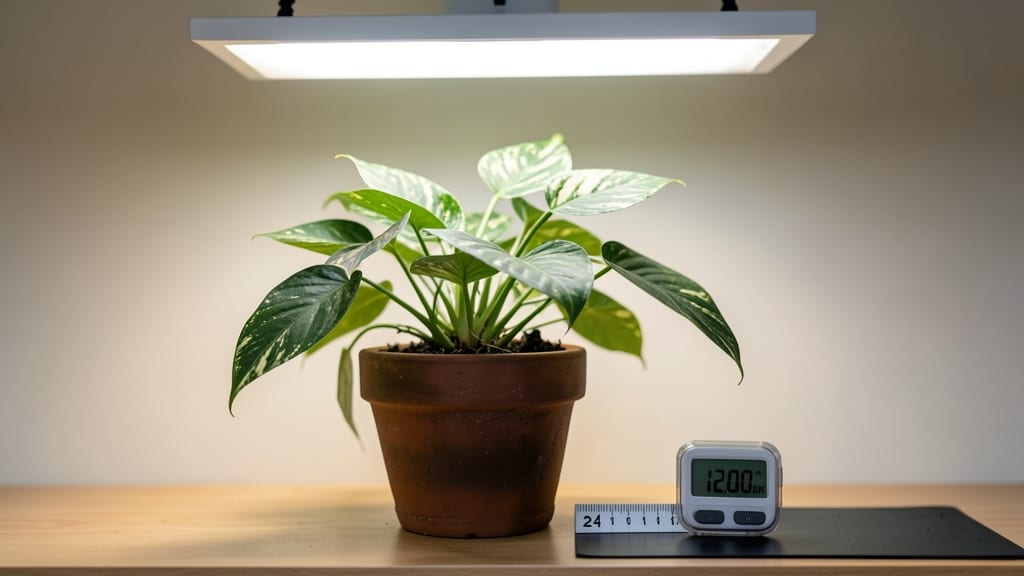
If your home lacks natural light, grow lights are a game-changer. A simple LED grow bulb (6000K-6500K color temperature) placed 6-8 inches above the plant mimics natural light perfectly.
Run it for 12-14 hours daily to replicate a full day cycle. I’ve seen arrowheads grow just as lush under these as they do in sunrooms!
Remember, the goal is to mimic the dappled light of its native rainforest habitat. Too little light slows growth, while too much causes stress. With the right balance, your arrowhead will reward you with bold, arrow-shaped leaves and a bushy, healthy appearance.
Next, we’ll dive into how to adjust care for different varieties—some need more light than others!
Arrowhead plant light requirements: ideal spectrum for healthy growth
The Arrowhead Plant (Syngonium podophyllum) thrives in moderate to bright indirect light, making it perfect for indoor spaces with filtered sunlight. Unlike sun-worshippers, it avoids harsh rays that cause leaf burn—think of it as a plant that enjoys a cozy reading nook rather than a spotlight.
The ideal spot? 4-6 hours of bright indirect light daily, like an east-facing window or 3-5 feet back from a south-facing one.
Too little light, and your plant stretches toward the window, producing leggy stems and sparse leaves. Too much direct sun, and you’ll see brown crispy edges or bleached patches. The goal is to mimic the dappled shade of a forest understory, where light filters through leaves without scorching.
If your home lacks natural light, don’t worry—grow lights can bridge the gap!
Here’s how to test your space: Hold a piece of white paper near your plant. If the shadow is sharp and dark, it’s direct sun—move the plant back. If the shadow is soft and faint, you’ve hit the sweet spot for your Arrowhead’s light needs.
| Light Condition | Window Type | Distance from Window | Signs of Good Light |
|---|---|---|---|
| Bright Indirect | East or North | 2-3 feet | Vibrant leaves, compact growth |
| Low Light | North or shaded room | Anywhere | Leggy stems, pale leaves |
| Direct Sun | South or West | Too close | Brown edges, crispy leaves |
Seasonal shifts can throw off your plant’s light balance. In summer, when sunlight intensifies, move your Arrowhead Plant 1-2 feet away from the window to prevent sunburn. In winter, when days grow shorter, supplement with a 12-hour grow light to maintain its light cycle.
Even a simple LED bulb (6,500K color temperature) can work wonders for keeping leaves lush.
Pro tip: Rotate your plant quarter-turn weekly to ensure even growth. Arrowhead Plants lean toward light sources, so this simple habit keeps them symmetrical and prevents one side from stretching.
If you notice yellowing leaves, it’s often a sign of too much direct sun—adjust placement immediately to save your plant!
For variegated varieties (like ‘White Butterfly’), aim for slightly brighter conditions to keep those striking patterns vibrant. Solid green types, however, are more forgiving and adapt well to medium indirect light. The key is observation: watch your plant’s response and tweak as needed.