
Watering
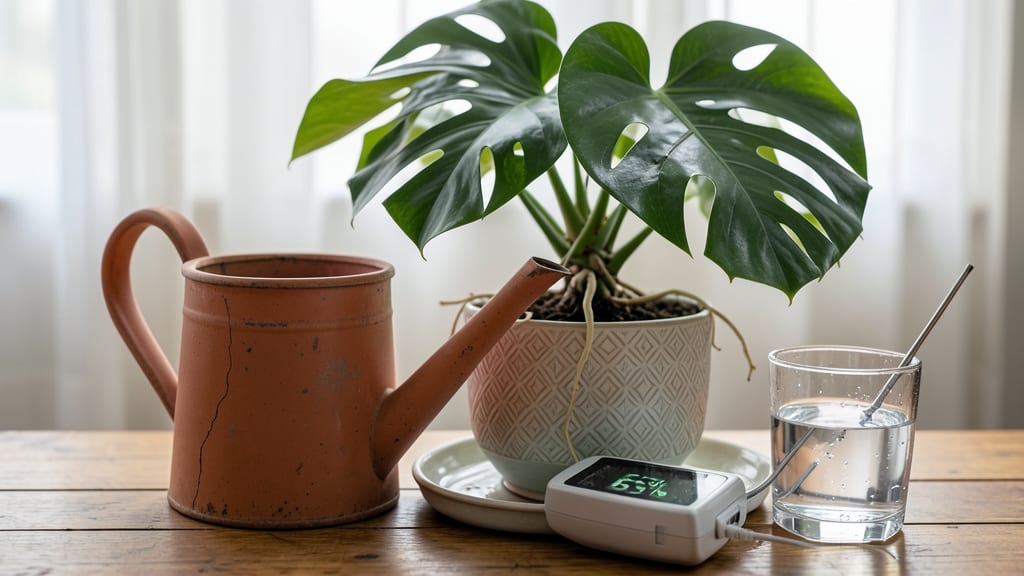
Figuring out how much water your Monstera plant needs can feel like solving a mystery—one day it thrives, the next its leaves droop or turn yellow. The truth? Monsteras 🌿 are finicky about moisture, and getting it wrong is the fastest way to kill your tropical beauty.
I’ve learned the hard way that overwatering is the silent killer of Monsteras, while underwatering stunts their growth. The key isn’t just when to water but how to check if your plant is truly thirsty.
You’ll discover the exact watering schedule tailored to your home’s humidity, light, and even the season—no guesswork required.
Whether you’re a beginner struggling with brown edges or an experienced grower tweaking your routine, this guide breaks down the science behind soil moisture, pot size, and environmental clues. Let’s turn your Monstera from wilting to vibrant in just a few simple steps.
Ready to master the balance? By the end, you’ll know exactly when to reach for that watering can—and when to hold back.
Monstera watering schedule: how often to water based on season
Mastering your Monstera’s watering schedule is all about reading your plant’s cues and adapting to seasonal changes. Monsteras thrive in moist but well-draining soil, and their water needs shift dramatically between summer’s heat and winter’s dry air.
As someone who’s nursed more than a few Monsteras back to health, I’ve learned that consistency is key—but so is flexibility. Let’s break down the perfect watering rhythm for each season to keep those iconic split leaves happy and growing.
First, always check the top 1-2 inches of soil before watering. Stick your finger in—if it feels dry, it’s time. If it’s still damp, wait another day. This simple test prevents both root rot and dehydration, two common pitfalls for new Monstera owners.
Remember, Monsteras are tropical vines, so they prefer humidity-rich environments, but soggy soil is their worst enemy. Let’s dive into the seasonal breakdown to keep your plant thriving year-round.
| Season | Watering Frequency | Soil Check | Key Factors |
|---|---|---|---|
| Spring | Every 10-14 days | Top 2" dry | New growth begins; increase humidity |
| Summer | Every 7-10 days | Top 1-2" dry | Hot, dry air increases evaporation; monitor daily |
| Fall | Every 10-14 days | Top 2" dry | Growth slows; reduce water slightly |
| Winter | Every 2-3 weeks | Top 3" dry | Low humidity from indoor heat; water less |
During spring, your Monstera will show its first signs of new growth, and that’s your cue to increase watering slightly. This is when you’ll see those baby splits emerge on younger leaves—a sure sign your plant is thriving.
Use this season to establish a routine by watering deeply until water runs out the drainage holes. Pro tip: Group your Monsteras with other plants to create a microclimate that retains moisture longer.
Summer is when Monsteras drink the most, but don’t let that translate to daily watering. The key is deep watering every 7-10 days, not frequent shallow drinks.
If you notice the soil drying out faster than usual, your plant might be telling you it needs a larger pot or better humidity levels. Place a tray of water nearby or invest in a humidifier—your Monstera will thank you with glossy, dark green leaves.
As fall arrives, your Monstera’s growth will naturally slow down, mirroring its tropical origins. This is the perfect time to reduce watering frequency back to every 10-14 days. Watch for yellowing leaves, which can signal either overwatering or underwatering—always check the soil first.
A simple soil moisture meter (around $10) can save you from guessing games and potential root rot.
Winter is the most critical season for watering discipline. With indoor heating drying out the air, your Monstera’s soil will stay moist longer. Stretch out watering to every 2-3 weeks, and only water when the top 3 inches are completely dry.
This is also a great time to repot if your plant has outgrown its container, using a well-draining mix with perlite or orchid bark to improve aeration.
One mistake I see often is ignoring the pot material. Terracotta pots dry out faster than plastic, so terracotta-grown Monsteras may need watering more frequently. Conversely, plastic pots retain moisture longer, so you’ll water less often.
Always match your watering schedule to your pot’s material and your home’s humidity levels. A hygrometer (around $15) can help track humidity—aim for 60% or higher for optimal Monstera care.
Finally, never skip the drainage hole check. If your pot lacks drainage, switch to one with holes immediately. Without proper drainage, even the best watering schedule can lead to root rot, which is nearly impossible to reverse.
If your Monstera’s leaves start turning yellow with brown edges, it’s often a sign of overwatering—act fast by letting the soil dry out completely before watering again.
With this seasonal guide, you’ll give your Monstera the perfect balance of moisture it craves without drowning its roots. Stick with these rhythms, and
Monstera watering schedule: how often to water based on season
Your Monstera plant thrives on consistency—too much or too little water can turn those stunning leaves into a sad, yellowing mess. The key is understanding how seasonal changes affect its water needs. In spring and fall, when growth is moderate, water every 10-14 days.
During summer’s peak growth, increase frequency to every 7-10 days, while winter’s dormancy calls for a reduced schedule of every 2-3 weeks. Always check the top 2 inches of soil—if it’s dry, it’s time to water.
Environmental factors like humidity levels and light exposure play a huge role. A Monstera in bright indirect light will dry out faster than one in lower light, requiring more frequent watering. Conversely, low humidity (common in winter) means the soil stays moist longer, so you’ll water less often.
Pay attention to your plant’s pot size too—larger pots retain moisture longer, while smaller ones dry out quicker.
🌿
| Season | Watering Frequency | Soil Check | Environmental Notes |
|---|---|---|---|
| Spring | Every 10-14 days | Top 2 inches dry | Moderate growth; increase if humidity is low |
| Summer | Every 7-10 days | Top 1-2 inches dry | Peak growth; water more if in bright light |
| Fall | Every 10-14 days | Top 2 inches dry | Growth slows; reduce frequency |
| Winter | Every 2-3 weeks | Top 3 inches dry | Dormancy; water sparingly |
When watering your Monstera, always use the deep watering method. Soak the soil until water drains from the bottom of the pot, then empty the saucer to prevent root rot.
In summer months, I like to water in the morning to allow excess moisture to evaporate during the day. For terracotta pots, which dry out faster, you may need to water every 5-7 days in summer, while plastic pots retain moisture longer, so adjust accordingly.
If you’re unsure whether your Monstera needs water, stick your finger about 1-2 inches deep into the soil. If it feels dry, it’s time to water. If it’s still damp, wait another 2-3 days before checking again.
Overwatering is the #1 killer of Monsteras, so when in doubt, wait a little longer. Your plant will thank you with glossy, holey leaves that everyone will envy.
💧
Pro tip: Group your houseplants together to create a microclimate with higher humidity. This helps your Monstera retain moisture longer, especially in dry winter air. A simple pebble tray with water beneath the pot can also boost humidity around your plant, reducing the need for frequent watering.
Just ensure the pot isn’t sitting directly in water—root rot is still a risk if the roots stay soggy.