
Companion Plants
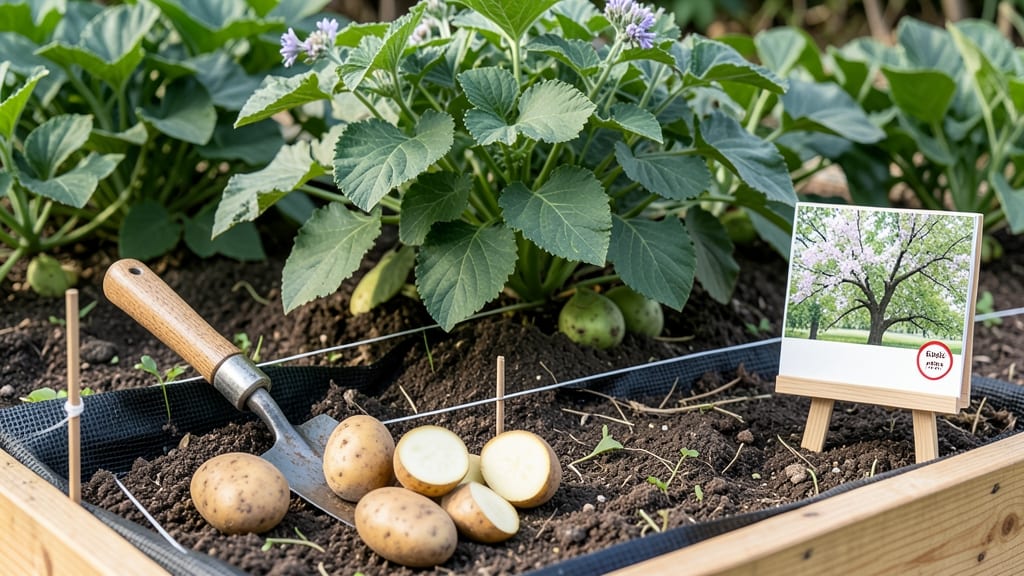
Planting your potatoes at the wrong time in Zone 7 could mean the difference between a bountiful harvest and wasted effort—so timing is everything.
With the right schedule, you’ll enjoy crisp, flavorful 🥔 tubers by summer, but get it wrong, and you might end up with stunted growth or even rot.
The key is planting 2-4 weeks before your last frost date, typically in early spring (February or March), when soil temperatures hit that sweet spot of 45-50°F.
I’ve learned the hard way that rushing into planting too early—when the ground is still cold—can leave your seed potatoes sitting there, doing nothing but waiting. On the flip side, planting too late risks missing the optimal growing window, leaving you with smaller yields.
Zone 7’s variable microclimates (think Virginia to Oregon) mean you’ll need to adjust based on your exact location, but the general rule holds: patience pays off.
In this guide, I’ll walk you through the exact weeks to plant, how to prep your seed potatoes, and even how to tell if you’ve planted too early.
Whether you’re a first-timer or a seasoned gardener looking to maximize your harvest, these tips will help you avoid common mistakes and set yourself up for success. Let’s get those 🥔 in the ground the right way!
Ready to dig in? You’ll discover how to calculate your local frost-free date, choose the best varieties for your climate, and create a planting schedule that works for your garden. No more guesswork—just a foolproof plan for a garden full of potatoes by summer.
Zone 7 potato planting timeline: exact weeks before last frost for peak growth
In Zone 7, potatoes thrive when planted 2-4 weeks before your last frost date. For most of Zone 7, this window falls between mid-February and early March.
However, your exact planting date depends on your local frost-free date and soil temperature—never plant when soil is below 45°F, or your seed potatoes will rot.
For example, in Virginia’s Piedmont region, the average last frost is March 15, so aim to plant by February 28-March 5. In Portland, Oregon, where frost arrives later (around April 1), you can start as early as late February.
Always check your local USDA frost map for precision.
Soil temperature is critical. Use a soil thermometer to confirm the ground has warmed to 45-50°F at least 6 inches deep. Cold soil slows sprouting and invites rot. If your soil is too cold, wait—rushing leads to failure.
Here’s your Zone 7 potato planting timeline based on frost dates and soil readiness:
| Stage | Action | Zone 7 Timeline |
|---|---|---|
| Prep Seed Potatoes | Cut certified seed potatoes into 2-inch chunks (2-3 eyes each). Cure cuts in sunlight for 24-48 hours. | January-February |
| Chit Potatoes | Place seed potatoes in bright light (e.g., windowsill) to sprout 1-inch sprouts. | February-March |
| Plant | Plant 2-4 weeks before last frost, 4-6 inches deep, 12 inches apart in rows 3 feet apart. | Mid-February to Early March |
| Hill Soil | When foliage reaches 6 inches tall, mound soil around stems to encourage tuber formation. | April-May |
| Harvest | Harvest new potatoes when foliage is 12 inches tall or mature potatoes when foliage yellows. | June-July |
Pro tip: Use black plastic mulch to warm soil faster and extend your planting window by 1-2 weeks. Simply lay it down 2-3 weeks before planting to create a microclimate that speeds up soil warming.
If you’re unsure about your last frost date, check resources like the Old Farmer’s Almanac or your local Cooperative Extension Service. These tools provide hyper-local data that can shift your planting window by 10 days or more depending on elevation or urban heat islands.
For Zone 7 gardeners in cooler microclimates (e.g., higher elevations in the Appalachians), consider staggered planting. Plant a second batch 4-6 weeks after the first to ensure a continuous harvest. This works especially well for heat-sensitive varieties like Red Pontiac.
Remember: Potatoes need 90-120 days to mature. Plant too late, and you’ll miss the harvest window before first frost in November. Aim to have half your crop harvested by July 15 to avoid risk.
Finally, test your soil before planting. Potatoes prefer slightly acidic soil (pH 5.0-6.5). If your soil is too alkaline, amend it with peat moss or sulfur to prevent scab disease, a common issue in Zone 7.
With the right timing and soil prep, you’ll harvest golden, disease-free potatoes that rival store-bought—without the chemicals. Happy planting! 🥔
Zone 7 potato planting timeline: exact weeks before last frost for peak growth
In Zone 7, potatoes thrive when planted 2-4 weeks before your last frost date, typically around mid-February to early March. This window ensures soil temperatures reach the ideal 45-50°F for sprouting, while avoiding frost damage to tender shoots.
Missing this window risks stunted growth or rot from cold, wet soil.
Your last frost date in Zone 7 usually falls around March 15, but microclimates (like valleys or urban heat islands) can shift this by 1-2 weeks.
Check your local USDA frost map or ask nearby gardeners for precise timing. Planting too early in cold soil can delay harvests by 3-4 weeks.
| Stage | Action | Zone 7 Timeline |
|---|---|---|
| Prep Seed Potatoes | Cut certified tubers, let sprout | January 15-February 15 |
| Plant Early Varieties | Cold-hardy types (Yukon Gold) | February 15-March 1 |
| Plant Late Varieties | Heat-tolerant types (Red Pontiac) | March 15-April 1 |
| Harvest New Potatoes | When tubers are 2" diameter | June 1-June 15 |
| Harvest Mature Potatoes | After foliage dies back | July 15-August 1 |
For Zone 7 gardeners, soil temperature is more critical than calendar dates. Use a soil thermometer to confirm 50°F+ at 4" depth before planting. If your soil stays below this, wait—cold soil slows sprouting and invites rot.
In northern Zone 7 (e.g., Virginia), aim for late February plantings, while southern Zone 7 (e.g., Oregon) can start as early as January.
Pro tip: If your last frost arrives late (after March 15), opt for early-maturing varieties like Red Norland (60-70 days) to salvage the season. These tolerate cooler soils and still yield 2-3 weeks earlier than standard varieties.
Always plant 4-6 inches deep—shallower depths risk exposure to light, turning tubers green and bitter.
After planting, hill soil around stems every 2 weeks to encourage tuber formation. This simple step boosts yields by 30-40% by blocking light from reaching developing potatoes. Mulch with straw or grass clippings to maintain even moisture—critical in Zone 7’s unpredictable spring rains.
Remember: Potatoes need 90-120 days to mature, so calculate backward from your first frost (usually November 15). If you plant too late, your harvest will coincide with cooling temps, stunting tuber growth.
For a second crop, try late-season varieties like Kennebec planted in early May—they mature just before frost.