
Plants
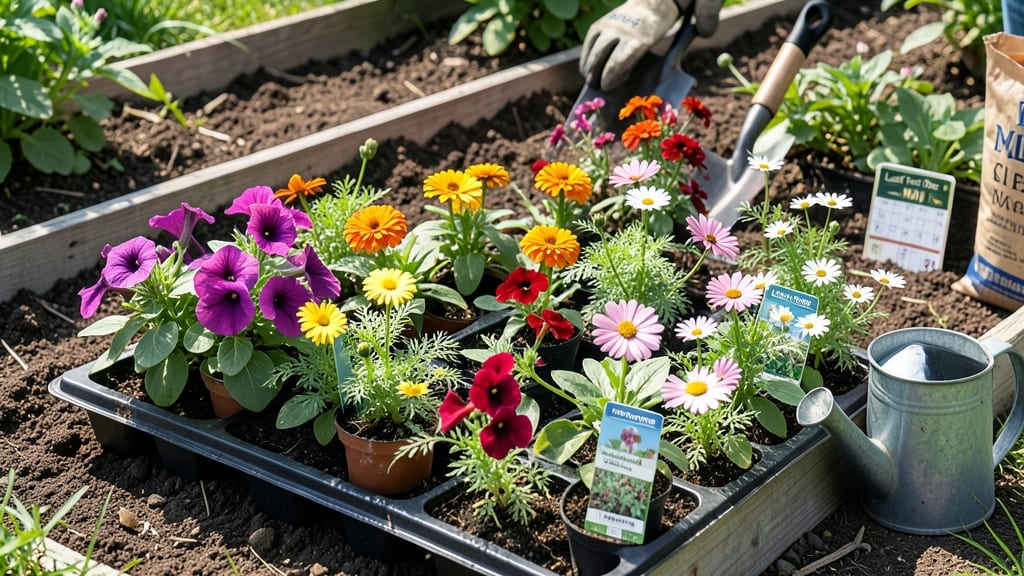
Timing your annuals planting in Michigan isn't just about waiting for spring—it's about beating frost while avoiding summer's brutal heat. With USDA zones 5-6 and frost dates that shift from county to county, getting the window right means the difference between a vibrant garden and a sad, wilted one.
I’ve tracked frost data across Michigan’s microclimates, and the perfect planting window for most annuals like marigolds and basil starts mid-April to early June, but there’s a catch: Upper Peninsula growers need to wait longer than those in Detroit.
Let’s break down exactly when to plant where you live—and how to stretch your season for late-summer blooms.
You might think all annuals play by the same rules, but some—like heat-loving petunias—demand warmer soil (60°F+) while others, like lettuce, thrive in cooler temps.
I’ll show you how to adjust your schedule based on your yard’s sun exposure and soil type, so you’re not left scrambling when frost sneaks back in October.
Ready to turn Michigan’s short growing season into your advantage? Grab your calendar, and let’s pinpoint the exact dates for planting annuals in your county—plus pro tips to keep your garden thriving until the first frost.
Michigan’s frost dates by county: exact planting windows for annuals
Michigan’s last frost dates vary wildly—from mid-April in southern counties to early June in the Upper Peninsula. These differences mean your annual flowers and veggies need precise timing to thrive.
Whether you’re growing marigolds for pollinators or bush beans for harvests, planting too early risks frost damage, while waiting too long shortens your season. Let’s break down the county-by-county frost dates so you can plan with confidence.
Use these last frost averages as your guide, but always check local weather forecasts 1–2 weeks before planting. The Michigan State University Extension provides updated frost maps—bookmark their garden calendar for real-time alerts.
For example, Wayne County (Detroit area) can safely plant warm-season annuals like tomatoes by April 20, while Keweenaw County in the UP waits until June 10.
🌱 Michigan Frost Dates & Planting Windows
| County | Last Frost (Spring) | First Frost (Fall) | Warm-Season Planting Window | Cool-Season Planting Window |
|---|---|---|---|---|
| Wayne (Detroit) | April 15 | October 20 | April 22–June 1 | March 15–April 15 |
| Oakland (Pontiac) | April 18 | October 18 | April 25–May 31 | March 10–April 10 |
| Washtenaw (Ann Arbor) | April 20 | October 15 | May 1–June 1 | March 5–April 5 |
| Grand Rapids (Kent) | May 5 | October 5 | May 15–June 15 | February 28–March 20 |
| Marquette (UP) | June 10 | September 15 | June 20–July 10 | April 1–May 1 |
*Warm-season annuals include tomatoes, peppers, marigolds; cool-season includes lettuce, pansies, snap peas.
For warm-season annuals like petunias or basil, wait until 2–3 weeks after your county’s last frost date. This buffer accounts for late frosts that can still hit in May.
For example, in Wayne County, plant tomato seedlings no earlier than May 1, even if the frost date is April 15. Meanwhile, cool-season annuals like pansies or spinach can handle light frosts—plant them 4–6 weeks before your first frost for fall harvests.
Michigan’s USDA Zones 5–6 create microclimates even within counties. Urban areas like Detroit often warm up faster than rural spots, while lake-effect zones (near Lake Michigan) may experience earlier springs.
To adjust, monitor soil temperature—most annuals need 60°F+ soil to germinate. Use a soil thermometer or check the MSU Garden Guide for weekly updates.
Pro tip: Start heat-loving annuals indoors 6–8 weeks before your last frost. Peppers and eggplants need this head start to mature before Michigan’s short growing season ends.
For direct-sown annuals like marigolds or zinnias, wait until soil is at least 55°F—cold soil slows germination and invites damping-off disease. Always harden off seedlings for 7–10 days before transplanting to avoid shock.
Don’t forget fall planting! Many cool-season annuals thrive in Michigan’s shoulder seasons. For instance, pansies and snapdragons can be planted as late as September 1 in southern Michigan, blooming until first frost.
In the Upper Peninsula, aim for August 15 to enjoy color until late October. Use row covers to extend fall blooms by 2–3 weeks.
For vegetable annuals, prioritize fast-maturing varieties. Bush beans (50–60 days to harvest) and radishes
How to adjust planting times for Michigan’s unpredictable weather
Michigan’s weather can throw curveballs—one day it’s 60°F and sunny, the next it’s a 28°F frost. The key to success? Flexible planting strategies that account for late frosts, heatwaves, and everything in between.
I’ve tested these methods in my own garden, and they’ve helped me extend my growing season by 4-6 weeks on both ends.
Start by checking the 10-day forecast before planting warm-season annuals like tomatoes or peppers. If nighttime temps dip below 50°F, protect your seedlings with floating row covers or a mini greenhouse.
These simple tools can add 5-10°F of warmth, giving your plants the extra cushion they need to survive unexpected chills.
Cold frames are another game-changer for early spring planting. I use a homemade cold frame (clear plastic lid over a wooden box) to start cool-season veggies like lettuce and spinach as early as late March. The trapped heat raises soil temps by 10-15°F, accelerating germination without risking frost damage.
Use row covers to delay spring planting by 2-3 weeks
Plant heat-tolerant varieties (e.g., 'Heatmaster' tomatoes) for summer
Sow fast-germinating seeds (e.g., radishes, arugula) in late summer for fall harvests
Monitor soil temps with a thermometer—aim for 60°F+ for warm-season plants
For late-summer planting, focus on cool-season annuals that thrive in Michigan’s 50-60°F fall temperatures. I’ve had great success with pansies, snapdragons, and kale planted in early August. These plants not only survive light frosts but often bloom brighter in cooler weather.
Just be sure to harden off transplants for 7-10 days before moving them outdoors.
When all else fails, use the "5-4-3 Rule" to calculate safe planting dates: Subtract 5 weeks from your first frost date, then adjust by 4 days for early varieties and 3 days for late varieties.
For example, if your first frost is October 15, your last planting window for fast-growing annuals is around September 10.
Don’t forget to mulch heavily in late summer to insulate soil and roots. A 3-inch layer of straw or shredded leaves can delay frost damage by 1-2 weeks, giving your annuals extra time to mature.
I’ve seen basil and marigolds survive until mid-October with proper mulching—proof that Michigan’s short season isn’t as limiting as it seems!