Plants
Timing your blackberry 🫐 planting in Florida isn’t just about the calendar—it’s about matching varieties to the state’s unique chill-hour zones to guarantee sweet, productive harvests every season. Get it wrong, and you’ll end up with weak canes or disappointing yields, no matter how much care you put in.
Florida’s warm climate means you can plant blackberries year-round, but late winter or early spring remains the sweet spot for most varieties. The key is understanding how chill-hour requirements vary across Florida’s zones 8a-11, where some areas barely get winter frost while others experience light freezes.
This guide breaks down exactly when to plant for maximum success.
Whether you’re growing primocane varieties that fruit on new growth or floricane types that need winter dormancy, the right planting window makes all the difference. I’ll walk you through the best months for each type, soil prep tips, and how to protect your plants from Florida’s unpredictable weather patterns.
Ready to grow blackberries that thrive in your backyard? Let’s dive into the chill-hour matching system that’ll help you pick the perfect planting time—and set yourself up for a bountiful harvest from spring through fall.
Florida’s chill-hour zones explained: how they dictate blackberry planting times
Florida’s warm climate might seem ideal for blackberries, but the key to success lies in understanding chill-hour requirements. Unlike northern states, Florida’s USDA chill-hour zones range from 0 in Miami (Zone 11) to 500+ in the Panhandle (Zone 8a).
These hours determine when blackberries enter dormancy and when to plant for optimal growth.
Blackberries need 300–1,000 chill hours to produce fruit, but Florida’s varieties thrive with far fewer. Primocane varieties (like ‘Arapaho’) produce fruit on new growth and need 0–300 chill hours, while floricane varieties (like ‘Natchez’) require 500+ chill hours but struggle in southern Florida.
Matching your variety to your zone is critical.
Here’s how chill hours break down across Florida’s zones:
- Zone 8a (Panhandle): 500–1,000 hours (best for floricane types)
- Zone 9a (Central Florida): 300–500 hours (primocanes or low-chill floricanes)
- Zone 10a/11 (South Florida): 0–300 hours (only primocanes work)
Planting at the wrong time—like in summer—can stress plants in Florida’s heat. Instead, aim for late winter or early spring (January–February) when soil is warm but temperatures are mild. This gives roots time to establish before summer’s intensity.
🌱
Florida Blackberry Planting by Chill-Hour Zone
| Zone | Chill Hours | Best Varieties | Ideal Planting Month | Notes |
|---|---|---|---|---|
| 8a (Panhandle) | 500–1,000 | Natchez, Ouachita | January–February | Floricane types; needs winter dormancy. |
| 9a (Central FL) | 300–500 | Arapaho, Chester | December–March | Primocanes; year-round harvest. |
| 10a/11 (South FL) | 0–300 | Apache, Choctaw | Year-round (best in Jan–Feb) | Heat-tolerant; minimal dormancy. |
⚠️ Pro Tip: In Zone 10a/11, avoid planting in summer—high heat stresses young roots.
For example, in Zone 9a (Orlando), planting ‘Arapaho’ in January lets it establish before summer’s heat, while ‘Natchez’ in Zone 8a (Tallahassee) needs a February start to handle winter chills.
Always check your local last frost date (e.g., January 15 in Zone 8a vs. no frost in Zone 11).
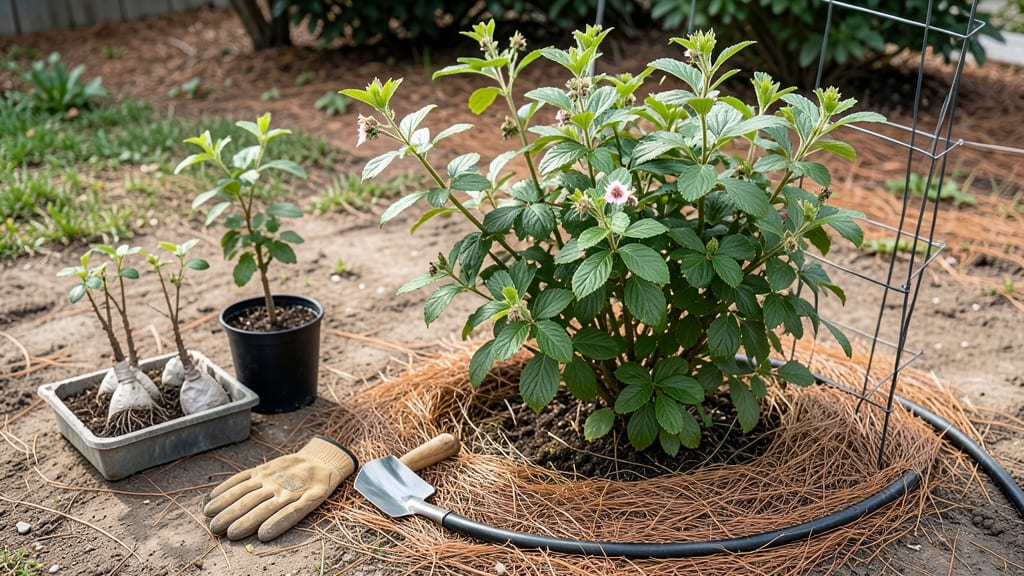
After planting, mulch heavily (3–4 inches) to retain moisture and regulate soil temps. In Florida’s heat, mulch also suppresses weeds, which compete for water. Use straw or pine bark—avoid grass clippings, which can mat and block airflow.
🌿
One common mistake is assuming all blackberries need winter dormancy. Primocane varieties in southern Florida grow year-round, but they still benefit from a cool-season planting to avoid transplant shock. For instance, ‘Apache’ thrives in Zone 11 but should still be planted in January to align with natural rainfall patterns.
Finally, monitor soil temps. Blackberries struggle if soil stays above 90°F for extended periods. In Zone 10a/11, provide afternoon shade (using shade cloth) during peak summer months to protect young canes.
☀️
Best blackberry varieties for Florida’s climate and their ideal planting months
Florida’s warm climate means you can grow blackberries year-round, but the key is choosing varieties with low chill-hour requirements—ideally under 500 hours. Most Florida-friendly blackberries are primocane-fruiting types, which produce berries on new growth rather than needing winter dormancy.
These varieties thrive in USDA Zones 8a–11 and can fruit twice a year if conditions are right.
For northern Florida (Zones 8a–9a), varieties like ‘Arapaho’ (300–400 chill hours) and ‘Natchez’ (300–500 chill hours) are excellent choices. They produce large, sweet berries and handle Florida’s heat well.
In central and southern Florida (Zones 9b–11), ‘Ouachita’ (200–300 chill hours) and ‘Chickasaw’ (100–200 chill hours) are top picks—they’re nearly frost-free and fruit prolifically in winter and spring.
| Variety | Chill Hours | Best Planting Month | Fruit Season | Notes |
|---|---|---|---|---|
| Arapaho | 300–400 | January–February | Spring & Fall | Large berries, needs trellis |
| Natchez | 300–500 | December–March | Winter & Summer | Sweet, disease-resistant |
| Ouachita | 200–300 | Year-round (best Jan–Feb) | Winter & Spring | Heat-tolerant, early producer |
| Chickasaw | 100–200 | January–March | Winter & Spring | Best for Zone 10+, drought-resistant |
If you’re in southern Florida (Zones 10–11), avoid varieties requiring 500+ chill hours, like traditional ‘Darrow’ or ‘Cheyenne’, as they’ll struggle to fruit reliably. Instead, focus on everbearing or primocane types like ‘Apache’ or ‘Prime-Ark Freedom’, which produce berries without needing a cold winter.
These varieties fruit on new growth, so they adapt well to Florida’s mild winters and long growing seasons.
For container growing in urban areas, ‘Prime-Ark Freedom’ is a standout—it’s compact, disease-resistant, and produces sweet berries year-round with minimal chill hours. Just ensure your container is at least 18 inches deep and has drainage holes to prevent root rot in Florida’s humid summers.
Timing your planting is just as critical as variety selection. Late winter (January–February) is ideal for most Florida regions because it gives roots time to establish before the hot, dry summer.
However, in southern Florida (Zones 10–11), you can plant year-round, though avoid peak summer (June–August) when heat stress can stunt young plants.
Pro tip: If you’re planting in fall (September–November), choose bare-root plants and keep them well-watered to help them establish before the next growing season. Mulch heavily with 3–4 inches of pine straw or wood chips to retain moisture and protect roots from Florida’s intense sun.