
Plants
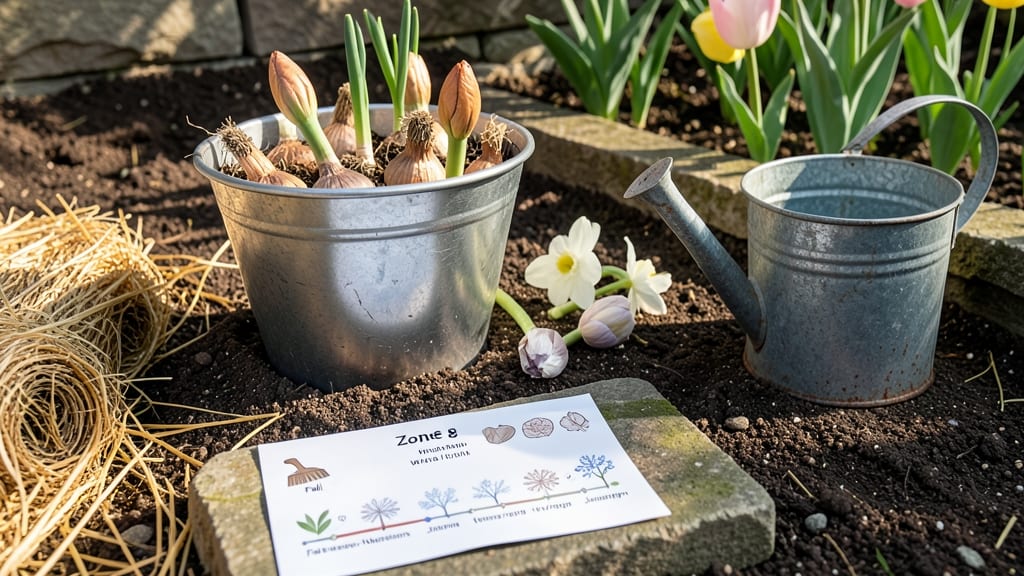
Knowing when to plant bulbs in Zone 8 can mean the difference between a vibrant spring garden and empty flowerbeds. With mild winters and unpredictable frost dates, timing is everything for 🌱 bulbs (General) that need just the right chill to bloom.
Skip the guesswork and learn the exact windows that work for your microclimate—whether you're in coastal Southern California or high-desert Arizona.
Most bulbs thrive when planted in fall (October-November), but Zone 8’s warm winters throw a wrench into traditional schedules. Some varieties need almost no chill, while others demand a few cold snaps to trigger those stunning spring displays.
I’ll break down the chill-hour requirements and show you how to adjust planting dates for perfect results—no matter where you are in Zone 8.
You’ll also discover which bulbs are foolproof for your area and how to handle those tricky microclimates. Urban heat islands? Coastal breezes? High desert elevations? We’ve got solutions to ensure your bulbs get the right conditions, even when Mother Nature doesn’t cooperate.
Ready to transform your garden into a springtime paradise? Let’s dive into the science—and the simple tricks—that make all the difference in Zone 8 bulb planting.
Zone 8 bulb planting calendar by chill-hour needs
In Zone 8, where winters are mild and frost dates vary dramatically by location, timing your bulb planting to match chill-hour requirements is the key to vibrant spring blooms.
Unlike colder zones, we don’t have a one-size-fits-all window—some bulbs need almost no winter chill, while others demand 20+ hours below 42°F to trigger flowering. Let’s break down the exact planting windows for your garden.
Most bulbs thrive when planted in fall (October-November), but Zone 8’s unpredictable winters mean adjustments are often necessary. For bulbs requiring 0-10 chill hours, like paperwhite narcissus, you can plant as late as December.
Meanwhile, tulips and daffodils (10-20 chill hours) need to be in the ground by mid-November to avoid rot in warm spells. Let’s dive into the specifics.
| Chill-Hour Range | Best Planting Window | Zone 8 Adjustments | Example Bulbs |
|---|---|---|---|
| 0-10 chill hours | December-February | Plant after first frost (if any) or in warm microclimates. | Paperwhite Narcissus, Rain Lilies, Cyclamen |
| 10-20 chill hours | October-November | Use mulch to simulate winter chill in urban heat islands. | Daffodils, Hyacinths, Miniature Tulips |
| 20+ chill hours | September-October | Plant early and use cold frames for extra chill. | Standard Tulips, Crocuses, Alliums |
For bulbs needing 0-10 chill hours, think of them as the low-maintenance stars of Zone 8 gardens. These varieties, like paperwhite narcissus, will bloom reliably even if you plant them in December.
They’re perfect for containers or areas where winters are exceptionally mild, like coastal regions. Just ensure they’re in well-draining soil to prevent rot during occasional winter rains.
Bulbs requiring 10-20 chill hours—such as daffodils and hyacinths—are the workhorses of Zone 8 gardens. Plant them between October and November, aiming for 6-8 weeks before your average first frost.
In urban areas, where pavement and buildings trap heat, you might need to plant 2-3 weeks earlier than rural zones to compensate for the heat island effect. Always test your soil’s drainage first—these bulbs hate soggy soil.
If you’re growing tulips or alliums, which need 20+ chill hours, you’ll need to act fast. Plant them in September or early October and consider using cold frames or refrigeration tricks (like storing bulbs in the fridge for 6-8 weeks before planting) to mimic winter conditions.
These bulbs are worth the extra effort—their dramatic blooms will reward you with spring color that lasts for weeks.
Pro tip: Use a soil thermometer to check when temperatures consistently drop below 60°F at night. This is your cue to start planting chill-sensitive bulbs.
In high-desert areas, where nights are cold but days warm quickly, you might even plant tulips in late October to avoid early sprouting. Always mulch heavily (3-4 inches) after planting to protect bulbs from temperature swings.
One common mistake in Zone 8 is waiting until November or December to plant bulbs that need chill hours. By then, the ground may be too warm, causing bulbs to sprout prematurely and rot. Another pitfall?
Planting too shallowly—bulbs need 3x their height in soil for insulation. For example, a 6-inch tulip bulb should be buried 18 inches deep. Use a bulb planter to dig holes to the correct depth effortlessly.
For warm-season bulbs like dahlias and cannas, the rules flip entirely. These beauties go in the ground after your last frost date, typically in March or April in Zone 8.
They thrive in hot summers and don’t need winter chill—they’ll simply die back in cold weather and regrow from their tubers the next season. Think of them as the summer’s secret weapon for bold, long-lasting blooms.
To track your Zone 8 bulb planting success, mark your calendar for January 15th (average last frost date) and December 15th (average first frost). Adjust these dates by 1-2 weeks based on your local microclimate.
For example, coastal areas may have no frost, while high-desert regions might experience light frosts even in December. Always err on the side of earlier planting for chill-loving bulbs—you can’t rush their growth, but you can outpace the heat.
Zone 8 bulb planting calendar by chill-hour needs
Zone 8’s mild winters make bulb planting a balancing act—too early, and bulbs rot in wet soil; too late, and they miss critical chill hours needed to bloom. The key is matching your local frost dates with each bulb’s chill-hour requirements.
Most Zone 8 gardeners aim to plant 6-8 weeks before the first frost (typically mid-October to early November), but some bulbs thrive with almost no chill.
Bulbs fall into three chill-hour categories: 0-10 hours (zero-chill varieties), 10-20 hours (low-chill), and 20+ hours (traditional). In Zone 8, even a few cold snaps can satisfy the needs of 20-hour bulbs, while coastal areas may never hit those thresholds.
Let’s break down the exact planting windows for each category to ensure your garden bursts with color come spring.
| Chill-Hour Need | Zone 8 Planting Window | Best Bulb Examples | Microclimate Notes |
|---|---|---|---|
| 0-10 hours | October 15–November 15 | Paperwhite Narcissus, Rain Lilies, Cyclamen | Plant anytime in mild winters; no chill needed. |
| 10-20 hours | October 1–November 10 | Daffodils, Hyacinths, Miniature Tulips | Aim for early October in warm microclimates; coastal areas may need December planting. |
| 20+ hours | September 15–October 15 | Tulips, Crocuses, Alliums | Plant early in inland areas; high-desert zones may need extra chill tricks. |
For zero-chill bulbs, like paperwhite narcissus, timing is flexible—plant them in late fall or even early spring (February-March) if you miss the traditional window. These varieties bloom without cold exposure, making them perfect for coastal Zone 8 gardens where frost is rare.
Meanwhile, 20-hour bulbs like tulips need early planting to maximize their chill exposure before winter sets in.
Pro tip: Use a soil thermometer to monitor ground temps—bulbs should go in when soil reaches 60°F (15°C). In high-desert areas, plant 4-6 weeks earlier than coastal zones to account for faster cooling.
If your winter is unusually warm, consider pre-chilling bulbs in the fridge for 4-6 weeks before planting to trick them into dormancy.
Don’t overlook early spring planting (February-March) for bulbs like dahlias or cannas, which thrive in Zone 8’s warmth. These warm-season bulbs skip the chill requirement entirely and bloom in summer instead. Just plant them after the last frost when soil is workable and mulch heavily to retain moisture.
Remember: Mulch is your best friend in Zone 8. A 2-3 inch layer of straw or wood chips after planting helps regulate soil temps, prevents frost heave, and keeps bulbs from drying out during mild winters. This simple step can mean the difference between flawless blooms and disappointing flops.