
Plants
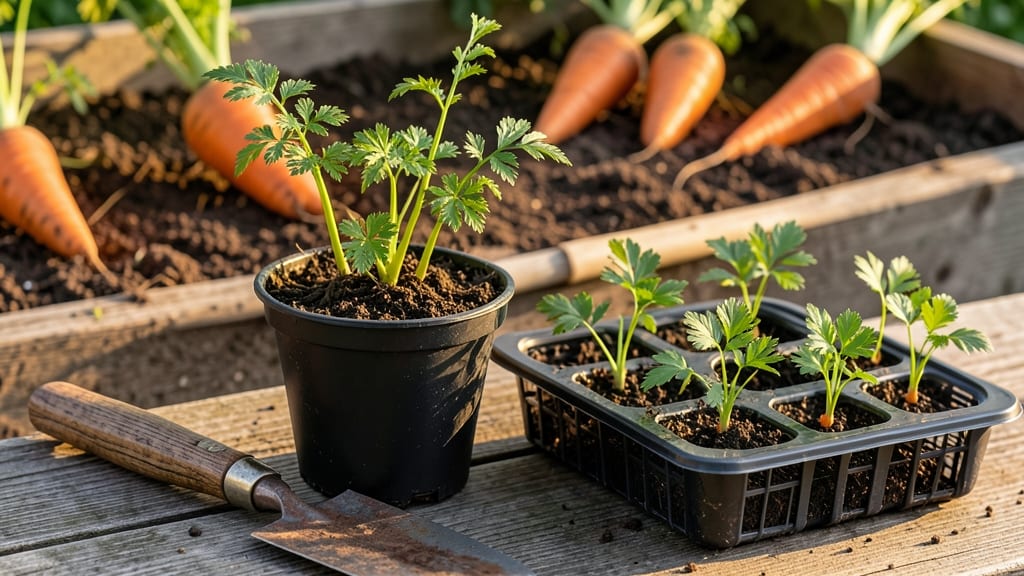
Timing your fall carrot planting just right can mean the difference between crisp, sweet roots and bitter, stunted vegetables. That perfect window exists—4-6 weeks before your first frost—but getting it wrong means your 🥕 might bolt or rot before you can harvest.
I’ve learned the hard way that soil temperature and regional frost dates matter more than just counting back from Halloween. In USDA Zone 6, where many gardeners grow carrots, that window typically falls in late August or early September—but your exact timing depends on factors like soil warmth and variety.
Here’s the game-changer: cooler fall soils actually sweeten carrots, but they need to stay warm enough to germinate. I’ll show you how to test your soil, pick the right varieties, and stretch your harvest right up to frost—so you’re pulling those orange treasures when they’re at their peak.
Whether you’re a first-time gardener or a seasoned grower, these tricks will help you avoid common mistakes and enjoy homegrown carrots that taste better than anything from the store. Let’s get those seeds in the ground at the perfect moment.
Ideal fall carrot planting dates based on your USDA hardiness Zone
Timing your fall carrot planting depends on your USDA hardiness zone and first frost date. Most gardeners aim to plant 4-6 weeks before the first hard frost—this ensures carrots mature before winter sets in.
For example, in Zone 6 (like much of the Midwest), I plant mine in late August to early September to harvest before the mid-October frost.
In warmer zones (8-11), you can extend planting into October or even November, while cooler zones (3-5) may need to start as early as July. The key is balancing soil warmth (ideally 50-70°F) and daylight hours to prevent bolting or stunted growth.
Here’s how to calculate your perfect window: subtract 60-75 days (carrots’ maturity time) from your first frost date. For instance, if frost hits November 15, plant by September 10. Use local almanacs or USDA frost maps to pinpoint your exact date.
Pro tip: Succession planting every 2 weeks in late summer/early fall gives you a staggered harvest. For example, I sow a batch in August, another in September, and a final one in early October—this ensures fresh carrots until winter.
If you’re in a transitional zone (e.g., Zone 7b), err on the earlier side—cooler microclimates (like valleys) may need an extra 2 weeks earlier. For example, I’ve had success planting Danvers Half Long in Zone 7 by August 15 to harvest before November 1.
For direct sowing (best for fall), plant seeds ½ inch deep in loose, rock-free soil. If transplanting seedlings, harden them off for 7-10 days before setting out. I’ve found that shorter varieties (like Paris Market) mature faster in cooler fall soils.
Watch for bolting—long daylight hours in early fall can trigger flowering. To prevent this, choose short-day varieties or use shade cloth (30-50%) if days stay too long. In my garden, I’ve avoided bolting by planting Nantes carrots in late September when daylight shortens.
Finally, mark your calendar for harvest time: pull carrots when roots reach 1-1.5 inches thick and tops are 3-4 inches tall. Leaving them too long can make them woody. In Zone 6, I harvest my last batch by November 1 before hard frost sets in.
Soil temperature secrets: how to test and adjust for perfect carrot growth
Carrots thrive when soil temperatures hover between 50°F and 70°F—too cold, and seeds won’t germinate; too hot, and roots turn tough. The key? Timing your plantings to match your local climate.
In my Zone 6 garden, I’ve learned that late August to early September is ideal, but your mileage may vary. Let’s break down how to test and tweak soil warmth for foolproof fall carrots.
Start by checking soil temperature at 1-inch depth (where most carrot seeds lie). Use a digital soil thermometer or a DIY version: bury a thermometer in a small can for 30 minutes, then read it.
Morning readings (9–11 AM) are most accurate. Aim for 60°F+ for germination and 55°F+ for root growth. If your soil runs cooler, don’t panic—we’ll fix that next.
For slower soil warming, try succession planting in 2-week intervals from late summer into early fall. Plant short-season varieties like ‘Early Nantes’ (58 days to maturity) first, followed by longer types like ‘Danvers’ (70 days).
This stretches your harvest window and ensures at least one batch hits the sweet spot of cool soil and crisp roots.
Companion plants can also help regulate soil temperature. Interplant carrots with radishes (they germinate faster and mark rows) or onion family members (their pungent aroma deters pests). Avoid planting near dill or parsley, though—their slow growth can shade out your carrots.
Pro tip: Tuck in clover or alfalfa as living mulch to insulate soil and retain warmth.
If your soil stays stubbornly cold, try warming it pre-planting. Lay down clear plastic sheeting for 2–3 weeks before sowing to trap sunlight. Or, mix in composted leaves or straw to improve drainage and warmth retention.
Just avoid overdoing it—carrots hate soggy soil, so aim for well-draining, loose beds with a fine texture (no clods!).
Finally, monitor your carrots’ progress. If seedlings emerge unevenly, your soil may have had temperature fluctuations. Thin to 2 inches apart once they’re 2 inches tall, and watch for bolting (long stems, bitter roots)—a sign of heat stress or daylength changes.
Harvest before the first hard frost, or mulch heavily to protect roots through winter for a spring treat.