
Plants
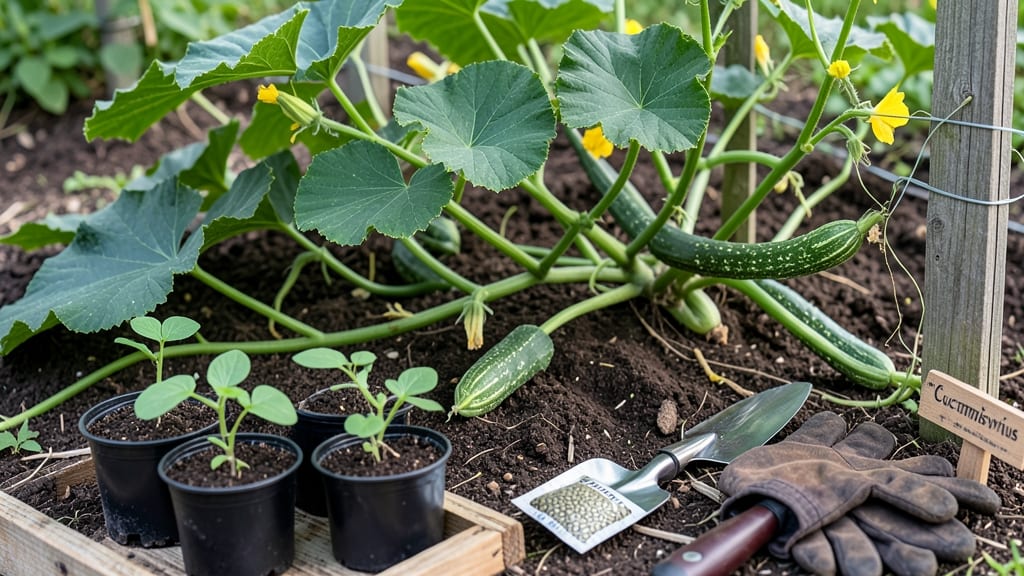
If you’ve ever planted cucumbers 🥒 in New Jersey only to watch them wilt from a late frost or struggle through a short summer, you’re not alone.
The key to a bountiful harvest isn’t just luck—it’s knowing exactly when to plant cucumbers in New Jersey based on soil temperature triggers that most gardeners overlook.
Here’s the secret: Cucumbers thrive when soil reaches a steady 60°F or warmer, which typically happens between mid-April and late June in zones 6a-7a. Planting too early risks frost damage, while waiting too long cuts your harvest short.
I’ll break down the exact windows, regional tweaks for coastal vs. inland areas, and how to stretch your season with simple tricks like row covers.
You’ll also discover how to prep your soil for maximum growth, spot common mistakes (like planting in cold soil), and use local resources to fine-tune your timing. By the end, you’ll know exactly when to get those seeds in the ground for crisp, vine-ripened cucumbers all summer long.
Whether you’re a first-time gardener or a seasoned pro, these insights will help you avoid wasted effort and enjoy a garden bursting with fresh, homegrown cucumbers from July to September. Let’s get started!
New Jersey cucumber planting calendar: soil temperature triggers for success
New Jersey’s climate zones (6a-7a) create distinct planting windows for cucumbers, but the real secret to success lies in soil temperature. Unlike air temperature, soil warms slowly—waiting for 55°F+ for germination and 60°F+ for vigorous growth ensures your seedlings thrive.
In northern NJ (e.g., Bergen County), aim for mid-May planting after the last frost (typically April 15), while southern NJ (e.g., Cape May) can start as early as late April.
For direct-sown seeds, use a soil thermometer to confirm readiness—cucumbers won’t germinate below 55°F.
If your soil is too cold, try black plastic mulch to raise temperatures by 5-10°F within days. Transplanted seedlings need 60°F+ soil to avoid shock, so hold off until after Memorial Day in cooler microclimates like the Poconos region.
Here’s the critical timeline for New Jersey gardeners:
- Northern NJ: Plant May 1–15 (soil >60°F)
- Central NJ: Plant April 20–May 10 (soil >58°F)
- Southern NJ: Plant April 1–April 30 (soil >55°F)
Miss these windows, and you risk poor germination or stunted vines.
🌱 New Jersey Cucumber Planting Summary
| Region | Last Frost Date | Optimal Planting Window | Soil Temp Threshold | Key Tip |
|---|---|---|---|---|
| Northern NJ (e.g., Hudson County) | April 20–May 1 | May 1–15 | 60°F+ | Use row covers for early starts |
| Central NJ (e.g., Trenton) | April 10–20 | April 20–May 10 | 58°F+ | Black plastic mulch speeds warming |
| Southern NJ (e.g., Atlantic City) | March 30–April 10 | April 1–April 30 | 55°F+ | Start seeds indoors for head start |
✅ Pro Tip: Check NJ Agricultural Experiment Station’s frost-free maps for your exact location.
Don’t let microclimates fool you—coastal areas like Cape May may warm faster than inland Morris County. Test your soil in morning sunlight (it’s cooler then) to avoid overestimating warmth. If your garden sits in a low-lying area, frost lingers longer, so delay planting until late May.
For container gardening, soil heats up 3–5°F faster than ground soil. Place pots in full sun on black surfaces (like a patio) to hit 60°F sooner. Just be ready to move containers indoors if a late frost threatens—cucumbers wilt at 32°F.
If you’re succession planting for continuous harvests, your last planting window is mid-July. Seedlings planted then need 80 days to mature, so time it to finish before first frost (October 15). Use fast-maturing varieties like ‘Straight Eight’ (55 days) for late-season success.
One common mistake is planting based on air temperature alone. A 70°F day with 50°F soil will stall germination. Use a soil thermometer ($10 at garden centers) to avoid this pitfall. Pro tip: Bury it 2 inches deep—that’s where cucumber roots thrive.
For organic gardeners, amend soil with compost or aged manure 2–3 weeks before planting to boost warmth retention. Avoid fresh manure—it can burn roots and raise soil temps too quickly. Aim for 6.0–6.8 pH; cucumbers hate acidic soil.
🌱 Remember: Patience pays off. Rushing cucumbers into cold soil wastes seeds and time
How to extend cucumber season in New Jersey: transplanting, row covers, and succession planting
New Jersey’s short growing season can feel like a race against time for cucumbers 🥒, but with the right strategies, you can stretch harvests from early summer to late fall.
The key is understanding how to transplant seedlings at the perfect moment, use protective covers, and implement succession planting for continuous yields.
Most gardeners wait until after the last frost date (typically mid-April in southern NJ and early May in northern regions) to transplant cucumber seedlings. However, if you’re eager to start earlier, row covers can protect tender plants from late frosts while allowing sunlight to penetrate.
I’ve found that using lightweight frost blankets over seedlings planted in early April can buy you an extra 2-3 weeks of growing time.
Here’s how to maximize your cucumber season with these three proven methods:
🔹 Extend Your Cucumber Harvest with These Pro Tips
- 1. Transplant after soil warms to 60°F+ (use a soil thermometer) and all frost risk has passed. Southern NJ gardeners can start in early May, while northern areas should wait until mid-May.
- 2. Use row covers for 2-3 weeks post-transplant to shield plants from light frosts (down to 28°F) and pests like cucumber beetles.
- 3. Plant in stages: Start your first batch in early May, then add 2-3 more plantings every 2 weeks until late June for continuous harvests.
- 4. Try late-season varieties like ‘Straight Eight’ or ‘Marketmore’—they mature faster (50-55 days) and handle cooler temps better.
- 5. Mulch heavily with straw or black plastic to retain soil heat and suppress weeds, keeping roots warm for longer harvests.
For those in coastal NJ, where temperatures moderate more slowly, consider starting seedlings indoors in late March and transplanting after May 15. Inland areas can push the timeline slightly earlier, but always confirm with your local Cooperative Extension Service for precise frost dates.
One common mistake I see is planting all cucumbers at once and expecting a long harvest. Instead, stagger your plantings by 2 weeks to ensure fresh cucumbers appear every 3-4 weeks.
This method works especially well for bush varieties, which mature faster than vining types. Pair this with drip irrigation to maintain consistent moisture—cucumbers wilt quickly when stressed.
By combining these techniques, you can enjoy homegrown cucumbers from early July through September, even in New Jersey’s variable climate. The secret isn’t just timing—it’s layering strategies to protect your plants and keep them producing.
With a little planning, your garden can become a cucumber powerhouse all season long! 🌱