
Trees
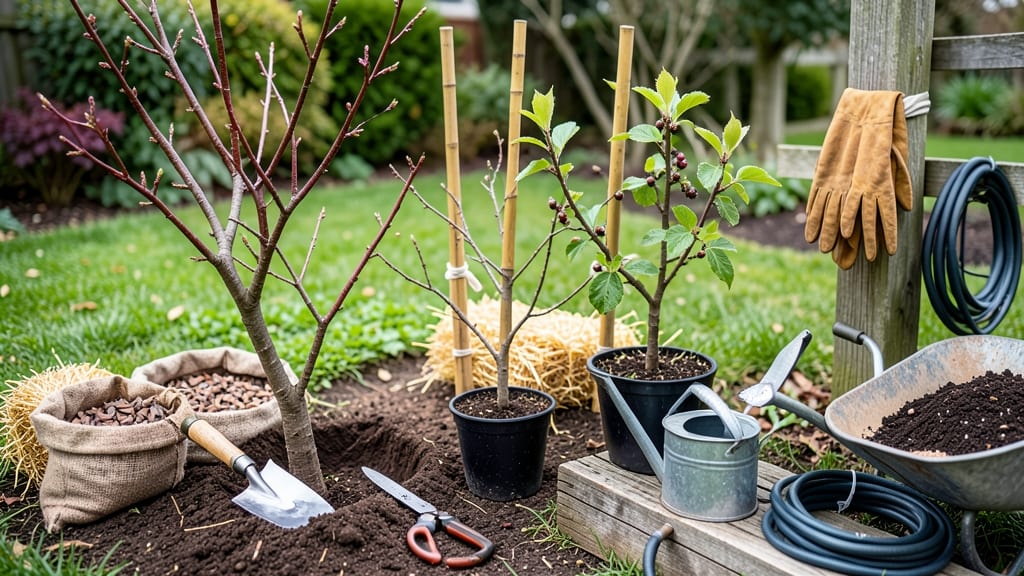
Planting fruit trees in Massachusetts isn’t just about grabbing a shovel and digging—it’s about timing it right to beat the frost and set your orchard up for success. Whether you’re dreaming of crisp apples or juicy peaches, getting the window wrong could mean lost investments and missed harvests.
The key lies in understanding your local chill hours and frost-free dates, which vary dramatically from coastal zone 6b to inland zone 5a.
I’ve learned the hard way that rushing or waiting too long can make all the difference between a thriving orchard and a sad, frost-nipped experiment. For example, high-chill varieties like apples need 800+ hours of cold weather, while low-chill pears can handle as few as 200 hours.
Knowing these details means you can plant with confidence, whether you’re in Boston or the Berkshires.
In this guide, I’ll break down the exact planting windows for spring 2024, including when to plant bare-root vs. container-grown trees and how to adjust for your specific microclimate.
You’ll also discover pro tips to extend your planting season and protect young trees from late frosts—so you can finally grow that orchard you’ve always wanted.
Let’s dive into the science behind Massachusetts planting deadlines and how to give your fruit trees their best shot at success. Your future harvest starts with the right timing!
Massachusetts fruit tree planting deadlines by chill hours & frost zones
Massachusetts spans USDA hardiness zones 5a-6b, but the real game-changer for fruit trees is chill hours—the number of hours below 45°F (7°C) your tree needs to break dormancy.
Coastal areas like Barnstable County average 1,200+ chill hours, while inland zones like Hampshire County can hit 1,500+ hours. This mismatch explains why Honeycrisp apples thrive inland but struggle near Cape Cod.
Your planting window hinges on two deadlines: soil workability (when soil reaches 40°F/4°C) and last average frost date (April 15–May 15 in most of MA).
High-chill varieties (800+ hours) like McIntosh apples must go in early spring (March–April), while low-chill (300–500 hours) plums or pears can wait until late April–May.
Here’s the critical rule: Plant bare-root trees in dormancy (fall or early spring), but container-grown trees can go in until June 15—just water deeply afterward. Coastal gardeners should push dates 2–3 weeks later due to milder winters.
🌱
| Zone/Region | Avg. Last Frost | Ideal Planting Window | Chill Hours | Best Varieties |
|---|---|---|---|---|
| 5a (Northwest MA) | April 15 | March 15–April 15 | 1,000–1,200 | McIntosh, Cortland, Early Harvest |
| 6a (Central MA) | May 1 | March 30–April 30 | 800–1,000 | Honeycrisp, Gala, Stanley Plum |
| 6b (Southeast MA) | May 10 | April 15–May 15 | 500–700 | Bartlett Pear, Red Haven Peach |
| Coastal (Barnstable) | May 15 | April 30–June 1 | 300–500 | Lemon Crabapple, Redfree Plum |
For bare-root trees, dig a hole twice as wide as the root ball but only as deep—planting too deep suffocates roots. Amend the soil with compost and mycorrhizal fungi to boost early establishment.
In zone 5a, mulch with 6 inches of wood chips to insulate roots from winter heaving.
If you’re in zone 6b or coastal areas, prioritize low-chill varieties like Redfree Plum (300 hours) or Bartlett Pear (500 hours). These tolerate warmer winters and still produce reliable harvests.
Avoid Tartarian Cherry (1,000+ hours) unless you’re in Hampshire County—it’ll just leaf out early and get fried by late frosts.
Pro tip: Use the USDA Plant Hardiness Zone Map and NOAA’s frost calculator to pinpoint your exact last frost date. Add 2–4 weeks to this date for your safe planting window. For example, if your last frost is April 25, aim to plant by May 15.
🌿
Remember: Container-grown trees can handle late plantings (up to June 15), but they’ll need consistent watering and shade cloth during heatwaves. The trade-off? They establish 2–3 weeks faster than bare-root trees because their roots aren’t shocked by transplanting.
For fall planting (September–October), focus on dwarf varieties like Columnar Honeycrisp or Patio Pear. These handle w
Best fruit tree varieties for Massachusetts planting: chill requirements & harvest timing
Massachusetts’ USDA zones 5a-7a demand fruit trees with chill hours between 200-1,000+ hours below 45°F. Low-chill varieties like Stanley plums (200-300 hours) thrive in coastal areas, while Honeycrisp apples (800+ hours) need inland zones. My top 8 picks balance flavor, hardiness, and harvest timing for MA’s short growing season.
Dwarf rootstocks (like B.9 or M.9) are perfect for small gardens, while standard trees suit large properties. For example, Liberty apples (600-800 hours) resist fire blight, while Brookhaven pears (300-500 hours) ripen early for July-August harvests.
Always check your local chill hour data—coastal areas like Barnstable may need low-chill varieties.
| Variety | Chill Hours | Harvest Window | Rootstock | Notes |
|---|---|---|---|---|
| Honeycrisp Apple | 800-1,000 | Late Sept-Oct | M.9 (Dwarf) | Sweet, crisp; needs full sun |
| Liberty Apple | 600-800 | Mid-Sept | MM.111 (Semi-Dwarf) | Fire blight resistant |
| Stanley Plum | 200-300 | Early July | Lovell (Standard) | Best for coastal zones |
| Brookhaven Pear | 300-500 | July-Aug | Quince A (Dwarf) | Early ripening |
| Montmorency Cherry | 700-900 | Late June | Mahaleb (Semi-Dwarf) | Sour cherries for pies |
For late-season harvests, consider Northern Spy apples (700-900 hours) or Red Haven peaches (300-500 hours). Always pair varieties with compatible pollinators—Honeycrisp needs another apple tree within 50 feet. My garden’s Liberty apple thrives in zone 6a, while my neighbor’s Stanley plum struggles in inland zone 5b.
Pro tip: Use dwarf rootstocks for urban gardens—they bear fruit in 3-5 years vs. 8+ for standard trees. Just ensure they get 6+ hours of sun daily. If you’re unsure about chill hours, check the USDA Plant Hardiness Zone Map and local extension office records for your town’s microclimate.
Remember, coastal MA (e.g., Cape Cod) has milder winters, so low-chill varieties like Brookhaven pears outperform high-chill McIntosh apples. Inland areas (like Worcester) can handle 800+ hour varieties without issues.
Always plant 1-2 weeks after your last frost date—typically mid-April to early May for most of the state.
Now that you’ve picked your varieties, mark your calendar for late winter—that’s when nurseries stock bare-root trees at the best prices. And don’t forget to amend your soil with compost and organic matter before planting to give your new trees a strong start!